Anthropic Hires Google TPU Founder Amir Salek to Build Its Own AI Chips
Anthropic has hired Amir Salek, the engineer who co-founded Google's custom silicon program and shipped seven TPU generations, as it lays the groundwork for in-house AI chips — the strongest sign yet that the Claude maker wants to own its compute stack.
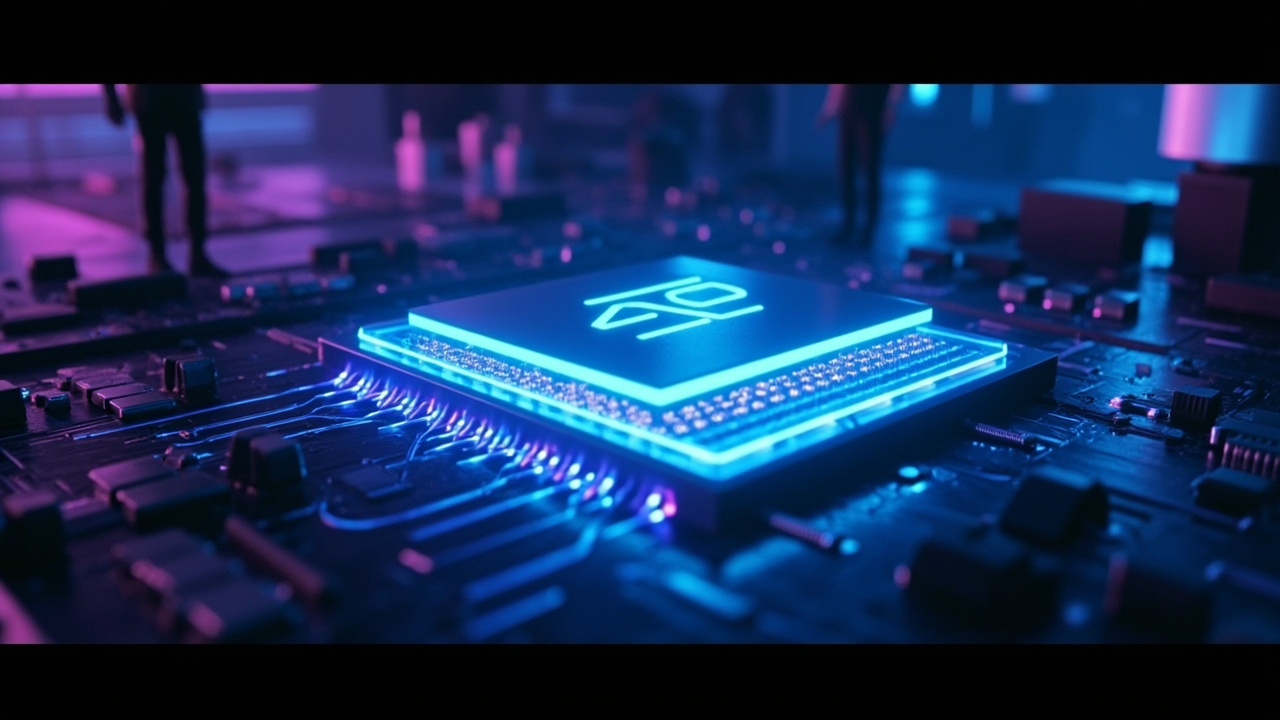
On August 21, 2026, Bloomberg reported that Anthropic PBC has hired Amir Salek, one of the founders of Google’s custom chip program and the man who ran the Tensor Processing Unit (TPU) business until 2022. He joins Anthropic’s compute team, reporting to James Bradbury, as the company lays the groundwork for its biggest strategic leap yet: designing its own AI silicon.
On the surface, this is a single executive hire. In reality, it may be the clearest signal yet that the frontier labs have decided the next battleground is not just models — it is the hardware underneath them.
Who is Amir Salek?
Salek’s resume reads like a map of the last decade of AI infrastructure. He joined Google in 2013 with, as he later put it, “a mission (and a dream) to build custom silicon development capabilities for Google’s datacenters.” At the time, the idea that a software company should design its own server chips was radical. Over the following nine years, he helped prove it was inevitable.
Salek ultimately became head of Silicon for Google Technical Infrastructure and Google Cloud, a role in which he was responsible for product lines that today carry a large share of Google’s internal AI training and inference. By the time he left in 2022, he had delivered seven generations of TPUs — the accelerator family that now powers everything from Gemini training runs to Google’s search stack, and the chip family that Anthropic itself has committed to use at gigawatt scale.
After Google, Salek moved into finance as a Senior Managing Director at Cerberus Capital Management, where he worked on deep-tech and semiconductor investments. That detour matters: building a chip program is as much a capital-allocation problem as an engineering one, and Anthropic is hiring someone who has now seen both sides.
Why this hire, why now
Anthropic already runs one of the most deliberately diversified compute strategies in the industry — a “multi-chip” approach spanning NVIDIA GPUs, Google TPUs, and Amazon Trainium, plus a reported AMD agreement for up to 2 gigawatts of GPUs signed earlier this month. In April 2026, Anthropic signed a deal with Google and Broadcom for multiple gigawatts of next-generation TPU capacity, on top of an earlier Google Cloud expansion “worth tens of billions of dollars.” In June, Bloomberg reported that Google’s backstops underpin a roughly $35 billion chip financing package for Anthropic, and the Wall Street Journal reported in late July that a Nexus Data Centers campus in Texas — built for Anthropic, backed by Google guarantees — is seeking another $15 billion in loans.
So why would a company with that much rented and financed capacity want its own chip? The answer is the same one that drove Google in 2013 and is now driving OpenAI’s co-design work with Broadcom: at frontier scale, renting compute forever means permanently donating your margin to your suppliers, and being last in line whenever supply gets tight. Inference — serving Claude to millions of users — is a recurring, predictable workload, and predictable workloads are exactly what custom silicon optimizes best.
Reporting from Tom’s Hardware earlier in August suggests this is already in motion: Anthropic is said to be co-designing a custom AI inference accelerator, with Samsung reportedly in discussions to manufacture it. The Salek hire gives that effort something no startup roadmap can fake — a leader who has taken a custom accelerator from whiteboard to seven shipping generations.
What it means for Nvidia
The uncomfortable read belongs to NVIDIA. As TheStreet noted, NVIDIA’s reported $10 billion investment in Anthropic is likely to be its last — Anthropic is drifting from customer to vertical integrator, and its fastest-growing capacity commitments (Google TPUs via Broadcom, potentially its own co-designed parts) are precisely the ones that bypass NVIDIA GPUs. Analysts at AINest estimate Google and Broadcom could capture $42 billion or more in Anthropic-driven AI revenue by 2027. A widely shared Chosun headline this week captured the inversion neatly: “Anthropic Builds Chips, NVIDIA Develops AI Models” — a reference to NVIDIA’s own push up the stack into foundation models and agents.
None of this means NVIDIA loses Anthropic as a customer tomorrow. GPUs remain essential for frontier training runs, and Anthropic’s diversified portfolio still includes large GPU allocations. But the direction of travel is unmistakable: every hyperscaler and frontier lab is now hedging the GPU monopoly, and Anthropic just hired one of the architects of the original hedge.
The caveats
Temper the excitement with history. Custom silicon takes years: Google needed nearly a decade from first TPU to today’s fleet-wide deployment. OpenAI’s Broadcom chip is not expected until 2027 at the earliest. Reports of the Samsung partnership and Broadcom’s reported efforts to raise up to $80 billion in debt financing for Anthropic chips remain unconfirmed by the companies involved. And Anthropic, heading toward what could be the largest IPO in history, will need to convince public-market investors that building a silicon team is capital well spent rather than a distraction.
What to watch
- Whether Anthropic formally confirms a custom accelerator program (or an Acorn-style internal codename leaks)
- Any foundry agreement with Samsung or TSMC — and its timing relative to the IPO
- How NVIDIA’s roadmap responds at GTC, particularly on inference-specific parts like the Vera Rubin follow-ons
- Whether the Google relationship deepens or frays as Anthropic designs chips that could one day compete with TPUs
One hire does not make a chip. But when the hire is the person who built the only accelerator family that has genuinely competed with NVIDIA at scale, it is a statement of intent — and the AI industry just heard it.
Sources
- [1] https://www.bloomberg.com/news/articles/2026-08-21/anthropic-taps-google-chip-veteran-as-part-of-push-into-hardware
- [2] https://finance.yahoo.com/technology/ai/articles/anthropic-hires-ex-google-chip-211528852.html
- [3] https://www.tomshardware.com/tech-industry/anthropic-to-build-its-own-co-designed-custom-ai-accelerator-for-inferencing-workloads-samsung-reported-to-be-partnering-with-the-claude-ai-maker-for-manufacturing
- [4] https://www.thestreet.com/technology/anthropic-silicon-team-amir-salek-hire
- [5] https://www.chosun.com/english/industry-en/2026/08/24/ZZROZVXDFRFLPF44XZ4PS66VM4/