XPeng's Robotics Arm Raises $900M at $6.3B Valuation — China's Largest Embodied AI Round Ever
XPeng's robotics business closed China's largest embodied-AI funding round — over $900M led by IDG Capital with Tencent and Alibaba backing — to push the IRON humanoid into mass production by end-2026.
XPeng, the Guangzhou-based automaker that now brands itself as a “Physical AI company,” announced on August 24, 2026 that its robotics business has signed share purchase agreements with a group of investors, raising over US$900 million at a post-money valuation exceeding US$6.3 billion. The company says this is the largest single-round private capital raise in China’s embodied AI industry to date — a record that signals just how quickly capital is rotating from chatbots into machines that act in the physical world.
Who put up the money
The round was led by IDG Capital, one of China’s oldest and most established technology investors, with participation from Gaorong Ventures and strategic backing from both Tencent and Alibaba. That investor list is itself a statement: two of China’s internet giants sitting alongside dedicated venture capital in a bet that the next platform shift belongs to humanoid robots.
Notably, this is the robotics unit’s first external funding round. Until now, the program had been funded from XPeng’s own balance sheet as part of CEO He Xiaopeng’s decade-long, full-stack in-house R&D strategy. Bringing in outside capital at a $6.3 billion mark establishes a clear market valuation for the business, diversifies its funding sources, and — as the company notes — strengthens long-term incentive mechanisms for senior executives and key talent. XPeng retains controlling ownership, and the unit will remain consolidated in the group’s financial statements.
What the money builds: IRON
The proceeds flow into XPeng’s next-generation IRON humanoid robot, and the numbers around this machine explain why investors wrote a record check.
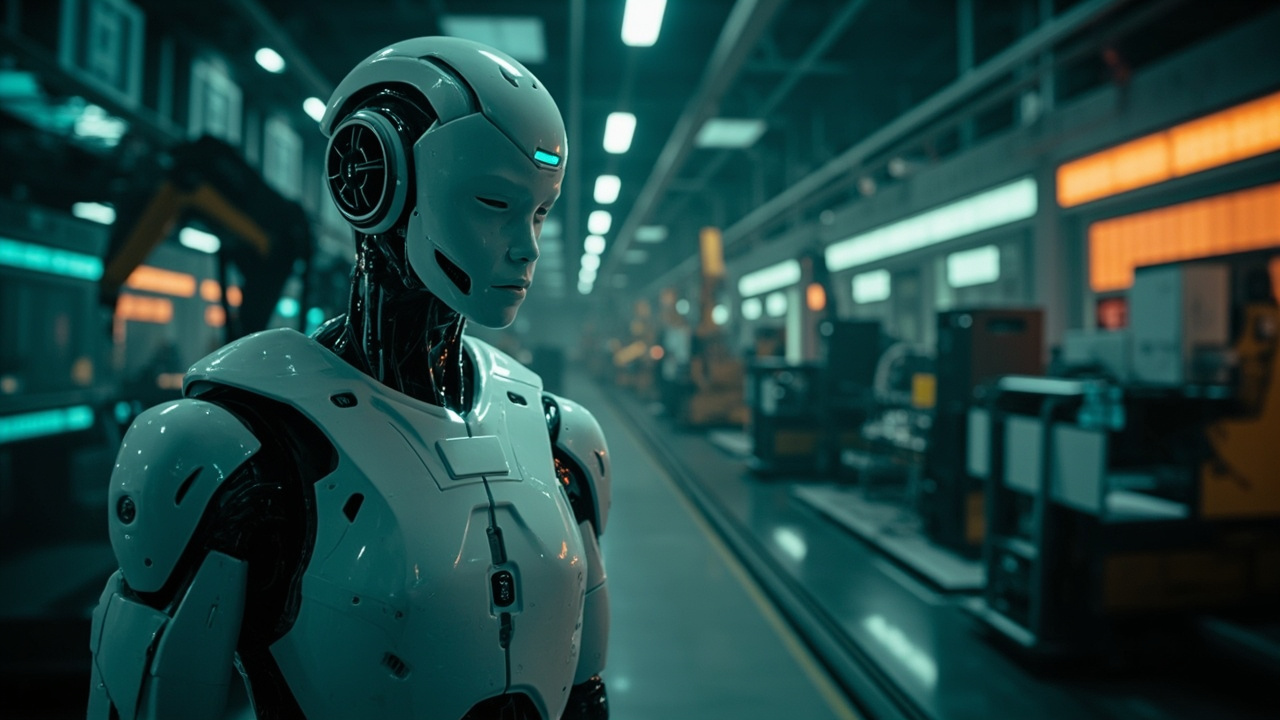
At the hardware level, IRON is built around a proprietary fully enclosed flexible lattice structure designed to balance a human-like appearance with safety. The platform offers 76 degrees of freedom across the body and 21 DOF in each hand — figures that put it at or near the top of the humanoid industry for dexterity. XPeng designs and develops the core components in-house: chips, controllers, motion modules, and dexterous hands, all on what the company calls an AI-native hardware platform.
On the intelligence side, IRON is powered by three in-house Turing AI chips delivering up to 2,250 TOPS of effective on-board compute. That local computing power is the strategic heart of the design: it lets XPeng run its Physical AI foundation model directly on the robot, so IRON can autonomously perform complex tasks without remote operation (teleoperation), while keeping inference latency low and data on-device. In a market where many humanoids still lean on cloud connectivity or human pilots, on-board autonomy is the differentiator XPeng is selling.
The automotive-grade advantage
The most underappreciated part of the story is manufacturing. XPeng is translating more than a decade of smart-EV engineering, supply chain management, and mass-production discipline directly into robotics — what the company describes as bringing “automotive-grade quality standards and large-scale mass production and delivery capabilities to humanoid robotics.”
Gaorong Ventures framed the investment thesis in exactly these terms: humanoid robotics is “moving beyond demonstrations of mobility and dexterity toward reliable mass production and tangible value creation in real-world settings.” The firm argues IRON’s anthropomorphic form factor makes it not just a human-centered interface but “a critical gateway to real-world data,” powering a self-reinforcing Production–Data–Models–Deployment flywheel.
That flywheel logic is worth spelling out. A highly human-like robot can operate in environments designed for people — factories, stores, campuses — generating behavioral data from everyday human activities. That data trains better models, which unlock more applications, which generates more data. IDG Capital’s statement adds that the robotics business also benefits from “significant strategic synergies with XPENG’s smart EV and autonomous driving businesses,” including shared edge AI processors, world foundation models, and both on-device and training compute.
Timeline: mass production by end-2026
The roadmap announced with the funding is aggressive but specific:
- End of 2026: IRON enters mass production
- Initial deployment: XPeng’s own stores and campuses
- 2027: Official launch and deliveries in China and overseas markets
Funds will support software and hardware R&D, training and iteration of Physical AI models, high-quality data generation, end-to-end mass production facilities, and global commercial expansion.
He Xiaopeng, Chairman and CEO of XPeng, said the round “provides the resources needed to accelerate the growth of our robotics business, while strengthening our ability to attract more world-class Physical AI talent.” His stated ambition: “for IRON to become a trusted partner for people and a meaningful part of everyday work and life.”
Why this round matters beyond XPeng
First, it sets a price. A $6.3 billion valuation for a robotics unit that has never raised external money gives the entire Chinese embodied-AI sector a new reference point — and the >$900 million check size demonstrates that late-stage capital views humanoids as an infrastructure-scale bet, not a demo-scale one.
Second, it sharpens the China-vs-US humanoid race. Where Tesla’s Optimus remains tied to Tesla’s factory floors and Figure AI raises on Silicon Valley valuations, XPeng’s model fuses an automaker’s production system with Tencent and Alibaba as strategic shareholders. Reuters noted the round sets a new fundraising record for China’s embodied AI industry, coming the same summer that physical AI funding hit record levels across the sector.
Third, it validates the “Physical AI” consolidation thesis. XPeng now runs Turing chips, world foundation models, robotaxis, EVs, and humanoids on one integrated stack. If the data flywheel between vehicles and robots works as designed, the robot that learns from a delivery van’s driving data — and from shoppers in an XPeng store — compounds faster than any single-purpose competitor.
The open questions are the ones that always haunt humanoid roadmaps: real unit economics at scale, reliability outside controlled environments, and whether “mass production” in 2026 means hundreds or thousands of units. But with $900 million of fresh capital, three of China’s most consequential tech investors on the cap table, and an automotive manufacturing base behind it, XPeng has just moved to the front row of the race to put a humanoid robot into commercial service.
Sources
- [1] https://www.prnewswire.com/news-releases/xpeng-robotics-business-raises-over-us900-million-at-a-post-money-valuation-of-over-us6-3-billion-accelerating-physical-ai-deployment-302858203.html
- [2] https://ir.xiaopeng.com/news-releases/news-release-details/xpeng-robotics-business-raises-over-us900-million-post-money
- [3] https://www.reuters.com/business/retail-consumer/xpeng-says-its-robotics-business-raised-over-900-million-first-funding-round-2026-08-24/
- [4] https://electrek.co/2026/08/24/xpeng-robotics-900m-iron-humanoid-robot-valuation/
- [5] https://www.stocktitan.net/news/XPEV/xpeng-robotics-business-raises-over-us-900-million-at-a-post-money-7uyylw1p98v1.html