a16z Raises $1.1B 'Machine Age' Fund to Bankroll the Physical Buildout of AI
Andreessen Horowitz bets $1.1 billion that AI's next bottleneck is hardware — chips, memory, data centers, robots — not software.
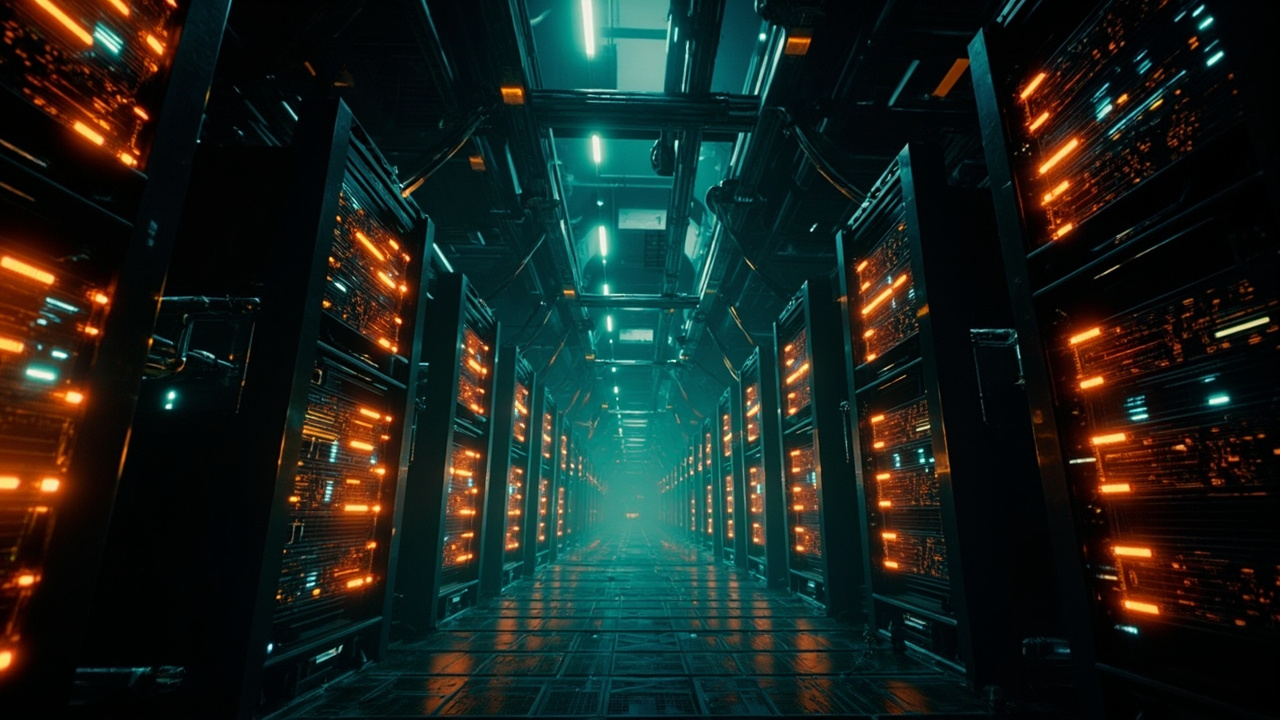
Andreessen Horowitz has never been shy about making big, thematic bets. But its newest vehicle, announced today, marks a symbolic pivot for a firm whose brand was built on the thesis that “software eats the world.” The Machine Age Fund, a $1.1 billion pool of committed capital, will invest exclusively in the physical substrate of artificial intelligence: chips, memory, networking, storage, data centers, robotics — even home AI appliances.
“It’s time to open the throttle and accelerate the physical buildout of AI,” the firm wrote in its announcement post, signed by Ben Horowitz, Martin Casado, Raghu Raghuram, David Ulevitch, and David George. They call AI “the strongest tool ever developed for solving problems and bestowing abundance” — and frame advancing it as “our social and national imperative.”
Why hardware, and why now
The timing is not accidental. As AI workloads evolve from chat to reasoning to agentic coding, both the demand for compute and the token intensity of each task are increasing by orders of magnitude. The a16z team describes the moment bluntly: “Machine intelligence is going vertical.”
But the physical supply chain simply isn’t built for that curve. The post lays out a striking set of numbers:
- Compute density per rack has increased 28× from an H100-era rack to a Rubin-era rack, with intra-rack networking growth pushing past the limits of copper cabling.
- Rack power has jumped from roughly 5–10 kW to 100–250 kW, and is projected to reach 1 MW per rack within three years.
- Data center scale is moving from tens of megawatts to hundreds of MW, with gigawatt-scale campuses now on drawing boards.
- Power sourcing is shifting from grid-only to grid-plus-behind-the-meter and even captive generation.
Against this, the hardware industry’s supply side has historically grown 20–30% per year at most — nowhere near the triple-digit growth needed to catch up with AI demand. Every layer of the stack, the firm argues, is “hitting the wall of today’s supply chain capability, and the limits of physics and computer science.”
That gap is the investment thesis. Where a16z sees scarcity, it also sees “a once-in-a-generation opportunity to rearchitect” the AI stack as platforms, “all the way down to the electricity.”
A homecoming disguised as a pivot
While a16z is best known as a software investor, the firm is eager to point out that hardware is in its DNA. It led Skydio’s Series A back in 2016, invested in SpaceX, wrote its first check into Anduril in 2019, and was among the first venture investors in Waymo’s 2020 raise.
More recently, that muscle has been flexing again. The firm has backed hardware companies including Unconventional AI, Nexthop, Volta, Heron Power, and Mind Robotics — plus Atoms, Travis Kalanick’s industrial robotics venture, which raised a $1.7 billion round led by a16z in July 2026. Deal flow tells the same story: hardware startups have grown from a sliver of a16z’s pipeline to over 20% of it in just the last couple of years.
The fund’s leadership reflects that pedigree. Guido Appenzeller was CTO of Intel’s Data Center Group; Raghu Raghuram spent decades in the data center and systems world (he’s the former VMware CEO turned a16z managing partner); Martin Casado built his career on systems software with deep hardware co-design; Shangda Xu and David George have led investments across the AI infrastructure stack from silicon to compute platforms; and David Ulevitch and Erin Price-Wright drive hardware and U.S. manufacturing investments through the firm’s American Dynamism practice.
The bigger picture: inference is eating the data center
The Machine Age Fund also extends an argument a16z has been building all year. In a July post titled “How to Win the Largest Market in AI,” the firm’s infrastructure team argued that AI inference — not training — is becoming “the largest workload computers have ever run,” and that general-purpose GPUs are a poor long-term fit for it. Their evidence: Google announced in May 2026 that it processes 3.2 quadrillion tokens per month across its products, roughly 300× what it processed two years earlier, while OpenAI serves roughly a billion monthly users and Anthropic’s Claude Code keeps climbing.
Inference is the operating cost of intelligence, the post argued — “every token has a price in silicon time and electricity” — and tokens-per-watt is the real currency. That logic already pushed a16z toward silicon bets like Etched, the inference-chip startup that has hired more than 400 engineers from Nvidia, Google’s TPU group, Broadcom, and TSMC. The Machine Age Fund institutionalizes that worldview across the entire stack.
What it means
Three takeaways worth watching:
1. Capital is rotating from models to atoms. With frontier labs soaking up mega-rounds and model differentiation getting harder, the marginal dollar increasingly chases picks-and-shovels. A dedicated hardware fund from the most profile-driven VC firm in software is a loud signal of where the next decade of returns is expected to come from.
2. The power bottleneck is now an investable market. The fund’s scope — cooling, materials, electrical buildout, real estate, even captive power — treats gigawatt-scale energy as a product category, not an afterthought. Expect more VCs to follow.
3. Hardware startup formation is accelerating. If hardware deals already exceed 20% of a16z’s flow, the fund effectively formalizes and fuels an existing shift. For chip architects, power engineers, and robotics founders, the fundraising environment just got meaningfully warmer.
The announcement lands at an awkward moment for the firm — a DOJ investigation into a16z, reported last week, remains ongoing — but nothing in today’s post engages with that. The message is pure momentum: the software investors of Sand Hill Road have decided the next great software story is written in silicon, steel, and megawatts. As the firm puts it: “We’re ready for you.”
Sources are listed in the article metadata. Figures and quotes are drawn from a16z’s announcement post and TechCrunch’s coverage, both published August 28, 2026.