India's Greenko-Backed AM Intelligence Bets $8 Billion on 9,000 NVIDIA Rubin GPUs for Hyderabad AI Factory
AM Intelligence has placed a binding order for 9,000 NVIDIA Rubin GPUs to build one of Asia's first frontier AI compute clusters, backed by cheap renewable power and an aggressive electron-to-token economics thesis.
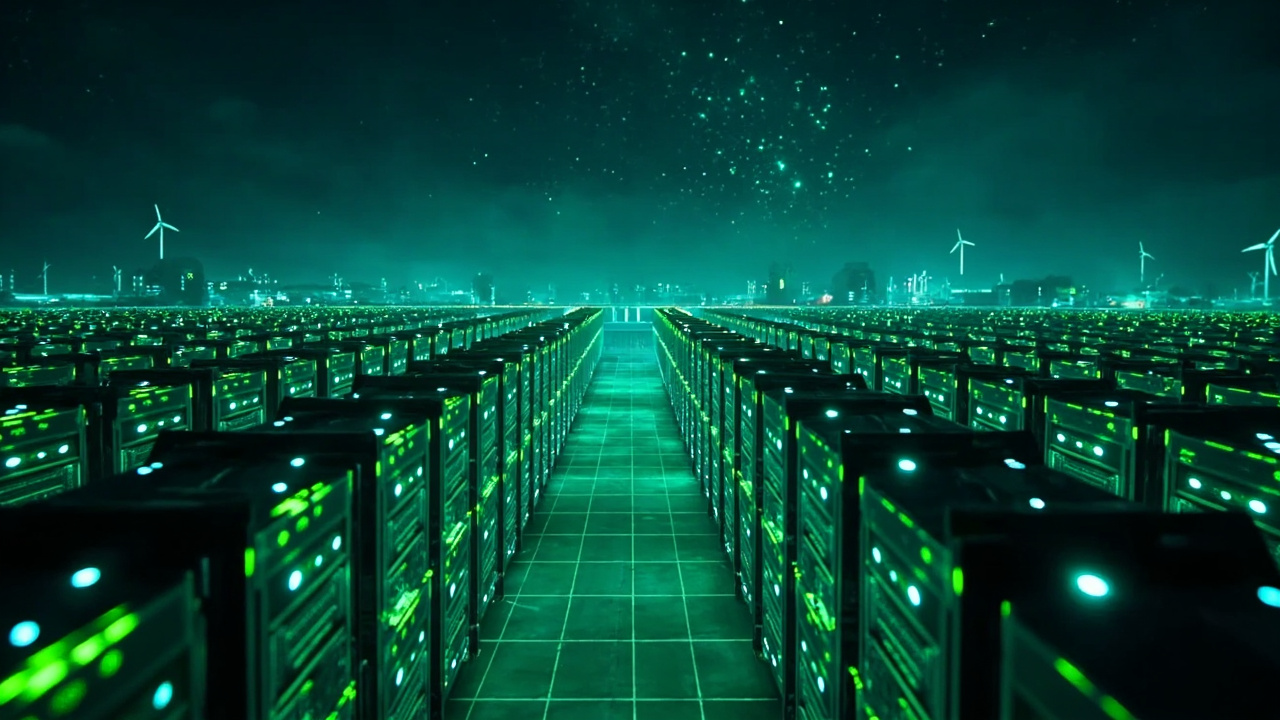
On August 25, 2026, Hyderabad-based AI infrastructure company AM Intelligence (AMI) announced it has placed a firm and binding order for 9,000 NVIDIA Rubin GPUs for its first AI factory — a 30 MW facility in Hyderabad that the company says will become one of Asia’s first frontier AI compute clusters built on NVIDIA’s next-generation Vera Rubin platform. The order sits under a broader US$8 billion buildout plan, and it marks the arrival of a serious new competitor in the global market for AI compute: one whose core thesis is that the cheapest electrons will win the token economy.
What Was Announced
AMI, set up by the promoters of Greenko Group — one of India’s largest renewable energy producers — said the 9,000 Rubin GPUs will be deployed as Vera Rubin NVL72 rack-scale systems, each pairing 72 Rubin GPUs with 36 Vera CPUs. Delivery is slated for Q1 2027, with servers coming online at the Hyderabad site next year.
The numbers behind the deal are substantial:
- 9,000 Rubin GPUs in NVL72 rack-scale configuration, delivered Q1 2027
- 30 MW initial AI factory in Hyderabad, scaling to an initial 200 MW of market capacity
- Over US$8 billion in capital expenditure for the near-term phase
- ~450 exaFLOPS of NVFP4 inference compute at the Hyderabad facility
- 1 GW of planned global compute-as-a-service capacity across India, the US, Finland, and Malaysia
- 5 GW of powered AI data centres under development across India, the US, and Europe, targeted by 2030
The Vera Rubin NVL72 platform introduces NVFP4, a new low-precision computing format designed to run AI workloads more efficiently, alongside next-generation HBM4 memory. AMI says the Hyderabad AI factory is engineered to run trillion-parameter models and next-generation agentic AI applications — precisely the workloads straining global compute supply.
The Energy Arbitrage Thesis
What makes AMI unusual among the dozens of startups now chasing AI data centre deals is its origin. Greenko is not a technology company; it is a renewable energy major with deep experience in power infrastructure, pumped storage, and energy management. AMI’s pitch is essentially a vertical integration play: own the power, own the silicon, and sell the resulting tokens at prices Western hyperscalers struggle to match.
“In global token economics, energy prices play a huge part,” Mahesh Kolli, founder and president of Greenko Group, said in a video interview. “We’re one of the lowest-cost AI computation infrastructure players globally.”
Kolli argued that India faces few operational constraints as a compute export hub because undersea cables allow US companies to use Indian AI compute with round-trip latency of roughly 300 milliseconds — acceptable for training workloads and much batch inference, even if not for the most latency-sensitive applications. The company plans to offer capacity to customers in India, the US, Finland, and Malaysia.
The demand signal, at least according to AMI, is already there. Kolli said the initial capacity has been purchased by a US customer, whose identity is protected by a non-disclosure agreement, and that customers are “hunting desperately” for compute amid multiyear backlogs at NVIDIA and tight supplies of high-end clusters. Target customers span major cloud service providers, AI labs, sovereign AI initiatives, and organizations building homegrown Indian AI models.
AM Group chairman Anil Chalamalasetty framed the strategy as an “electron-to-token opportunity” — converting power infrastructure into frontier AI compute at scale. In a statement, the company described two decades of “electron valorisation,” progressively creating greater value from energy across energy management, molecules and metals, and now AI tokens.
Funding and the Road to 5 GW
AMI says it will fund the buildout with a mix of debt and equity, leveraging the group’s balance sheet and its experience tapping bond markets. Kolli noted that “capex to cash flow in this business is very short,” reflecting pre-sold capacity and the service model — compute-as-a-service rather than speculative construction.
The Hyderabad facility is explicitly the first tranche. Beyond the initial 200 MW, AMI is developing 5 GW of powered AI data centres across India, the US, and Europe, with a stated goal of reaching that capacity by 2030. The platform is pitching itself as a full-stack ecosystem integrating energy solutions, data centres, hardware, and customised AI models for hyperscalers, “neo cloud” providers, sovereign AI initiatives, frontier labs, and local developer communities.
Context: The Global Rubin Race
The order places AMI among the first adopters of NVIDIA’s Vera Rubin platform in Asia — a meaningful position given that supplies of high-end NVIDIA compute clusters remain tight worldwide. Demand from hyperscalers like Microsoft, Google, and Amazon has produced multiyear backlogs, and countries are now placing orders directly: Japan, for instance, is planning to buy Rubin chips to build a homegrown foundational AI model for robotics, with its first data centre slated to begin operating in June 2028.
India’s government, meanwhile, has been pushing hard to build a domestic AI ecosystem, and a domestically-sited frontier cluster — financed by Indian energy capital, not just hyperscaler capex — is a notable milestone. If AMI’s renewable-power cost advantage holds, Hyderabad could become a genuine alternative for training runs and inference serving that don’t need to sit inside a US Virginia or Oregon data centre.
The Caveats
Skeptics will note the gap between binding GPU orders and energized, operational clusters: power procurement, cooling, networking, and customer ramp all remain execution risks on an 18-month timeline. The identity of the anchor US customer is unverified, and the 5 GW-by-2030 ambition is a target, not a commitment. Competing on price also means thinner margins if GPU supply normalizes or energy costs shift.
But as a signal of where AI infrastructure is heading, the AMI deal is unambiguous: the next phase of the compute buildout is globalizing, and it is being led as much by energy companies as by technology firms. When a renewable power producer can credibly claim to be “one of the lowest-cost AI computation infrastructure players globally,” the definition of an AI company has officially expanded to include the grid behind it.
Sources
- [1] https://www.thehindu.com/business/Industry/ami-orders-9000-nvidia-rubin-gpus-for-hyderabad-facility/article71390110.ece
- [2] https://www.taipeitimes.com/News/biz/archives/2026/08/26/2003863126
- [3] https://www.business-standard.com/technology/tech-news/ami-orders-9-000-nvidia-rubin-gpus-plans-8-bn-capex-for-200-mw-capacity-126082501159_1.html
- [4] https://www.ndtvprofit.com/business/8-billion-ai-bet-am-intelligence-orders-9-000-nvidia-rubin-gpus-for-hyderabad-11957352