'Slam the Brakes': UK Greens Demand Moratorium on AI Data Centres as England Dries Out
Green Party leader Zack Polanski has demanded a freeze on new data centre approvals in England, warning that water-hungry AI infrastructure is being built in drought-struck regions while Labour calls a pause 'a disaster for jobs and national security.'
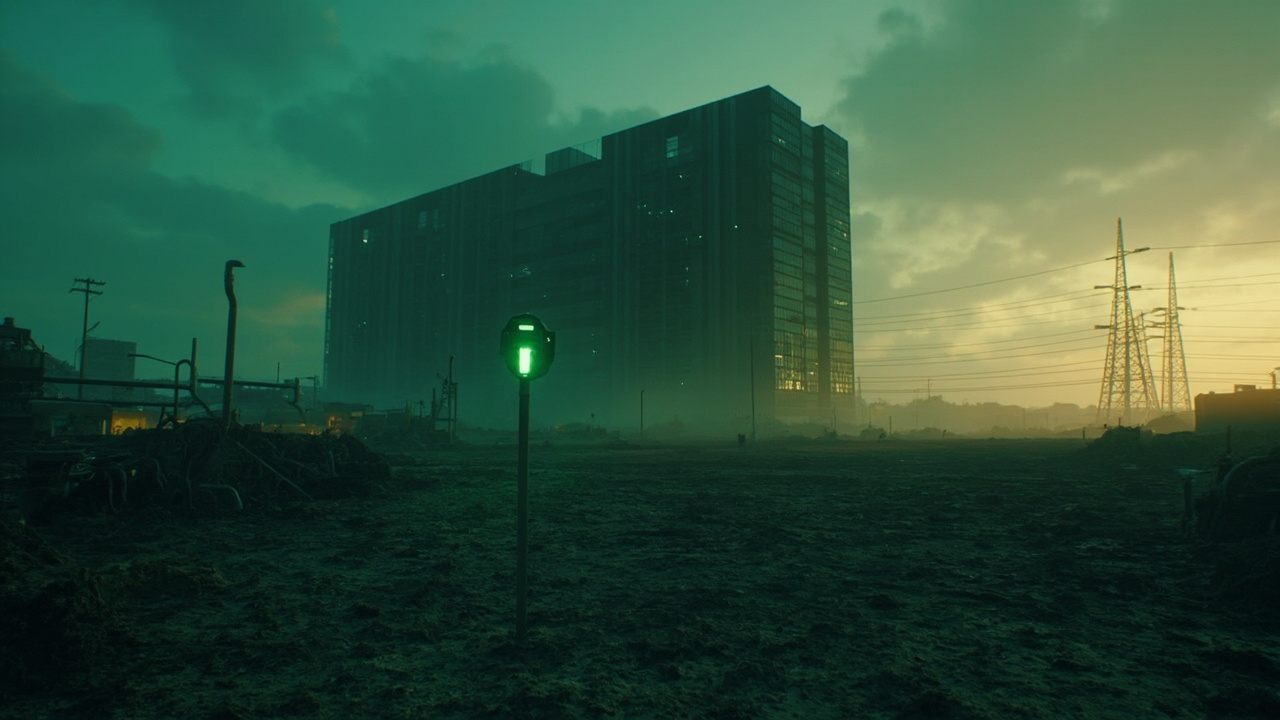
England is in drought, and the machines keep drinking. On Friday, August 28, 2026, Green Party leader Zack Polanski stood at the site of a proposed data centre in East London and delivered the sharpest political challenge yet to the UK’s AI infrastructure buildout: a moratorium on new approvals, effective now, until the country understands what these facilities are doing to its water and its grid.
“We need to slam the brakes on these energy guzzling, water guzzling data centres,” Polanski told the BBC. “Essentially, we need basically a moratorium other than local scale data centres for the local community. At a time when three-quarters of the country are in drought, it is outrageous that these are being considered critical infrastructure. To most people critical infrastructure means hospitals, water, electricity. It doesn’t mean Artificial Intelligence.”
The Labour government’s response was immediate and unambiguous. A spokesperson said a pause “would simply send investment and good jobs abroad, while leaving Britain dependent on overseas computing for the processing of sensitive health and defence data. Put simply: it would be a disaster for jobs and national security.” But the same statement conceded that the sector does not have a blank cheque: “this does not mean a blank cheque for Big Tech or that every data centre should be approved.”
The scale of the buildout
The numbers behind the argument are startling. According to The Times, the UK already hosts more than 500 data centres, with at least another 183 in the planning pipeline. Many are clustered around London and the south of England — precisely the regions that are officially in drought this summer. The BBC reported last year that the total stood at around 477 facilities; the figure has only climbed since.
The AI boom is the engine behind this expansion. Training and serving large models requires enormous continuous compute, and hyperscale campuses are being proposed at a pace that local planners and water utilities say they cannot properly assess. In a detail that will sting ministers, the BBC also discovered that the government has not carried out an environmental assessment of its own “Delivering AI Growth Zones” strategy — the very programme meant to accelerate data centre construction. A government official described the paper as “a statement of intent, rather than a formal policy moving towards implementation.”
The water question nobody can answer
Here is the uncomfortable core of the story: nobody actually knows how much water UK data centres consume, because they are not required to report it.
The Water Research Centre consultancy estimated in February that data centres in England currently use about 1.9 billion litres of drinkable water a year — roughly 0.2% of the non-household market — with a “clear upward trend.” That sounds manageable. But the Greens cite research by environmental charity Global Action Plan suggesting that a single large centre can consume up to 1.5 million litres per day. Multiply that across 183 new facilities, many sited in water-stressed counties, and the arithmetic becomes a political problem.
The government’s counterargument leans on leakage: roughly a fifth of the public water supply is lost through leaky pipes, far more than data centres use. It is a fair point about infrastructure failure, but it does not answer the forward-looking question — what happens when hundreds of new centres come online in the driest corners of the country during a national drought?
Scotland is already ahead of this debate. The Scottish Greens have called for their own moratorium on hyperscale developments, noting a wave of speculative planning applications, and Scottish MSPs have reportedly never seen such local opposition to any category of development. Scottish data centres are already using enough water to fill 27 million bottles a year, according to one BBC finding.
Critical infrastructure — for whom?
The sharpest edge of the Green argument targets the 2024 decision to classify data centres as critical national infrastructure. That designation gives facilities extra government support during incidents like cyber-attacks or extreme weather — and, the Greens argue, could give them priority over households during water shortages. The government insists data centres would not automatically get priority during shortages, but the classification itself has become a symbol of whose interests the state protects first.
Rosa Curling, co-executive director of the campaign group Foxglove, put the critique in structural terms: “Any action to pause or slow down this construction frenzy is positive, but the reality is that the government and local authorities already have the power to say that data centres can only be built if tech billionaires, not the British public, pay for their costs in full. As a minimum, no hyperscale data centre should be given the go-ahead unless the developer also builds new renewable energy and storage to power it completely — and commits to not draining local water supplies.”
The industry, for its part, is not accepting the framing. Mark Acton, executive director of the Data Centre Alliance, told the Today programme that data centres are not taking water from local communities and use less water than leisure centres and golf courses. He also pushed back on the planning critique: “Data centres are not just AI, data centres run our lives… social media runs through data centres, our banking systems run through data centres. We depend on these things massively.”
What the Greens are actually proposing
The moratorium demand comes with a policy package attached. The party wants:
- A freeze on new hyperscale approvals in England, with an exemption for small, community-scale facilities
- Mandatory annual reporting of water and electricity consumption by every data centre operator
- Brownfield-first siting, with new centres located near renewable energy sources so they can run on clean power
- Stronger community say over whether a centre is built in a given area at all
- Revocation or review of critical infrastructure status, at minimum a guarantee that households get water first in a shortage
Friends of the Earth is separately calling for a moratorium until proper environmental assessments are made, and Global Action Plan is running a “Stop Dirty Data Centres” petition demanding the government pause new developments until it has published a framework setting out how many data centres the country actually needs.
A global fault line, sharpening
What makes Friday’s clash more than a Westminster skirmish is that the same fight is erupting worldwide. In the United States, fourteen state legislatures are considering restrictions on data centre development, driven mostly by energy costs and local opposition. In Australia — where the Guardian reported this week on Labour’s parallel datacentre politics — Energy Minister Chris Bowen is insisting there will be “no special carve-out for states using fossil fuel to power datacentres,” as the Albanese government tries to hold the line between AI growth and its climate commitments. Water-stressed communities from Chile to Uruguay have fought similar battles over the past two years.
The economics ensure the pressure will intensify. A large data centre is estimated to use as much energy as a medium-sized town, and the International Energy Agency has repeatedly warned that data centre electricity demand could double by 2030 on current AI trajectories. Every government chasing the AI race now faces the same trilemma: build fast enough to compete, keep the lights on, and explain to voters why a server hall ranks alongside a hospital.
Labour has chosen growth, and framed the alternative as national security risk. The Greens have chosen water, and framed the status quo as a transfer of a public resource to private AI companies. Neither position is cost-free, and the drought of 2026 has turned an abstract infrastructure debate into something voters can see from their gardens — as one resident told the BBC, “I used to live in a quiet area - now a data centre overlooks my garden.”
The moratorium is unlikely to pass. The Greens hold nothing close to the numbers needed in Parliament, and Labour’s majority is committed to the AI Growth Zones strategy. But the demand has already shifted the conversation: within hours of Polanski’s appearance, the government was defending not whether data centres deserve scrutiny, but whether a pause would cost Britain its AI future. That is the language of a debate that has only begun.
Sources
- [1] https://www.bbc.com/news/articles/cz0zm4pzme2o
- [2] https://novaramedia.com/2026/08/28/zack-polanski-calls-for-temporary-ban-on-energy-guzzling-data-centres/
- [3] https://www.theguardian.com/uk-news/2026/aug/28/labour-green-party-zack-polanski-ai-datacentres
- [4] https://www.thetimes.com/uk/environment/article/zack-polanski-data-centres-greens-vsz2jmv0l
- [5] https://greens.scot/datacentres