XPeng's IRON Humanoid Unit Raises $900 Million in China's Largest Physical AI Funding Round
XPeng's robotics unit Dogotix has raised over $900 million at a $6.3 billion valuation to mass-produce its IRON humanoid robot — the largest single-round private financing in China's physical AI industry, led by IDG Capital with Tencent and Alibaba as strategic investors.
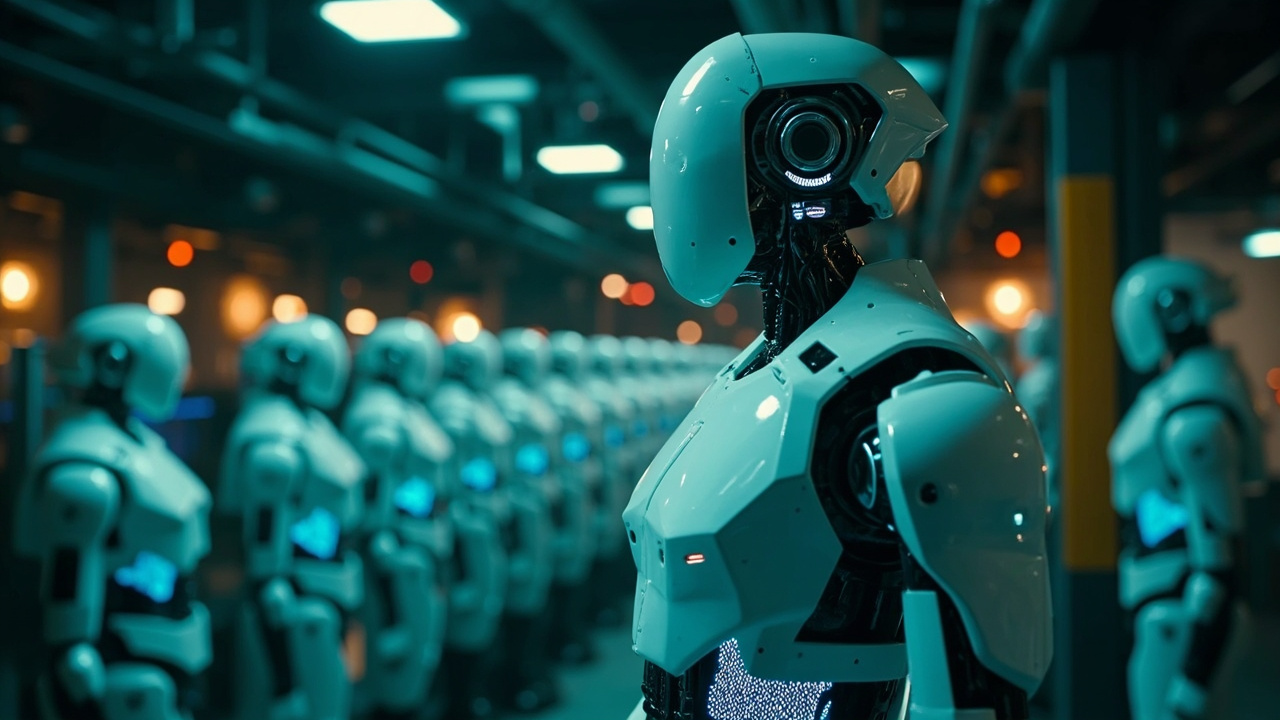
China’s physical AI industry just set a new record. XPeng, the Guangzhou-based electric vehicle maker, announced that its robotics business has raised more than US$900 million at a post-money valuation exceeding US$6.3 billion — the largest single-round private capital raise in China’s physical AI sector to date, measured by both the amount raised and the resulting valuation.
The financing, structured through a set of share purchase agreements, was led by IDG Capital, with Gaorong Ventures participating and Tencent and Alibaba joining as strategic investors. According to CnEVPost, around $600 million of the commitments come from external investors. XPeng will retain controlling ownership of the robotics unit once the round closes, and the business will remain consolidated into the group’s financial statements.
Why this matters
The round is the clearest signal yet that China’s tech giants and top venture firms believe humanoid robots are ready to graduate from demo videos to factory floors. IDG Capital said the physical AI industry is moving “from technical breakthroughs to scalable manufacturing and commercial deployment” — a shift that plays directly to XPeng’s strengths as an automaker with more than a decade of supply chain and manufacturing experience.
It also marks a strategic pivot for XPeng itself. The company’s core vehicle business faces brutal price competition inside China from domestic manufacturers, plus pressure from Tesla in both overseas and domestic markets. Its shares were down more than 7 percent on the funding news, and the stock has lost roughly half its value over the past 12 months. Investors are effectively pricing the robotics division at $6.3 billion even as the parent company’s shares keep falling — a bet that the next decade of XPeng’s growth may come from machines that walk rather than machines that drive.
What the money funds
XPeng says the capital will go toward what it calls full-stack physical AI development:
- Software and hardware R&D for the robotics unit, including chips and controllers
- Training and iteration of physical AI foundation models
- High-quality data generation to feed those models
- End-to-end mass production facilities built to automotive-grade standards
- Commercial expansion outside China
- Retention incentives for senior executives and staff working on robotics
That last item is notable: XPeng lost its robotics product head in June 2026 as the mass-production timeline loomed, and retaining specialized talent has become a genuine bottleneck across the entire humanoid industry.
Inside IRON
IRON, the humanoid robot at the center of the strategy, is a deliberately human-like machine. It uses a fully-enclosed flexible lattice structure designed in-house to balance appearance with safety, offers 76 degrees of freedom across its body and 21 in each hand, and carries onboard compute delivering up to 2,250 TOPS of effective processing power via three of XPeng’s self-designed Turing AI chips.
That on-board processing is the key architectural choice. XPeng runs its physical AI foundation model directly on the robot, enabling complex tasks with low inference latency and with data processed locally on the device — no constant cloud round-trip required. The company argues that IRON’s human-like form factor gives it two structural advantages: it can collect behavioural data from environments and tools designed for people, and it can adapt to the human world without the world being redesigned around it.
The earlier next-generation IRON unveiling also highlighted an all-solid-state battery and a total computing configuration (across three Turing chips) cited at up to 3,000 TOPS in some materials — figures that underscore how far on-board robot compute has climbed in a single generation.
The automotive flywheel
XPeng’s core argument is that building robots is fundamentally a manufacturing problem, and that it has already solved the hard parts as an EV maker. The company is applying the quality standards and production processes from its electric vehicles to robot manufacturing, targeting automotive-scale output. Separate motion modules and dexterous hand mechanisms handle manipulation, while the vehicle business contributes autonomy software, edge AI processors, and data infrastructure.
As IRON reaches mass production, XPeng expects a “data-model-application flywheel” to take hold: more robots in more environments generate more behavioural data, which improves the foundation model, which expands the range of tasks the robots can perform, which justifies deploying more robots.
Gaorong Ventures framed the shift the same way, saying humanoid robots are “moving beyond demonstrations of mobility and dexterity toward reliable mass production and tangible value creation in real-world settings.”
Timeline and context
IRON is expected to enter mass production by the end of 2026, with initial deployment inside XPeng’s own stores and campuses before any wider rollout. Customer deliveries in China and overseas markets are planned for 2027.
The round lands amid an intensifying global humanoid race — Tesla’s Optimus, Figure AI, and a wave of Chinese players including Unitree and Agibot are all chasing volume production. XPeng’s chairman and CEO He Xiaopeng said the company’s 12 years of full-stack in-house R&D — spanning its physical world foundation model, Turing AI chips, and AI infrastructure — “enabled us to pioneer a new phase of mass production and commercial deployment for advanced humanoid robots.”
Whether a $6.3 billion valuation for a pre-delivery robot business proves prescient or premature, the message from IDG, Tencent, and Alibaba is unambiguous: in China’s view, the physical AI race has entered its industrial phase, and the winners will be decided on the production line.
Sources
- [1] https://www.artificialintelligence-news.com/news/xpeng-iron-humanoid-robot-draws-record-physical-ai-funding/
- [2] https://ir.xiaopeng.com/news-releases/news-release-details/xpeng-robotics-business-raises-over-us900-million-post-money
- [3] https://cnevpost.com/2026/08/24/xpeng-carves-out-robotics-business/
- [4] https://www.therobotreport.com/xpeng-motors-humanoid-robot-unit-dogotix-raises-900m/