Texas Halts State Funding for Flock's AI Surveillance Cameras as Misuse Reports Multiply
Gov. Abbott ordered all Texas state agencies to stop funding Flock Safety's AI license-plate readers after a Tribune investigation found a state authority spent $30M+ installing 3,200 cameras — and a Lufkin officer was indicted on 100 felony counts for surveilling 11 people.
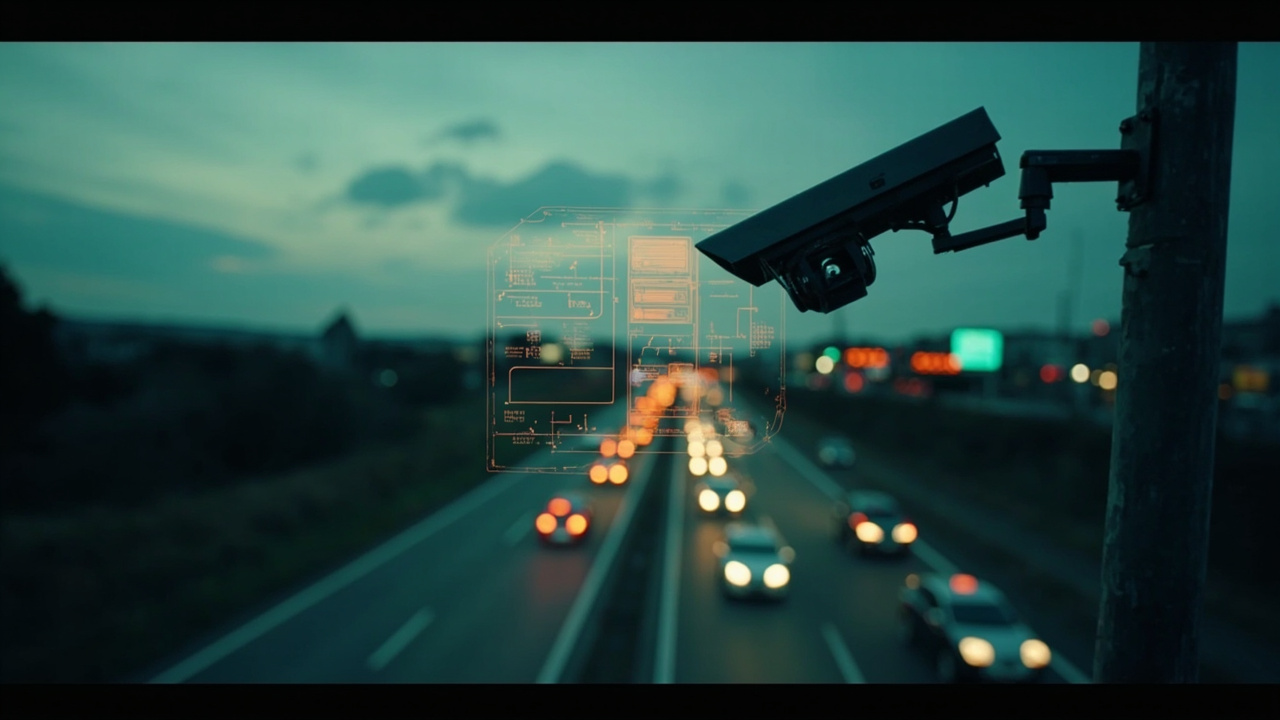
On Thursday night, August 28, Texas Governor Greg Abbott quietly ordered every state agency to pause spending on Flock Safety’s AI-powered license-plate reader cameras. The directive, confirmed by his spokesman on Friday, came hours before the Texas Tribune published an investigation revealing that a little-known state authority has spent at least $30 million in grants building out the state’s Flock surveillance network — and as criminal cases against officers who allegedly abused the system have started piling up across the state.
It is the sharpest reversal yet in a two-year debate over AI-assisted mass surveillance in America’s second-most-populous state, and it signals that the political constituency for camera networks that never forget a license plate may be narrower than their rapid spread suggested.
What happened
Abbott’s order directs state agencies to halt all funding for Flock cameras. “To the extent any funding comes from Texas agencies, those agencies are clarifying that those funds cannot be used for Flock cameras,” spokesperson Andrew Mahaleris said in a statement shared first with the Tribune, adding that most camera funding for cities actually comes from the federal government.
The timing was not subtle. The Tribune’s investigation, published the same day, detailed how the Motor Vehicle Crime Prevention Authority (MVCPA) — a board whose members are mostly Abbott appointees — has helped state and local agencies install at least 3,200 Flock cameras since 2023. Nearly 1,200 of those are being installed by the Department of Public Safety under a three-year, $15.9 million contract.
The funding source is the strangest part of the story. The grants flowed from a 2023 law that added $1 to every Texas auto insurance policy to combat catalytic converter theft. Lawmakers told the Tribune that before the bill passed unanimously in both chambers, there had been no discussion of using the money for Flock cameras or similar surveillance devices.
What makes Flock different
Flock cameras are not the crude license-plate readers of the 2010s. Each unit uses artificial intelligence to log not just plates but a vehicle’s make, model, color, and distinguishing features — bumper stickers, dents, roof racks, damage. The result is a searchable database of “vehicle fingerprints” that can track a specific car even when its plate is obscured.
More consequentially, departments that use Flock can opt into a national lookup program that lets participating agencies search each other’s data from anywhere in the country. A single camera on a Texas feeder road becomes a node in a nationwide tracking network — one whose retention policies and audit trails are set largely by a private company, not by legislatures.
That architecture is exactly what alarmed both parties in Austin. In July, Republican U.S. Rep. Keith Self of McKinney introduced federal legislation that would require warrants before agencies access Flock data. “Americans’ Fourth Amendment right to be secure in their privacy does not disappear just because of new technology or artificial intelligence,” Self said in announcing the bill.
The misuse cases that forced the issue
Policy arguments alone rarely move a governor mid-election-season. Criminal indictments do.
Abbott specifically cited the case of a Lufkin police officer indicted on 100 felony counts of misusing public information, after prosecutors said he used the area’s Flock cameras to surveil 11 people for more than a year. The officer, identified in local reporting as Zachary Anthony Klein, 32, was held at the Angelina County Jail on bonds totaling $700,000 following the August 22 indictment.
And Lufkin is not an outlier. At least six police departments and sheriff’s offices across Texas have announced in the past month that officers are being placed on leave, investigated, or criminally charged over camera misuse. A count compiled on the DeFlock mapping project and cited by the Texas Observer puts Flock’s footprint at more than 10,000 cameras sold across Texas alone.
“This is something that is easily containable, easily controllable,” Abbott said in a Friday radio interview with Glenn Beck, describing a crackdown in which cities and counties are canceling contracts as residents raise privacy concerns. “Flock cameras are being reduced dramatically. They’re going to be required to be used responsibly if they’re used at all.”
The politics cut both ways
The order lands in the middle of an already-hot gubernatorial race. Democratic candidate Rep. Gina Hinojosa released an ad this week blaming Abbott himself for the cameras’ spread, calling the devices “warrantless surveillance” and urging him to “stop turning Texas into a surveillance state.” The irony that Abbott appointees run the authority that funded the network has not been lost on either side.
Flock Safety, for its part, issued a statement saying it supports “thoughtful legislation” with privacy guardrails while defending its product: “Flock’s technology is an important public safety tool for law enforcement agencies across Texas, helping officers solve serious crimes, find missing people, recover stolen vehicles, and support safer communities.”
Why it matters beyond Texas
Texas is the biggest test case yet for a question now facing every level of American government: who governs AI surveillance infrastructure that was procured faster than anyone wrote rules for it?
The Flock story has the shape of a classic accountability loop, compressed. A dedicated funding stream created for one purpose (catalytic converter theft) was redirected to a far broader capability. Deployment outpaced oversight by years. Misuse stayed invisible until prosecutors acted. And only then — after thousands of cameras were installed, networked, and queried millions of times — did the funding spigot get questioned, by the same government that opened it.
That loop is not unique to license-plate readers. It is the default lifecycle of AI tools in public agencies: procurement first, governance later. The Texas pause is a rare instance of the “later” actually arriving while the program is still expanding. Whether other states — and Congress, where Rep. Self’s warrant bill awaits action — follow suit will determine if this is a genuine turn against dragnet vehicle surveillance, or a one-week news cycle in a single state.
For Flock Safety, a company whose cameras have spread to thousands of municipalities on the strength of grant money and crime-clearance statistics, the Texas freeze is the first time a large customer has publicly reversed course at the scale of an entire state government. How the company responds — with tighter audit logs, warrant requirements, or lobbying — will shape the template for every AI surveillance vendor watching from the sidelines.
Sources
- [1] https://www.texastribune.org/2026/08/28/texas-greg-abbott-flock-cameras-order-state-money/
- [2] https://www.foxnews.com/politics/texas-gov-greg-abbott-moves-cut-state-funding-ai-powered-flock-cameras-amid-privacy-concerns
- [3] https://thehill.com/homenews/state-watch/6058974-abbott-halts-texas-flock-agencies-funding/
- [4] https://www.kltv.com/2026/08/24/lufkin-police-officer-indicted-100-counts-related-flock-camera-misuse/