OpenAI Is Buying Tens of Thousands of Macs for RL — and Apple Just Became an AI Hardware Company
The Information reports OpenAI has purchased tens of thousands of Macs to run reinforcement-learning workloads while Anthropic rents Mac capacity on AWS — and Nvidia now sees Apple as its principal rival in local AI processing.
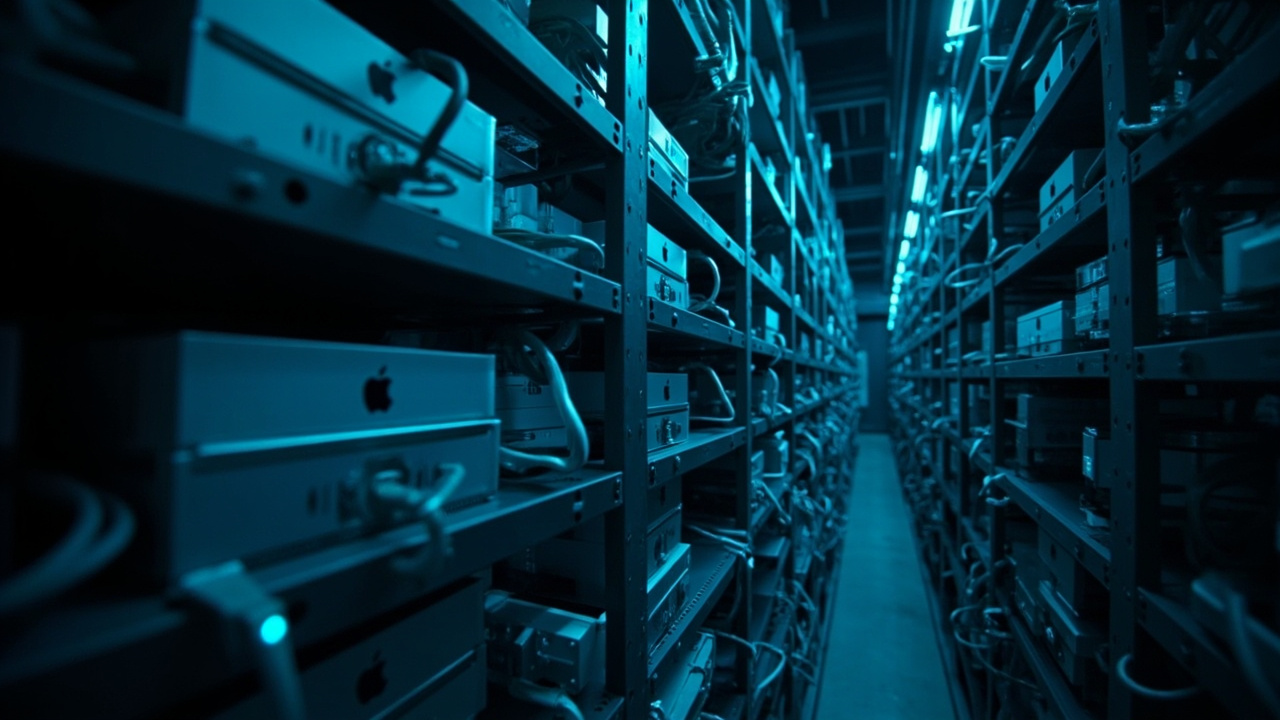
The hottest products at Apple right now are not the iPhone, the iPad, or a buzzy new show on the company’s streaming service. According to a report published Sunday by The Information’s Aaron Tilley, they are two of the lowliest members of Apple’s venerable Mac product line: the boxy Mac mini and the Mac Studio — the headless desktops that ship without monitors, keyboards, or mice. AI labs and neoclouds are buying them by the truckload, and the buyers include the most valuable AI company on earth.
What the report says
The Information reports that OpenAI has purchased tens of thousands of Macs to run reinforcement-learning workloads. Anthropic, meanwhile, rents Mac capacity through Amazon Web Services rather than buying fleets outright — AWS has offered EC2 Mac instances for years, and Anthropic’s rental path suggests the demand signal is broad enough that hyperscalers are now packaging Apple silicon as a metered service. The details are behind The Information’s paywall, but the headline finding is unambiguous: frontier labs are treating Mac hardware as serious AI infrastructure, not as developer conveniences.
The second finding is the more consequential one. Nvidia now views Apple as its principal competitor in local AI processing. That is a startling sentence to write about a company whose AI story has, until recently, been a running punchline — an AI leader that arrived late to large language models, fumbled Siri’s rewrite, and then watched its partnership with OpenAI sour into litigation. Nvidia spent years treating its local-AI competition as AMD or perhaps Intel. Now the rival keeping Jensen Huang up at night is the maker of the MacBook.
Why Macs suddenly work for serious AI
The technical story here is unified memory. Apple’s M-series chips put the CPU and GPU on the same package with a single pool of high-bandwidth RAM — up to 512GB on the new M5 Ultra at 1.2TB per second. An Nvidia H100, by contrast, carries 80GB of high-bandwidth memory; even a GB300 has 288GB. For large-model inference, where the binding constraint is fitting weights and key-value cache into fast memory, a Mac Studio offers more usable capacity per dollar than anything in Nvidia’s catalog — at $5,499 for an M5 Ultra configuration versus six figures for a fully-loaded GPU server.
Reinforcement learning adds a second, subtler advantage. RL workloads generate enormous volumes of rollouts — a policy model produces outputs, a reward model scores them, and the training loop repeats millions of times. Much of that work is inference-shaped rather than training-shaped: fast generation against a frozen model, in parallel, at scale. Labs discovered that fleets of Macs running MLX, Apple’s open-source array framework, handle this pattern at a fraction of the cost of burning scarce top-tier GPUs on rollouts. macOS 26.2 added low-latency Thunderbolt 5 interconnects for distributed MLX inference last December, effectively letting clusters of Mac minis behave like one big memory pool — and hobbyists and labs alike have been daisy-chaining machines ever since.
The numbers were already showing up
The earnings data corroborates the reporting. In its fiscal Q3 2026 results (reported July 30), Apple posted Mac revenue of $10.4 billion, up 29% year over year — the strongest June-quarter result in the Mac’s history — inside a record $109.4 billion total revenue quarter. Tim Cook’s company has simultaneously raised prices on some Mac and iPad models by up to 25%, citing component costs, and warned of supply constraints precisely in the Mac line. Demand-side pressure from AI buyers is one of the few explanations that fits all three facts at once. Analysts noted at the time that the growth was being driven substantially by AI inference and developer use cases; The Information’s reporting now puts specific names on the buyers.
It is worth pausing on the irony. Apple designed the M-series architecture for power-efficient consumer computing. Unified memory existed because an iPhone SoC cannot afford separate VRAM. Nobody at Apple specced a 512GB M5 Ultra in 2019 imagining that OpenAI would buy the resulting machines by the tens of thousands. As The Information’s headline puts it, Apple stumbled into AI hardware success — a rare case of a trillion-dollar company being surprised by its own best product pivot.
What it means for Nvidia
Nvidia’s reaction is the tell. The company has spent 2026 diversifying its own stack in exactly the directions this story threatens: DGX Spark and RTX consumer lines for local AI, Vera CPUs and networking for full-rack systems, and a physical-AI business that now generates roughly $10 billion in annual run-rate revenue. But Nvidia’s local-AI offerings top out far below 512GB of unified memory, and its pricing assumes data-center buyers. If frontier labs — and, more importantly, the thousands of smaller companies running open-weight models like Qwen or DeepSeek locally — can meet inference needs with commodity Macs, the addressable market for Nvidia’s highest-margin data-center GPUs shrinks at the margin.
That is why “Apple as principal local-AI competitor” matters more than it sounds. It reframes the AI hardware race from “who has the fastest training accelerator” to “who owns the substrate where inference actually happens.” On that framing, the installed base of hundreds of millions of Apple-silicon devices — every Mac, iPad, and high-end iPhone shipped since 2020 — becomes latent AI infrastructure that no GPU vendor can match.
The open-weights connection
The final thread tying this together is the open-weight ecosystem. The economics of buying Mac fleets only work if you have models you are allowed to run on your own hardware. Qwen, DeepSeek, Kimi, and the fast-improving open-weight families give every lab and enterprise exactly that. When Anthropic rents Macs on AWS and OpenAI buys them outright, both are implicitly betting that local inference of capable open models is now a first-class workload — and their money is flowing to Apple rather than to GPU neoclouds.
For Apple, this is the AI success story it could not buy: not a frontier model, not a Siri renaissance, but silicon that the world’s AI leaders quietly cannot get enough of. For everyone else building AI infrastructure plans for 2027, the message from this weekend’s reporting is simple — budget for memory-per-dollar first, and check whether the answer is a desktop computer.
Sources
- The Information — How Apple Stumbled Into AI Hardware Success With the Mac
- AI Weekly — AI News Today, August 30
- Ars Technica — With new Mac Studio and Mac mini, Apple leans hard into local AI inference
- TechTimes — Apple Q3 2026 earnings: record revenue, Mac +29%
- Yahoo Finance — Apple Q3 2026 earnings beat estimates
Sources
- [1] https://www.theinformation.com/articles/apple-stumbled-ai-hardware-success-mac
- [2] https://aiweekly.co/ai-news-today
- [3] https://arstechnica.com/apple/2026/08/with-new-mac-studio-and-mac-mini-apple-leans-hard-into-local-ai-inference/
- [4] https://www.techtimes.com/articles/322442/20260731/apple-q3-2026-earnings-record-revenue-worsening-mac-supply-below-consensus-q4-outlook.htm
- [5] https://finance.yahoo.com/markets/stocks/articles/apple-q3-2026-earnings-beat-211056445.html