John Ternus Takes Over as Apple CEO Today: A Hardware Engineer Inherits the AI Era
Tim Cook handed the CEO seat to hardware chief John Ternus on September 1, 2026 — the first Apple leadership transition in 15 years, landing one week before the iPhone 18 and foldable launch.
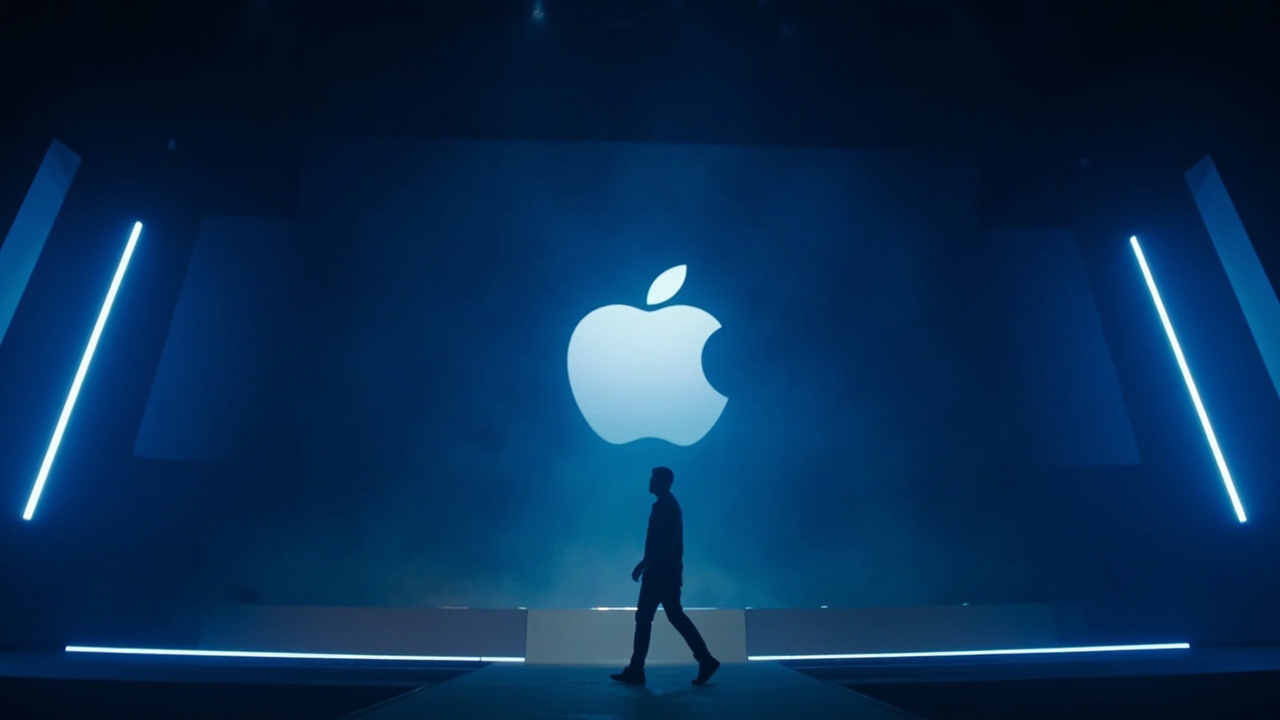
After 15 years at the helm of the world’s most valuable company, Tim Cook handed the CEO reins to John Ternus on Tuesday, September 1, 2026. The transition — first announced by Apple in April — is only the third orderly CEO handoff in Apple’s history, and it lands at a uniquely awkward moment: eight days before the company’s biggest product event in years, in the middle of a global memory-chip shortage, and with Apple widely seen as trailing in the AI race it once promised to lead.
Cook, who took over as CEO two months before Steve Jobs passed away in 2011, moves into the role of executive chairman of Apple’s board. Ternus, until now senior vice president of hardware engineering, becomes the seventh chief executive in Apple’s 50-year history — and the first engineer-products person to hold the job since the founders’ era.
Who is John Ternus?
Ternus joined Apple in 2001 as a member of the product design team, after earning a mechanical engineering degree from the University of Pennsylvania and a stint at Virtual Research Systems. Over 25 years he rose steadily: VP of hardware engineering in 2013, SVP in 2021, and along the way he personally worked on nearly every flagship device Apple shipped — iPad, AirPods, iPhone, Apple Watch, and most recently the MacBook line. Apple credits him with pushing 3D-printed titanium into the Apple Watch Ultra and developing recycled aluminum alloys now used across the Mac lineup.
At 51, he is roughly the same age Cook was when he took over in 2011. When the succession was announced in April, Cook called Ternus someone with “the mind of an engineer, the soul of an innovator and the heart to lead with integrity and with honor.” Ternus, for his part, framed his appointment as continuity: “Having spent almost my entire career at Apple, I have been lucky enough to have worked under Steve Jobs and to have had Tim Cook as my mentor.”
The farewell itself was deliberately low-key. According to The Information, roughly 200 people — mostly Apple employees, plus Cook’s partner and the band OneRepublic — gathered at Apple Park last weekend. Ternus spoke, as did Laurene Powell Jobs, former COO Jeff Williams, and services chief Eddy Cue. Sources described the transition as one of continuity rather than upheaval; most of the executive team stays in place, and Cook remains influential as board chair, particularly with the current US presidential administration, with which he has cultivated a warm working relationship.
What Ternus inherits: a $4 trillion company with three headaches
Under Cook, Apple grew into a $4 trillion giant, shipped every iPhone from 2012’s iPhone 5 onward, launched the Apple Watch, AirPods, Vision Pro and HomePod, and built a services business spanning Apple Music, TV+, and Fitness+. Quarterly results remain spectacular — roughly $109 billion in net sales and nearly $30 billion in net income last quarter. But the incoming CEO faces three problems that his predecessor never had to solve simultaneously.
First, the memory crisis. The global DRAM and NAND shortage — driven overwhelmingly by AI data centers hoovering up supply — has pushed component costs up as much as 300% year over year. IDC now projects smartphone shipments will fall a record 17% this year, with average selling prices up 27.6% and still climbing into 2027. Counterpoint Research expects the iPhone 18 lineup to carry price increases of $200 to $250 per phone, with high-spec models potentially exceeding even that. “The components that make AI possible are the same ones in short supply, and their cost is being passed straight through to the shelf,” IDC’s Francisco Jeronimo wrote in late August. “The era of the cheap smartphone has ended.”
Second, the September 9 event. Ternus’s first week on the job culminates in Apple’s fall launch, expected to bring the iPhone 18 lineup and — at long last — the company’s first foldable iPhone. Apple is eight generations behind Samsung in foldables, but IDC predicts rapid category growth from Apple’s entry alone, forecasting Apple could ship more than 17 million foldable iPhones by next year and capture 40% of the folding-phone market. Counterpoint is more cautious: at an expected $2,200 price point (IDC says $2,550), it sees the foldable as a niche halo product — around 3% of iPhone shipments — aimed at affluent early adopters and Pro Max upgraders. Rumors also point to refreshed AirPods, possibly with AI-powered cameras feeding Visual Intelligence into Siri.
Third, the AI deficit. Apple settled a lawsuit over the lack of AI features in previous iPhones after years of overpromising, and only unveiled the rebuilt Siri AI at WWDC in June 2026 — after striking deals with OpenAI for ChatGPT integration and Google for Gemini-powered Siri expansion. Siri AI has its own app, a fresh design, custom voices, integrated writing tools, and what Apple calls “broad world knowledge,” but it still hasn’t shipped: beta availability is expected later this year, possibly alongside the new iPhones. Whether Apple can genuinely compete with Google and OpenAI on AI remains an open question — one that now belongs to Ternus.
A products guy for the AI era — deliberately
The choice of a hardware engineer as CEO is widely read as a statement: Apple intends to win the AI era through devices, not through a frontier model. IDC’s Nabila Popal calls the pick a return to Apple’s roots — the company’s first two CEOs were also hardware people — and frames the stakes bluntly: “The biggest challenge for Apple as Ternus takes over is how to keep the company relevant in the age of AI. What will be crucial is whether the level of innovation can keep up with consumer expectations as the world shifts into an unknown AI era, where how we interact with our devices is changing — and for the moment it increasingly looks like we are moving towards a more voice-powered interface than touch.”
There are countervailing signals too. CNET’s own survey of more than 2,600 adults found 75% uninterested in a foldable iPhone, with respondents willing to pay only about $781 for one — less than a base iPhone 17. The same survey found AI is not a major motivator for phone upgrades, while consumer concern grows over AI data centers’ water and power use and over the privacy implications of AI embedded in everything, including camera-equipped earbuds.
For a company that just spent a decade under an operations virtuoso, the bet on Ternus is that execution in silicon, hinges, titanium, and industrial design — not model benchmarks — is where Apple’s next decade will be won. “The September launch will be an important first test for John Ternus as CEO,” Counterpoint’s Yang Wang told CNET. “Ternus knows the hardware organization very well, but the challenge will be balancing product ambition with affordability and launch execution.”
Cook closed his farewell note by calling Ternus “brilliant and wonderful and capable,” adding: “Few people understand what it takes to build products that change the world the way John does.” Eight days from now, the world finds out whether that faith is justified — on a stage in Cupertino, under a new CEO, with the most expensive iPhone lineup ever made.
Sources
- [1] https://www.cnet.com/tech/mobile/apple-new-ceo-john-ternus-first-day/
- [2] https://www.apple.com/newsroom/2026/04/tim-cook-to-become-apple-executive-chairman-john-ternus-to-become-apple
- [3] https://www.cnbc.com/2026/08/26/apple-iphone-launch-date-john-ternus.html
- [4] https://www.emsnow.com/apples-tim-cook-hands-ceo-reins-to-hardware-chief-john-ternus/