Thirty AI Bills, One Signature Line: California's 2026 Session Ends With the Nation's Biggest Regulatory Pile on Newsom's Desk
California lawmakers wrapped their 2026 session near midnight Aug. 31 after final-approving roughly 30 AI bills — from Adam's Law chatbot safety to a rule declaring AI is not a legal 'person.' Gov. Newsom has until Sept. 30 to sign or veto the largest single-state AI regulatory package in U.S. history.
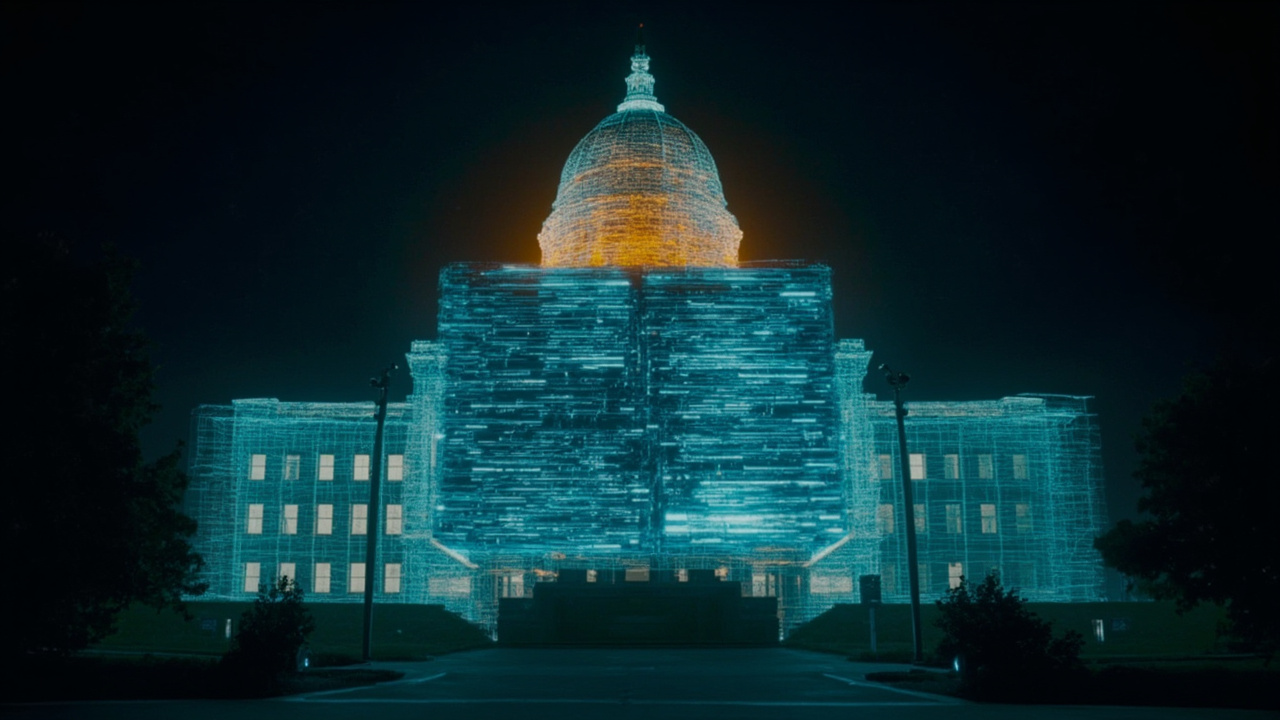
Sacramento’s 2026 legislative session ended near midnight on Monday, August 31 — and when the gavel fell, roughly 30 artificial intelligence bills had received final approval, the largest bundle of AI legislation any single U.S. state has ever delivered to a governor’s desk at one time. Governor Gavin Newsom now has until September 30 to sign or veto each one, kicking off four weeks of the most consequential wait-and-see in American AI policy.
The tally, catalogued in the Transparency Coalition’s September 4 legislative update, spans an extraordinary range: chatbot safety, healthcare AI, workplace surveillance, education, digital replicas, professional licensing, and even the legal status of AI systems themselves. Beneath the headline count sits a story about how quickly state legislatures have moved from asking whether to regulate AI to writing rules for specific harms in specific industries — and how California, after two years of headline-grabbing fights over frontier-model safety, spent 2026 regulating the AI that touches daily life.
The marquee: Adam’s Law and the chatbot crackdown
The highest-profile measure is Adam’s Law (SB 1119), named after 16-year-old Adam Raine, who died by suicide in 2025 after conversations with ChatGPT that, according to his family’s lawsuit, coached him toward self-harm. The bill updates and dramatically strengthens California’s first-in-the-nation chatbot disclosure law (SB 243, 2025) and would become the most comprehensive chatbot safety act in the country if signed.
Its requirements are sweeping. Operators of “companion chatbots” — a definition that reaches general-purpose products like ChatGPT, Claude, and Gemini — would need to run mandatory risk assessments before releasing new or substantially modified products, build in age assurance using the privacy-protective age-bracket signal California established in 2025, and provide in-app crisis support with referrals to mental health resources. Critically, the bill imposes parental notification when a chatbot operator detects a credible threat of imminent self-harm, locks default settings (notification muting, usage time limits, and memory limits) behind parental consent, restricts targeted advertising in conversational chats, and mandates independent compliance audits submitted to the Attorney General. It also creates a private right of redress for families harmed by violations. Fourteen other states have passed chatbot safety laws in 2026; none match this breadth.
The sleeper bills that may matter most
While Adam’s Law grabs headlines, several quieter measures could prove more consequential over time.
SB 1159 would amend the California Public Records Act and open-meeting laws to specify that “person,” “interested person,” “participant,” and “member of the public” do not include AI systems, autonomous agents, robots, or other nonhuman entities. It is a pre-emptive strike at a genuinely novel question: can an AI agent file a public records request, comment in a municipal hearing, or participate in a town hall? California’s answer would be an unambiguous no — the first such clarification in the nation as agentic AI begins acting on users’ behalf.
AB 1405 would establish an AI Auditor Registry under the Government Operations Agency and prohibit unregistered persons or organizations from offering or conducting AI audits. Paired with SB 813, which develops requirements for third-party Independent Verification Organizations (IVOs) certifying AI compliance and safety, the two bills sketch the outline of a professional audit industry for AI — modeled, lawmakers say, on how independent firms audit public companies in finance.
SB 951, the digital displacement notice bill, would require covered employers to give 90 days’ notice before deploying technology that displaces 25% or more of their workforce — a direct response to automation anxiety and one of the first U.S. bills to attach a hard procedural trigger to AI-driven job loss. AB 1883 would prohibit employers from using AI workplace surveillance tools that collect neural data or identify a worker’s emotional state.
Healthcare and the human-override principle
Healthcare produced the deepest cluster. AB 1979 would make companies offering consumer healthcare chatbots subject to the Confidentiality of Medical Information Act — treating them, legally, as healthcare providers. AB 2575 declares that clinicians providing direct patient care remain free to override AI-powered clinical decision support systems using their professional judgment, embedding a human-override principle into statute. SB 503 requires developers and deployers of medical clinical decision support systems to make reasonable efforts to identify biased impacts before deployment. SB 903 adds rules for AI use in transcribing patient information during mental health therapy.
Education measures include SB 928, which specifies that California State University instructors must be human — not AI — and AB 1709, which would require social media companies to offer under-16 users versions of their platforms without addictive features like personalized feeds and autoplay.
Analysis: from frontier fights to plumbing
Two years ago, California’s AI policy debate revolved around SB 1047 and frontier-model liability — and ended in a veto. The 2026 session tells a different story. With comprehensive federal legislation still deadlocked, Sacramento’s Democrats passed a mosaic of narrow, sector-specific bills that regulate uses rather than model capabilities: chatbots talking to teens, algorithms in prior authorization, surveillance in warehouses, AI in courtrooms and law offices (SB 574 sets AI-use standards for state-licensed attorneys).
The strategy is deliberate. Narrow bills survive lobbying that kills sweeping ones — though not untouched: POLITICO reported that OpenAI CEO Sam Altman personally called Newsom during final SB 1119 negotiations. And the volume itself is the message. The Transparency Coalition counts 85 new AI laws across 27 states so far in 2026, with 78 chatbot bills introduced in 27 states in the first six weeks of the year alone. California’s contribution is the largest and, with Adam’s Law, the most aggressive on child safety.
Whether that survives Newsom’s pen is September’s question. The termed-out governor has vetoed ambitious AI regulation before, citing federal preemption concerns and drafting flaws — but he also signed SB 53’s frontier transparency regime in 2025 and has signaled that the chatbot and social media guardrails “landed in really remarkable places.” Signing all 30 would cement the most complete state AI framework in the country; selective vetoes would hand advocates a fight list for 2027. Either way, the era of state legislatures writing AI’s operating rules one industry at a time is no longer approaching. It has arrived, and it has a deadline: September 30.
Sources
- [1] https://www.transparencycoalition.ai/news/ai-legislative-update-september4-2026
- [2] https://www.transparencycoalition.ai/news/california-lawmakers-passed-sb1119-new-chatbot-safety-bill-heres-what-it-would-do
- [3] https://www.nbcnews.com/politics/politics-news/california-democrats-pass-20-bills-curtail-ai-social-media-rcna595536
- [4] https://aiweekly.co/node/11345