No Wheel, No Pedals, No Pass: NHTSA Opens Federal Audit Into Tesla's Cybercab Self-Certification
Hours after the first Cybercabs hit Austin streets, NHTSA opened an audit query covering ~1,000 vehicles into how Tesla self-certified a car with no steering wheel, pedals, or side mirrors — the same process that took Zoox two years to clear.
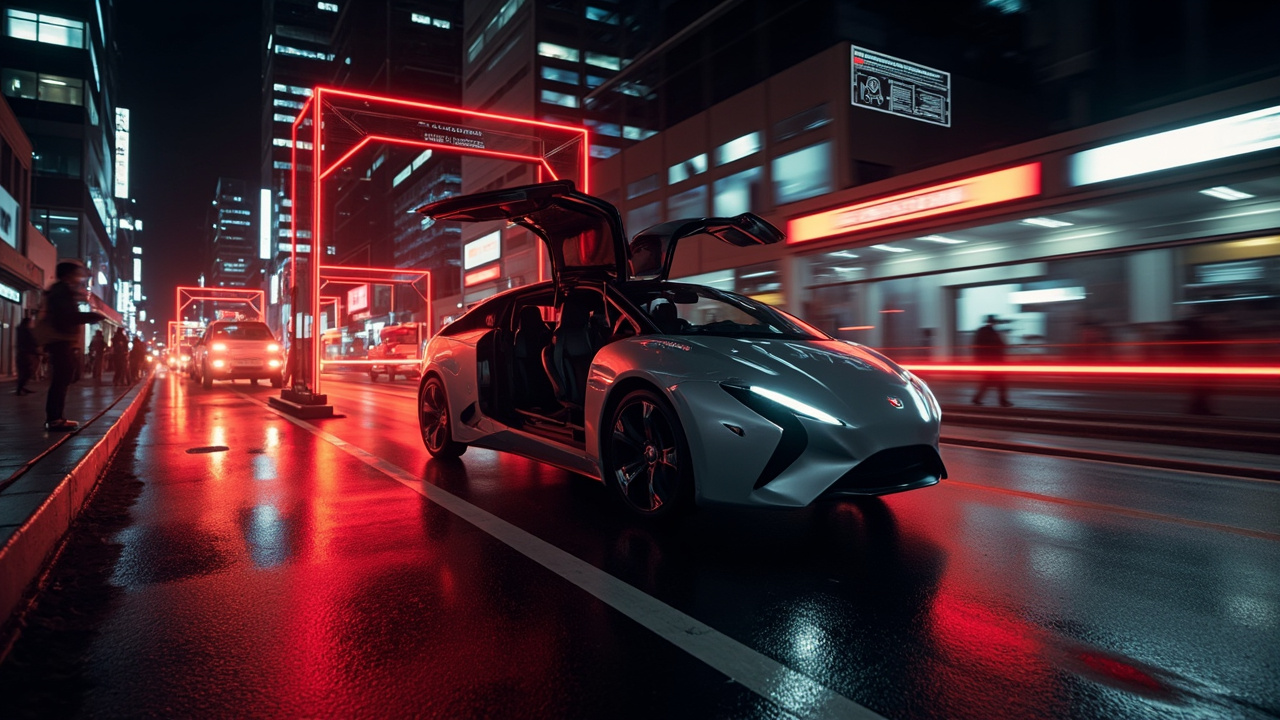
On September 3, 2026, Tesla put the first production Cybercabs on public roads in Austin, Texas — a compact two-seater with no steering wheel, no pedals, no side mirrors, and no version of itself that functions without self-driving software. Roughly 24 hours later, the National Highway Traffic Safety Administration (NHTSA) announced it was opening an investigation into that decision.
The probe, formally an audit query (AQ), was disclosed on the morning of September 4. Its stated purpose: “to examine the process and technical data on which Tesla relied when certifying the Cybercab and related issues.” In plain terms, the federal government wants to know how Tesla concluded that a vehicle lacking hardware the Federal Motor Vehicle Safety Standards (FMVSS) explicitly require — manual brake controls, a steering system, rearview visibility provisions built around mirrors — could legally certify itself as compliant.
What NHTSA is actually asking
In the United States, automakers do not seek pre-approval for vehicle safety. They self-certify that each model meets every applicable FMVSS rule, and NHTSA investigates after the fact when something looks wrong. Tesla, per the agency’s filing, told NHTSA it self-certified the Cybercab as compliant with all applicable standards. The audit query will scrutinize the engineering justifications behind that claim.
“Among other things, NHTSA will consider the extent to which Tesla’s certification depended on determinations that certain FMVSS are inapplicable to the Cybercab,” the agency wrote. That single sentence is the heart of the case. A car without pedals can still be argued to meet some brake-related standards if the regulator accepts that an autonomously driven vehicle has no “driver control” to regulate. But the determination that certain standards simply don’t apply is exactly the kind of legal judgment NHTSA reserves the right to second-guess — and Tesla does not appear to have sought a formal exemption from any of the rules in question.
The investigation’s scope covers an estimated 1,000 Cybercabs — a figure that itself invites scrutiny, since Texas DMV records showed only about 45 Cybercabs registered at launch, alongside Tesla’s larger fleet of roughly 270 autonomous Model Y robotaxis. Whether Giga Texas has actually built a thousand units is one of many facts the audit may surface.
NHTSA Administrator Jonathan Morrison framed the probe as routine rather than hostile: “NHTSA fully supports the safe development and deployment of automated vehicles. But as the federal regulator, we need to ensure that all of our laws are followed. Our approach of balancing innovation with safety oversight will allow the United States to maintain its global leadership in AV innovation.”
The Zoox precedent — and why it matters for Tesla
There is a direct precedent for this exact scenario, and it is the reason Tesla investors should take the timeline seriously. In 2022, Amazon-owned Zoox self-certified its toaster-shaped robotaxi — which also lacks a steering wheel and pedals — as FMVSS-compliant. NHTSA responded with a “special order” demanding information, then formally opened an audit query in 2023: the same process now aimed at Tesla.
The consequences were not immediate, but they were real. While the investigation proceeded, Zoox was limited to demonstration operations and could not charge fares. The company ultimately filed for a temporary Part 555 exemption from eight FMVSS requirements, received a demonstration exemption in 2025, and only won final approval to operate commercially in July 2026 — roughly two years after the process began, and under a cap of 2,500 vehicles per year. Zoox now charges for rides in Las Vegas.
Tesla’s situation differs in one crucial respect: it launched paying-adjacent commercial operations first and is negotiating legality after. Whether Tesla will be permitted to charge for Cybercab rides while the audit query is open is now the multi-billion-dollar question. The Verge’s Andrew Hawkins notes another wrinkle: Musk’s closeness to the Trump administration does not automatically translate to warmth at the Department of Transportation, where the relationship between the CEO and Transportation Secretary Sean Duffy is reportedly poor.
A rule change is coming — just not yet
The irony threading through this story is that NHTSA itself agrees the rules are outdated. The Department of Transportation has proposed removing manual-control requirements for vehicles designed to be autonomously driven, and NHTSA said Friday it is “in the process of changing some parts of the FMVSS that relate to manual controls in order to unleash American innovation and enhance safety on our roads.”
But the agency attached a pointed caveat: “Until that work is completed, however, existing standards remain in force.”
That sentence is the regulatory equivalent of a yellow card. Tesla’s April decision — confirmed by VP Lars Moravy — to bypass NHTSA’s 2,500-vehicle exemption cap through self-certification was always a bet that the rule change would land before enforcement did. The audit query tests whether that bet pays off or becomes the constraint that caps the “storm of Cybercabs” Musk promised at 4:12 AM on launch day.
The bigger picture
This is not NHTSA’s only active Tesla investigation. The agency is separately probing 3.2 million Tesla vehicles running Full Self-Driving over crash reporting and traffic-safety concerns — a probe that could end in a recall. The Cybercab audit adds a second, more existential front: it doesn’t ask whether the software works, but whether the car itself was legal to sell.
For the broader AV industry, the stakes are symmetrical. If NHTSA’s audit query concludes quickly and gently — with the pending FMVSS modernization as the off-ramp — Tesla’s launch-first strategy becomes the template, and Zoox’s two-year slog looks like over-caution. If the agency instead forces Tesla into the Part 555 exemption queue, the effective ceiling on Cybercab deployment snaps back to 2,500 units per year, and the economics of Musk’s sub-$30,000, 2-million-vehicles-per-year production vision collapse accordingly.
Either way, the era of asking forgiveness rather than permission has officially collided with the federal register. The Cybercab was mass-produced on an automotive line, registered with the state, and hailed through an app — and one day later, the regulator that governs whether it can exist at all has opened its file.
What to watch
- The audit’s timeline — Zoox’s equivalent process took years; NHTSA’s posture under the pending FMVSS rewrite could compress it to months.
- Fare collection — whether Tesla attempts to charge for Cybercab rides in Austin while the query is open, and whether NHTSA moves to stop it.
- The FMVSS modernization docket — the proposed removal of manual-control requirements is the rule that would retroactively legitimize the Cybercab’s form factor.
- Actual fleet size — reconciling the ~1,000-vehicle scope with the ~45 units registered in Texas will indicate real production volume.