The $265M Counterattack: AI's Money Machine Meets the Data Center Backlash
AI companies have pledged a record $265 million to super PACs for the 2026 midterms — the industry's answer to a voter revolt that has already blocked $130B in data center projects.
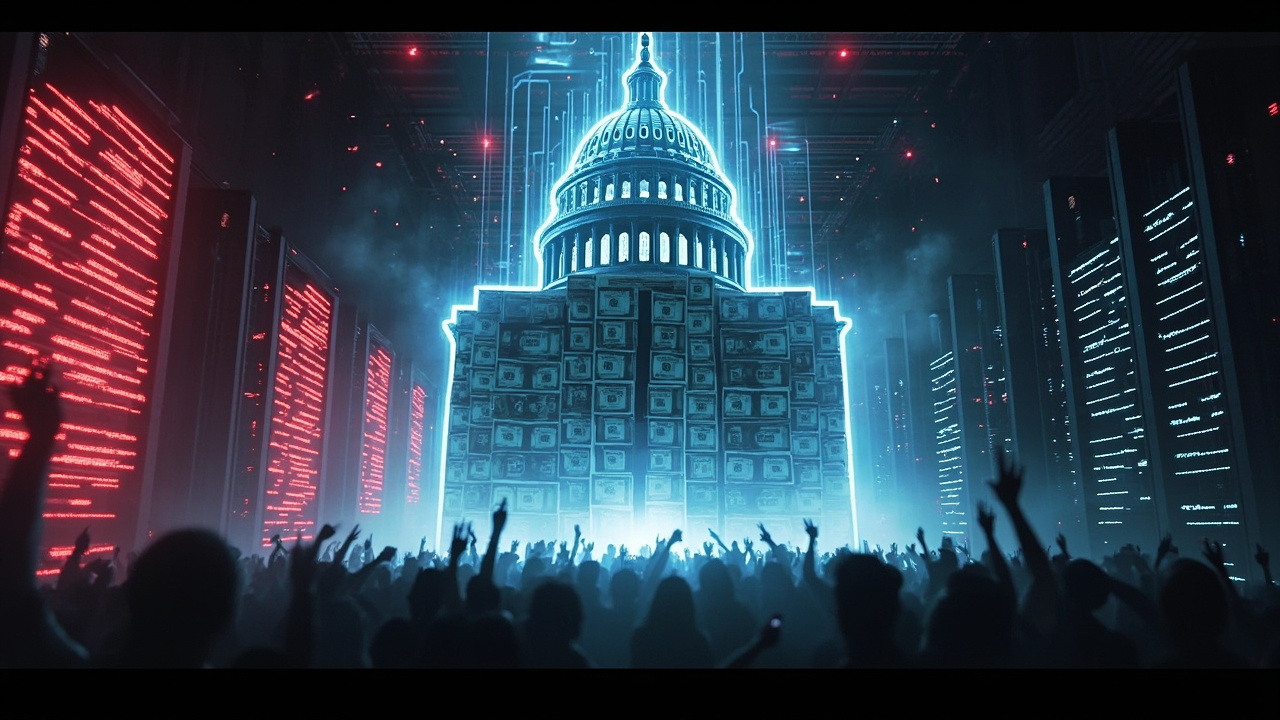
The artificial intelligence industry has spent four years behaving as though compute, talent, and capital were the only currencies that mattered. With two months to go before the November midterms, it is learning about a fourth: political money. According to a Wall Street Journal analysis, AI companies have now pledged roughly $265 million to super PACs and political groups for the 2026 election cycle — making AI, alongside cryptocurrency and betting firms, the single biggest industry spender of this cycle, in what is already a record-breaking year for corporate political spending in the United States.
The flood of cash is not a sign of confidence. It is a counterattack. Public opinion has turned sharply against the physical footprint of the AI boom, and the industry is trying to buy back the political ground it has lost.
What the money buys
The centerpiece is Leading the Future, a super PAC that has raised $140 million for the midterms with plans to support pro-AI candidates in both parties. Its donor list reads like a who’s-who of the AI establishment: $50 million from venture giant Andreessen Horowitz, and a combined $25 million from Greg Brockman — president of OpenAI, maker of ChatGPT — and his wife Anna, according to Federal Election Commission filings.
Anthropic, the company behind Claude, has taken a different route: at least $40 million routed through a dark-money nonprofit called Public First Action, which boasts a $100 million war chest. Elon Musk’s super PAC holds a similar pile, and Meta is linked to a web of PACs holding tens of millions more.
The sums are unprecedented for companies this young. “These newer companies like Anthropic and OpenAI are so new that this is the first time that they’ve really made a substantial jump in,” Brendan Glavin, director of insights at the transparency group OpenSecrets, told The Independent. His characterization of the strategy is blunt: “Crypto did this in 2024. It was seen as successful. Now you’re seeing it repeated and AI has taken on the same playbook.”
Indeed, the crypto industry’s 2024 campaign — which helped elect dozens of friendly lawmakers and sink the re-election of an SEC-chairman-turned-critic — has become the template. Like crypto, AI money often avoids mentioning AI at all: the groups run generic attack and support ads, backing or opposing candidates based on their perceived friendliness, rather than litigating data center policy on air.
NY-12: the $27 million dress rehearsal
Nowhere was the playbook clearer than this year’s Democratic primary in New York’s 12th congressional district. The target was Alex Bores, a state assemblyman and former Palantir employee who had authored a state AI safety law signed last year. A PAC tied to Public First — the Anthropic-linked group — spent more than $13 million supporting him, while a super PAC tied to Leading the Future spent more than $8 million opposing him. With roughly $27 million in AI-linked money dumped into a single House primary, Bores was narrowly defeated by fellow assemblyman Micah Lasher.
The irony is thick: Lasher was a co-sponsor of Bores’ own AI safety bill and supports a temporary national moratorium on data center construction. In his victory speech, he said he would not be “taking my cues” from the companies that had intervened. The industry’s money didn’t just fail to elect a friendly candidate — it possibly helped elect a more adversarial one, while simultaneously demonstrating to every voter watching that the AI industry is now a political actor willing to spend eight figures on a primary.
The revolt they’re fighting
What makes the spending remarkable is what it is up against. Just 20 percent of Americans think new data center construction is good for the country, according to a recent Economist/YouGov poll — and the skepticism is strikingly bipartisan, with only 14 percent of Democrats and 31 percent of Republicans in support. More than $31 million has been spent on data-center-related political ads this year, virtually all of them negative, per a CNN analysis of AdImpact data. In 2024, there wasn’t a single broadcast TV ad on the subject.
The physical numbers driving the politics keep escalating. The five hyperscale tech companies — Amazon, Microsoft, Google, Meta, and Oracle — are projected to spend more than $560 billion on AI infrastructure this year. Census Bureau data shows data center construction in July running about 60 percent higher year-over-year. US data center power demand is expected to double by 2027, and an estimated two-thirds of data centers built since 2022 sit in areas of high water stress, many in the western US.
President Trump has made the politics harder, not easier, for pro-build Republicans. “The only reason that communities throughout the U.S.A. should not want Data Centers is if they want to end up being backwards and poor,” he wrote on Truth Social, urging communities to “let Data Reign” — reportedly against his own pollsters’ advice. Commerce Secretary Howard Lutnick, meanwhile, recently claimed data centers “don’t use water,” contradicting both the evidence and his own remarks from a year earlier.
Republicans and Democrats, racing to the exits
The result is a scramble that defies the usual partisan script. In Texas, Governor Greg Abbott — who celebrated his state becoming the “epicenter of AI development” after a $40 billion Google investment — has ordered an audit of data center projects seeking grid connection, and wants to repeal tax incentives. His Democratic challenger Gina Hinojosa goes further, demanding a moratorium and calling data centers “the physical manifestation in Texas of government that is working for the moneyed interests instead of the people.”
In Pennsylvania, Governor Josh Shapiro has pivoted from “all in on AI” to restricting new data center development, attacking his opponent as “Pennsylvania’s #1 fan of data centers” — while his rival Stacy Garrity accuses him of “gaslighting” and wants a construction pause with community oversight. In Ohio’s Senate race, Democrat Sherrod Brown brands Republican Jon Husted “the face of data centers”; Husted counters with a Ratepayer Protection Act to shield utility bills. New York has gone furthest of all, imposing the country’s first statewide moratorium on large data center construction in July.
The open question
OpenAI, for its part, maintains that the company itself has “not donated to any candidates or campaigns and has not founded or funded any PACs,” noting that the Brockmans’ support for Leading the Future was “in a personal capacity.” Anthropic did not respond to requests for comment on the Public First Action donations.
Whether $265 million can move a public this sour is the defining question of the cycle. “The moral of the story is, trying to bypass communities in developing these data centers is not working, and they’re going to take it to the polls,” one expert told The Independent. Crypto’s 2024 experiment worked because voters were largely indifferent to the industry. AI does not have that luxury: it is loud, thirsty, visibly reshaping electricity markets, and now politically radioactive enough that both parties are competing to attack it. The industry’s bet is that money can substitute for consent. Two months from now, we find out if that’s true.
Sources
- [1] https://www.the-independent.com/news/world/americas/us-politics/midterms-data-center-ai-backlash-trump-b3043739.html
- [2] https://www.reuters.com/legal/legalindustry/new-kingmakers-crypto-ai-betting-firms-fuel-record-spending-2026-midterms-2026-08-20/
- [3] https://www.cnn.com/2026/08/31/politics/data-centers-backlash-midterms-invs-vis
- [4] https://www.wsj.com/articles/ai-companies-political-spending-2026-midterms