The CT Scan You Already Had: COCA Finds Colorectal Cancer Hiding in 27,000 Routine Scans
A deep learning model from Alibaba's DAMO Academy detects colorectal cancer on routine noncontrast CT with 86.6-88.2% real-world sensitivity and 99.5% specificity — and it caught 5 cancers clinicians missed.
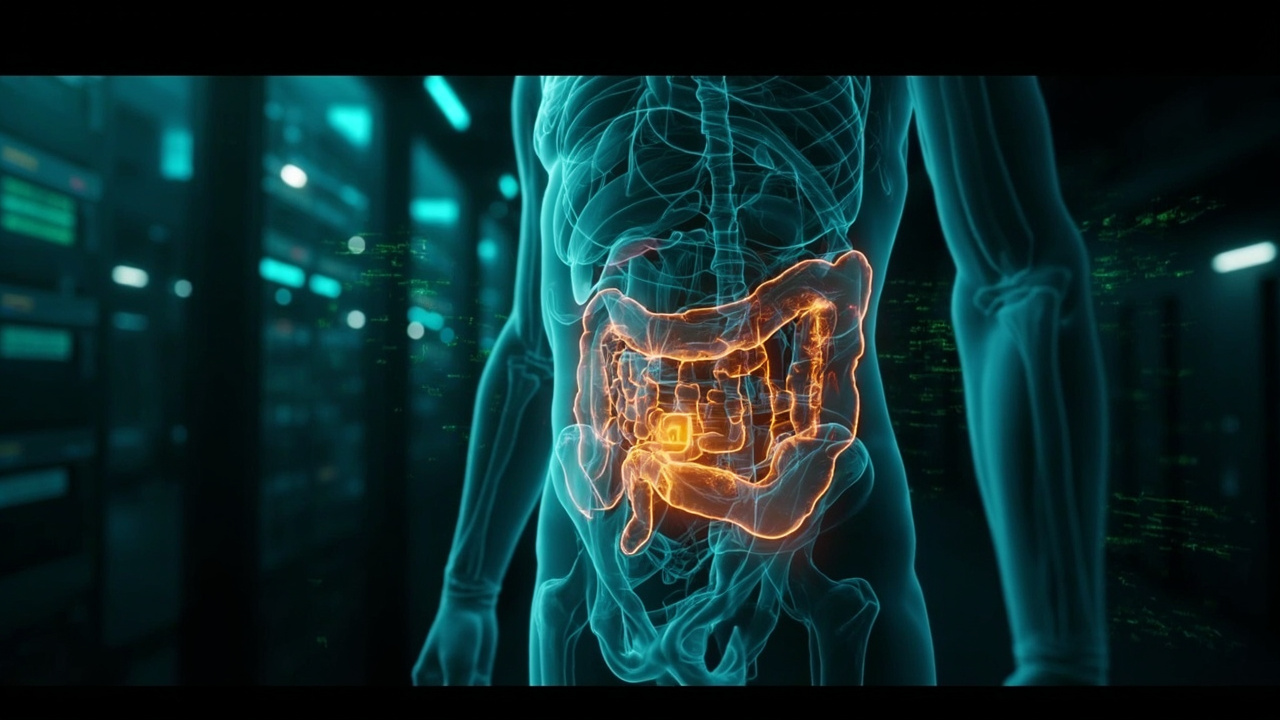
Tens of millions of abdominal and pelvic CT scans are performed every year for trauma, vague abdominal pain, or cancer staging — and almost none of them are read with the colon in mind. A deep learning model called COCA (COlorectal Cancer detection with AI), developed by researchers including a team from Alibaba’s DAMO Academy, was built to change exactly that. Published as a multicenter international cohort study in the Annals of Oncology and newly surfaced in clinical coverage this week, the results make a surprisingly strong case for “opportunistic screening”: mining scans that were ordered for something else entirely.
What COCA Does
COCA takes a routine, noncontrast CT volume — the kind already sitting in hospital archives by the millions — and produces a colorectal cancer assessment in roughly 30 seconds. Architecture-wise, it is a joint lesion segmentation and classification model trained with mixed-supervised learning, forced to both localize suspicious regions and classify them, rather than just slapping a score on the whole scan.
That framing matters. Noncontrast CT has traditionally been written off for colorectal tumors: soft tissue contrast is low, luminal distension is inadequate, and imaging features are nonspecific. Prior studies pegged unaided noncontrast CT sensitivity for colorectal cancer at typically under 60%. The colon simply was not what these scans were for.
The Numbers
The study is big where it counts. COCA was developed on 1,321 colorectal cancer patients and 1,357 controls from two centers. Validation then scaled in three tiers:
- Multicenter international validation: 2,053 patients across 6 centers, with an area under the curve (AUC) of 0.967 to 0.996. Compared with 10 radiologists of varying experience in a reader study, COCA improved detection sensitivity by 20.4 percentage points and specificity by 5.4 points.
- First real-world cohort: 9,014 consecutive patients presenting through physical examinations, emergency departments, outpatient clinics, and inpatient services. Sensitivity 88.2%, specificity 99.5%.
- Second external real-world cohort: 18,419 consecutive patients. Sensitivity 86.6%, specificity 99.8%, and a positive predictive value of 63.4%.
Across those real-world cohorts, COCA flagged 5 colorectal cancers that clinicians had actually missed in emergency, inpatient, and outpatient settings — the exact failure mode opportunistic screening exists to catch. Notably, the model’s gains are concentrated in the sigmoid colon and rectum, regions that together account for roughly 40% of cases and are among the hardest for radiologists to assess on noncontrast images.
Why It Matters
The clinical context is a screening system that leaks. The US Preventive Services Task Force recommends colorectal cancer screening for all adults aged 45 to 75, yet adherence remains below 60% against an 80% target, and 76% of colorectal cancer deaths occur in people who were not screened in time. Every existing option carries a barrier: colonoscopy is invasive, CT colonography needs bowel insufflation, capsule colonoscopy demands rigorous prep, stool DNA tests run into collection reluctance, and the newer cell-free DNA blood tests still have suboptimal sensitivity.
COCA sidesteps all of those barriers in a different way: it does not ask anyone to do anything new. The scan already happened. The patient already lay on the table. If the model works prospectively the way it worked retrospectively, a large slice of the unscreened population gets a colorectal cancer check as a side effect of imaging they were already having — no prep, no extra appointment, no new procedure.
At 99.5% specificity, the false-positive math is also manageable: roughly 50 false positives per 10,000 people screened, with the authors proposing expert review of flagged cases before any patient recall.
The Caveats — and They Are Real
The authors are candid that this is not a screening product yet. The single principal limitation: COCA detects colorectal cancer only. It does not assess non-cancer pathology — and in practice, many of its false positives turned out to be clinically relevant findings anyway: ulcerative colitis, Crohn’s disease, diverticulitis, appendicitis. Those warrant follow-up on their own terms, but the model cannot distinguish malignancy from other abnormalities it flags, which complicates the recall pathway.
Beyond that: regulatory clearance, patient consent frameworks for incidental findings, and secure integration into hospital picture archiving and communication systems (PACS) all remain prerequisites. The comparisons with stool DNA and blood-based tests were nonrandomized and drawn from distinct populations, so cross-modality claims deserve caution. Two prospective studies are planned, including a population-based screening program targeting asymptomatic adults aged 45 to 75 — that is the trial that would actually validate opportunistic CT screening as policy.
The Bigger Picture
COCA fits into a broader shift in medical AI: from “new scan for new purpose” to “new eyes on old data.” Alibaba’s DAMO Academy has been building a portfolio of these opportunistic screening models — its platform lists colorectal, pancreatic, cardiovascular, and fatty liver screening tools — and the WHO-partnered AI-for-health push has emphasized exactly this pattern for regions where dedicated screening programs never reached scale. Meanwhile, other groups have shown AI flagging pancreatic cancer on routine CT more than a year before conventional diagnosis.
The economics are the quiet story here. A model that runs in 30 seconds on existing scans, with ~87-88% sensitivity and 99.5%+ specificity, converts sunk imaging costs into a screening asset. If the prospective trials hold up, the debate shifts from “can AI read scans” to “which archives do we retroactively mine — and who consents to having their old trauma scan re-read for cancer?”
For now, COCA is a rigorously validated research result: better than 10 radiologists at a task they were not doing, on scans nobody ordered for cancer, across 27,433 consecutive real-world patients. That is a strong start.
Sources
- [1] https://www.ajmc.com/view/ai-model-flags-colorectal-cancer-on-routine-noncontrast-ct-scans
- [2] https://www.annalsofoncology.org/article/S0923-7534(26)00150-X/fulltext
- [3] https://pubmed.ncbi.nlm.nih.gov/42025761/
- [4] https://radiologybusiness.com/topics/artificial-intelligence/opportunistic-ai-detects-colorectal-cancer-using-routine-noncontrast-ct
- [5] https://www.scmp.com/tech/tech-trends/article/3351719/alibaba-doubles-down-healthcare-ai-new-tool-early-colorectal-cancer-detection