A Chatshow Built for Chatbots: Inside John Lewis's Play to Own AI Search
John Lewis built a YouTube studio and a celebrity vodcast because 2.5% of its customers now search via ChatGPT and Gemini — up from 0.3% a year ago. The move marks retail's biggest bet yet on generative engine optimization.
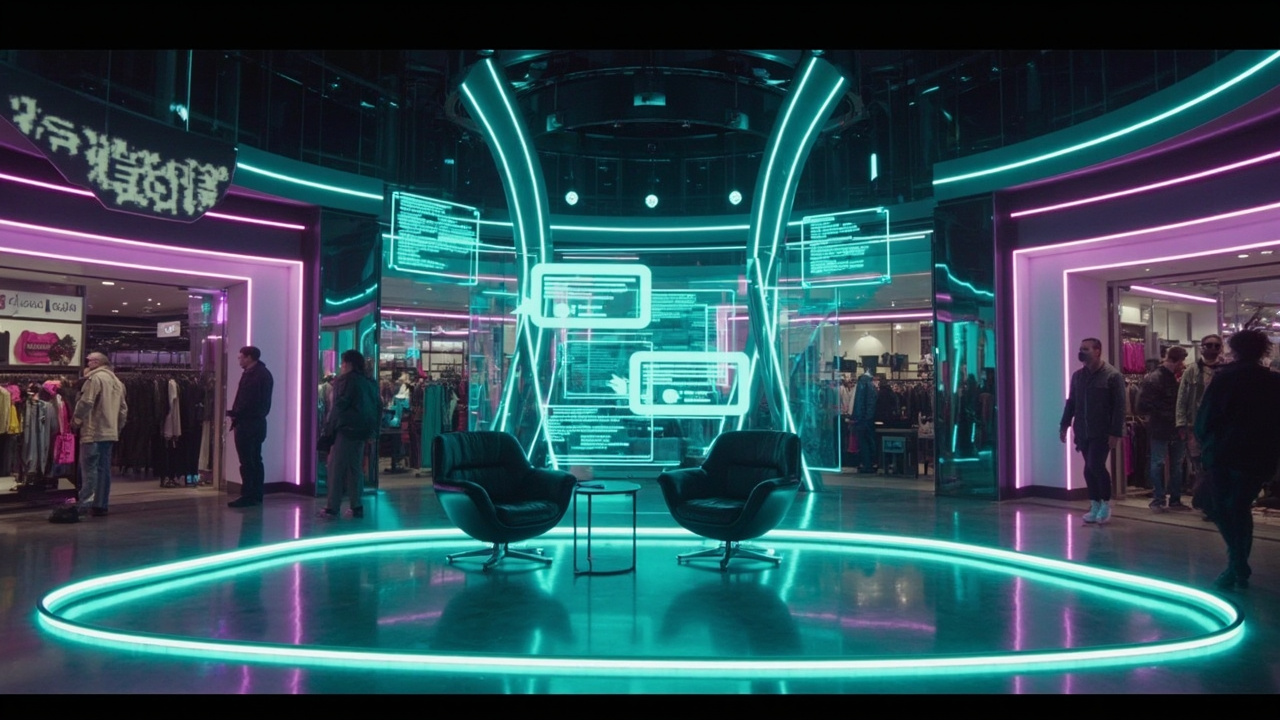
One of Britain’s best-known department stores has concluded that the next fight for shelf space won’t happen on the high street — it will happen inside the answers of chatbots. John Lewis is launching Gift List, a six-episode YouTube “vodcast” hosted by TV presenter Angela Scanlon, along with a permanent social-media production studio at its Oxford Street flagship, in a deliberate push to make the brand and its products more visible to AI search systems such as ChatGPT and Gemini.
The first episode features broadcaster Louis Theroux discussing the most memorable gifts he has ever given and received. New episodes follow roughly every three weeks through Christmas, with clips cut down for Instagram, TikTok, and other social channels. On paper it is a celebrity interview show. In practice, it is infrastructure for a new kind of search engine — one that recommends products conversationally and cites third-party, live content far more readily than any retailer’s own product pages.
The number that forced the move
The catalyst is a statistic from Peter Ruis, John Lewis’s outgoing managing director, who departs this weekend after almost three years in charge. A year ago, he told The Guardian, just 0.3% of John Lewis customers were searching for products using AI large language models. That figure has already climbed to 2.5% — an eightfold rise in twelve months — and Ruis says usage is growing exponentially, with all age groups joining in.
That is still a small minority of shoppers. But the trajectory is what matters to retailers. If AI-mediated product discovery compounds the way mobile search did in the early 2010s, brands that wait until it hits 20% will find the visibility landscape already locked up by competitors that spent 2025 and 2026 building content that language models like to cite.
Why a chatshow, and not more product pages?
The counterintuitive part of the strategy is the format. John Lewis already has one of the most complete e-commerce operations in the UK. Why fund a celebrity chatshow to sell earbuds and cashmere?
The answer lies in how large language models assemble answers. When a shopper asks ChatGPT or Gemini for gift ideas, the models tend to prioritize third-party advice and live, recent content — reviews, podcasts, news coverage, social video — over first-party retail listings. A brand describing its own product is treated as an ad; a comedian describing a gift on a popular podcast is treated as evidence. The Guardian notes that this bias is “forcing retailers to change their marketing plans” across the board.
Gift List is designed to be exactly the kind of material these systems surface: long-form video with transcripts, well-known names, topical hooks, and a steady release cadence that keeps fresh signals flowing into training and retrieval pipelines. The studio behind it — The Box Studio, inside the Oxford Street store — will go beyond the vodcast to produce product reviews, trend reactions, seasonal content, and creator takeovers, making the podcast just one output of a permanent content operation.
The Waitrose playbook
The move follows a proven in-house template. Waitrose, John Lewis’s sister chain under the John Lewis Partnership, launched the Dish podcast with celebrity guests discussing food — and it quietly became the most successful branded podcast in the world, surpassing one billion combined downloads, views, and listens as of June 2026, with more than 10 million views and listens per week across audio and video formats.
Dish demonstrated that a retailer could build genuinely popular entertainment that also happens to keep the brand embedded in the cultural conversation. Gift List transposes that playbook from food to gifting, and adds an explicitly AI-search rationale on top: the content is not just for humans to watch, but for models to read, quote, and recommend.
Trend-jacking at machine speed
Ruis outlined a second dimension of the strategy: rapid-reaction content. When the British Museum opens its Bayeux Tapestry exhibition and interest in cross stitching surges, or when the Harry Potter TV series launches before Christmas, John Lewis wants influencer and expert clips live within days — a cadence it now treats as being as important as its famous festive TV ad or its “never knowingly undersold” price pledge.
Speed matters because AI search rewards recency. A product page is static; a reaction clip published the week a trend breaks is fresh signal that retrieval-augmented systems are likely to pick up when shoppers ask what to buy for the occasion driving the trend.
The honest limitation
To its credit, John Lewis has not claimed guaranteed results, and the coverage has been careful on this point. This is a visibility strategy, not a ranking guarantee. Creating more citable material increases the probability that a chatbot mentions the brand, but no retailer can control which sources ChatGPT or Gemini choose to cite, and no launch data yet shows a measurable lift in AI recommendations for John Lewis specifically. More episodes beyond the initial six depend on how the series performs.
There is also an uncomfortable irony worth noting: brands are now producing entertainment whose ideal consumer may not be a human at all. The ROI loop runs through a model’s citation behavior, which no retailer can audit directly — they can only watch their share of AI-referred traffic, which for John Lewis is currently that fast-growing 2.5%.
Why this matters beyond one retailer
John Lewis is early among mainstream, non-tech retailers in saying the quiet part out loud: generative engine optimization (GEO) is now a line item. The SEO industry spent two decades optimizing for page rank; the emerging GEO discipline optimizes for being the answer a model gives. Signals that matter include original content, expert voices, reviews, and third-party mentions — precisely what The Box Studio is engineered to produce at volume.
For other retailers, the message is that the content arms race is changing shape. The unit of competition is no longer the keyword-optimized landing page but the citable cultural artifact — a podcast episode, a reaction video, an expert interview. Brands that own those artifacts own the answers. The 148-year-old department store on Oxford Street has decided it would rather be the interview than the ad.
Sources
- [1] https://www.theguardian.com/business/2026/sep/03/john-lewis-youtube-chat-show-angela-scanlon
- [2] https://superpowerdaily.com/posts/john-lewis-launches-gift-list-to-reach-shoppers-using-ai-search
- [3] https://searchenginewatch.com/famous-uk-retailer-builds-entire-youtube-production-studio-to-get-ai-to-recommend-its-products/
- [4] https://www.johnlewispartnership.co.uk/media-centre/latest-news/2026/23902