70% More Worried Than Excited: The Poll That Shows America Going Cold on AI
A new NBC News Decision Desk Poll finds worries about AI cut across age, race, education and partisanship — 70% of adults are more worried than excited, and 69% oppose local AI data centers.
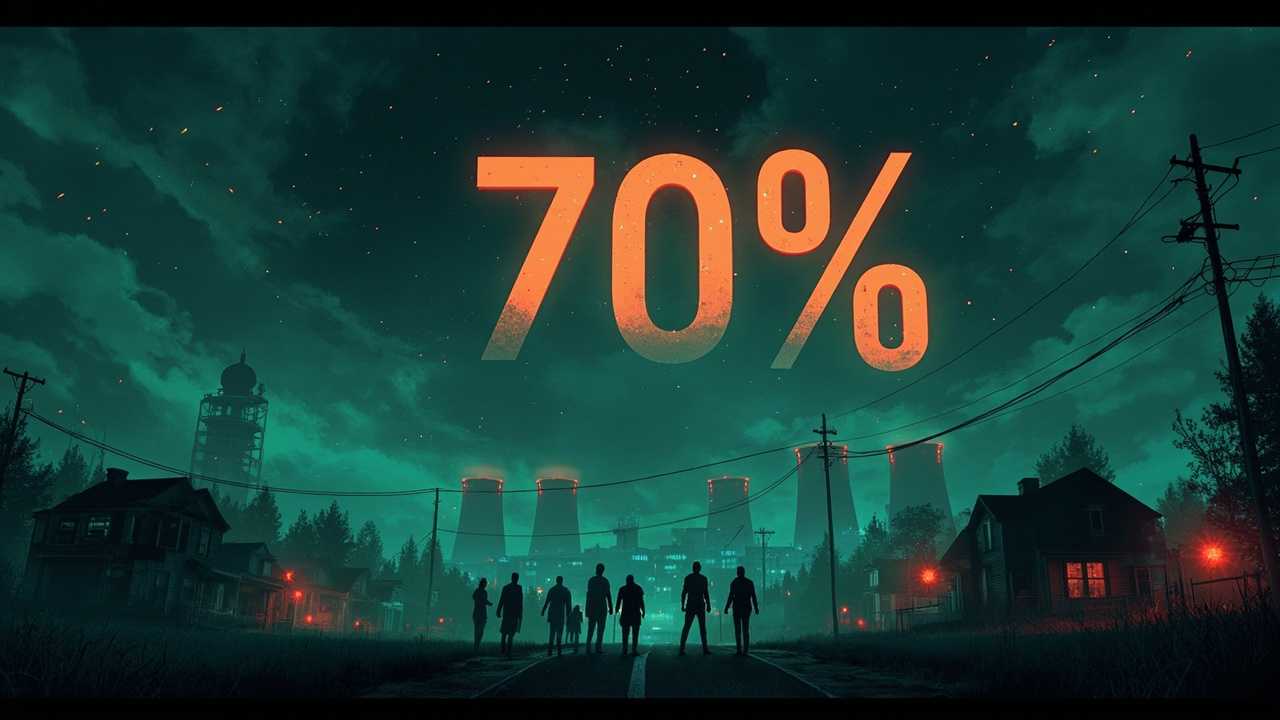
The single most striking thing about artificial intelligence in 2026 is not a model, a chip, or a funding round. It is a number: 70% of American adults say they are more worried about AI than excited about it, according to a new NBC News Decision Desk Poll powered by SurveyMonkey, published September 6, 2026. And unlike almost every other issue in American public life, that anxiety does not split along the usual fault lines.
The poll’s subtitle is its thesis: worries about AI “transcend age, race, education, partisanship and other typical dividing lines.” In a country where people cannot agree on newspapers, vaccines, or the weather, Americans of every stripe have quietly converged on the same conclusion about AI — they use it, and they do not like where it is heading. As the article’s lede puts it bluntly: “More Americans are using artificial intelligence, but they aren’t happy about it.”
What the poll actually found
The NBC News Decision Desk Poll, conducted by Ben Kamisar and Bridget Bowman, lands on a landscape already saturated with warning signs from other major pollsters this year:
- 70% of adults are more worried than excited about AI — the headline finding, with worry outrunning excitement across demographic groups.
- About two-thirds of Americans say AI carries high risks for society, per the same poll.
- 69% oppose the construction of an AI data center in their local area, a figure NBC has spotlighted separately.
- The concerns “transcend age, race, education, partisanship” — making AI one of the very few genuinely cross-partisan issues in American politics.
These are not outliers. They are the latest, cleanest data points in a year-long trendline:
| Poll | Date | Finding |
|---|---|---|
| NBC News Decision Desk | Sept 2026 | 70% more worried than excited; ~2/3 see high societal risk |
| Gallup | May 2026 | 7 in 10 oppose a local AI data center; 48% strongly opposed |
| Reuters/Ipsos | June 2026 | 57% would oppose a data center in their community |
| Annenberg | Aug 2026 | Local data center opposition up 12 points in four months to 61% |
| YouGov/Economist | Aug 2026 | 51% say new data centers are bad for the country; only 20% good |
| Fox News | Aug 2026 | 70% oppose a nearby data center; 78% support slowing construction |
Six different pollsters, six different methodologies, one direction. When Gallup’s “strongly opposed” number alone (48%) approaches the total opposition figure of most surveys, the intensity of feeling is hard to dismiss.
Adoption is up, enthusiasm is down
The most strategically important detail is the disconnect between usage and sentiment. Americans are not rejecting AI because they cannot access it — ChatGPT-class tools are woven into search engines, office software, phones, and customer service. Usage has climbed all year. Sentiment has fallen all year.
That combination — high adoption plus rising dread — is historically unusual. It resembles the arc of social media, which went from novelty to near-universal use to broad regret, but compressed into a fraction of the timeline. The difference is that social media never required a 100-megawatt building next to your house. AI does, and that is where public patience is breaking first.
Why data centers became the flashpoint
The data center has become the physical proxy for every abstract anxiety about AI. A conversation about “model capabilities” is hypothetical; a conversation about water, grid strain, and construction traffic is not. The NBC number (69% local opposition) sits at the top of a crowded field, and it confirms what state and local politics have been showing all summer: the backlash is no longer hypothetical, it is electoral. CNBC reported in August that data center anger is “showing up everywhere from ads to elections,” and that Pennsylvania’s boom had put incumbent Republicans at risk. A Fox News poll found 78% of voters support slowing data center construction — not stopping it, merely slowing it.
Notably, this is one of the few areas where MAGA Republicans diverge from the broader public: YouGov found MAGA-identifying Republicans more likely to call data centers good for the country (45%) than bad (29%). The pro-build consensus among elites of both parties is increasingly out of step with the people who live next to the substations.
The political economy of a 70% number
For the AI industry, a 70% worry figure is an existential political fact. Roughly $500 billion in annual AI infrastructure investment is now flowing into a country where seven in ten adults view the product’s premise with more dread than hope. Regulators read polls too. So do plaintiffs’ lawyers, insurers, and zoning boards. The Stop Rogue AI Act currently drafted in Congress, the 50-plus ChatGPT-harm lawsuits, the Geneva consensus text on AI and international law — each is partly downstream of public sentiment like this.
For policymakers, the poll describes a rare opportunity: an issue where the public is ahead of Washington, already united, and waiting for someone to represent them. The Annenberg survey in May found a bipartisan belief that government has done “too little” to regulate AI. When 70% of Americans agree on anything, the usual playbook — polarization as a shield against action — stops working.
For the labs themselves, the message is harsher. Every “model fatigue” story about buyers struggling to track four frontier releases in a week now has a mirror image on the demand side of public opinion: ordinary people are drowning in AI faster than they are learning to love it. Trust, once spent at this scale, is expensive to rebuild.
The caveat worth keeping
Polls measure sentiment, not policy preferences, and “worried more than excited” is not the same as “ban it.” Americans still use AI daily, and majorities in other surveys still want the benefits — better medicine, faster science — even as they fear the costs. The most defensible reading is not that America has turned against AI, but that America has lost patience with an AI industry that ships first and asks questions later.
Either way, the political climate that the industry enjoyed in 2023 — curiosity, goodwill, benefit-of-the-doubt — is gone, replaced by something colder and more demanding. The 2026 midterms are nine weeks away. The data center is on the ballot, whether anyone planned it that way or not.
Numbers cited from the NBC News Decision Desk Poll powered by SurveyMonkey, published Sept. 6, 2026; corroborating data from Gallup, Reuters/Ipsos, Annenberg, YouGov/Economist, and Fox News polls as linked in the sources.
Sources
- [1] https://www.nbcnews.com/politics/politics-news/poll-polarized-america-unites-deep-concerns-ai-rcna595525
- [2] https://news.gallup.com/poll/709772/americans-oppose-data-centers-area.aspx
- [3] https://www.reuters.com/world/us/americans-wary-ai-driven-data-center-boom-reutersipsos-poll-shows-2026-06-11/
- [4] https://yougov.com/en-us/articles/55479-nearly-two-thirds-americans-oppose-data-center-construction-in-their-community-august-28-31-2026-economist-yougov-poll
- [5] https://www.annenbergpublicpolicycenter.org/opposition-to-local-data-centers-rises-sharply-annenberg-survey-finds/