The Founder Returns: Zhang Yiming Personally Leads ByteDance's Real-Time World Model Bid
Bloomberg reports ByteDance is building a real-time spatial-video world model on Seedance, targeting ~20 fps at ~50ms latency for cloud-rendered Pico worlds, with a launch possible as soon as next month.
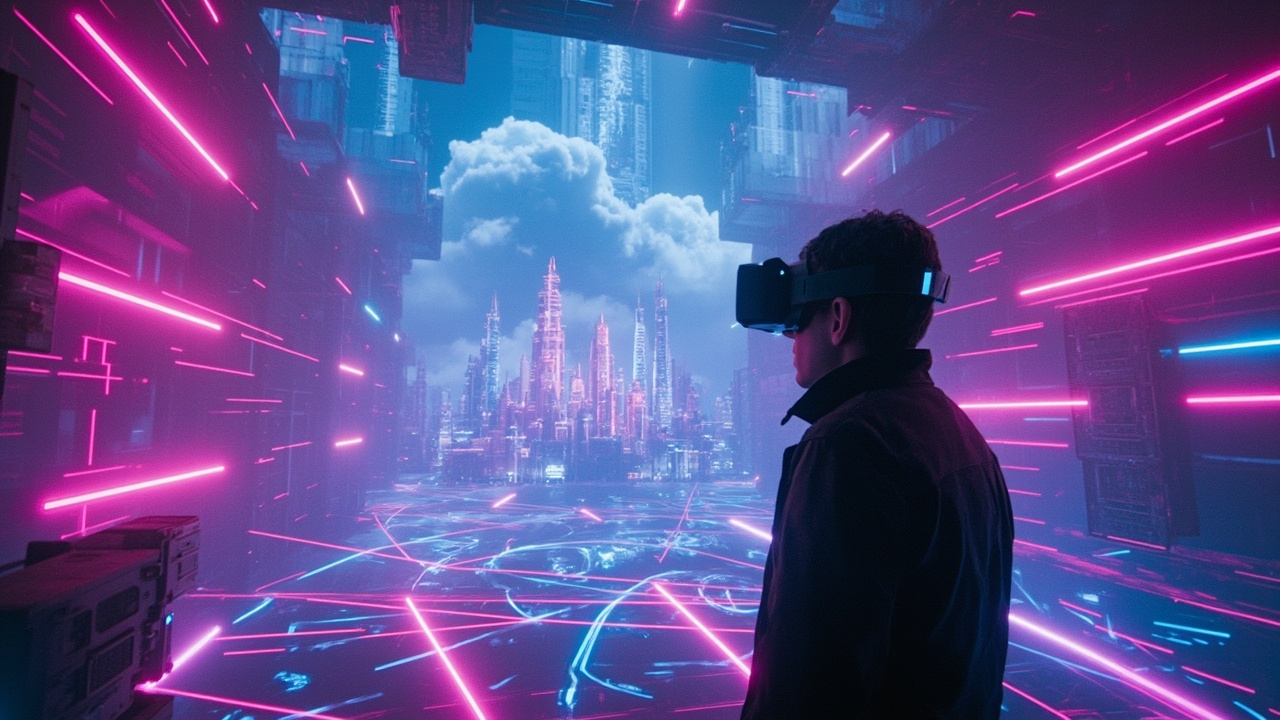
For most of the past decade, ByteDance’s founder Zhang Yiming has stayed away from day-to-day product work. That changed this week. According to a Bloomberg report citing people familiar with the matter, Zhang is now personally overseeing development of a real-time spatial-video AI model — a system designed to generate interactive virtual worlds on the fly — with a launch possible as soon as next month.
The people briefed on the plans cautioned that the timing is not settled and could shift. ByteDance did not respond to Bloomberg’s request for comment. But the specification described in the report is concrete enough to take seriously: on-demand video generation at around 20 frames per second, with end-to-end latency of roughly 0.05 seconds — 50 milliseconds — rendered in the cloud rather than on the device.
What the model actually is
The system is being built on top of Seedance, ByteDance’s existing video generation family. Seedance 1.0 shipped in mid-2025 with 1080p text-to-video and multi-shot transitions; Seedance 2.5, announced in June 2026, generates native 30-second clips in a single take, accepts up to 50 multimodal reference inputs, and includes 3D camera blocking controls. That lineage matters: a real-time world model is, in essence, video generation pushed to its limit — fast enough, and coherent enough, that a user can live inside the output.
The intended use cases are live streams, short-form dramas, and games. The model is meant to generate worlds that respond to users’ voices and movements — which is precisely what separates a “world model” from a video generator. A video model renders what you asked for. A world model renders what you do.
The target hardware is ByteDance’s own XR arm, Pico. And here the report’s most strategically interesting detail is not a number but an architecture: cloud rendering. By generating spatial content remotely, the computational burden moves off the headset entirely. The device becomes a display, a sensor package, and a network connection — which means it can be cheap.
This was the plan all along
The Bloomberg story did not come out of nowhere. Chinese tech outlet 36Kr reported earlier this year that ByteDance had set four AI priorities for 2026, with world models at the very top of the list — ranked ahead of defending Seedance’s lead in video generation, improving coding models, and commercializing the Doubao chatbot.
The data budget tells the same story. World models were said to command ByteDance’s largest data budget of any model direction — an eight-figure sum in renminbi that 36Kr’s sources estimated at three to four times what rivals were spending on world-model training data. The company set an explicit internal target: ship at least one world model by the end of 2026, benchmarked against Google’s Genie, which already lets users walk around Street View imagery rendered in real time.
Internal testing early in 2026 reportedly put ByteDance about 10% behind the global state of the art. A launch next month would beat the year-end schedule — and would land the project in users’ hands while Google’s Genie remains a research showcase.
36Kr’s reporting also described two parallel technical routes inside ByteDance: a vision-language-action approach aimed at embodied intelligence and robotics, and 3D simulation aimed at entertainment and games. The spatial video model belongs firmly to the second route — the one with an existing user base attached.
Why video companies keep winning this race
A world model, as the term is now used, is a system that learns how environments behave well enough to render one that responds coherently to what a user does inside it. The reason video-generation companies keep appearing at the front of this field is simple: the training material is video. The firms with the most of it — and the most experience compressing it into something that renders fast — start from an unusual position of strength.
ByteDance has spent a decade building exactly that pipeline, for a different purpose. TikTok and Douyin’s recommendation infrastructure is, underneath the memes, one of the world’s largest systems for ingesting, understanding, and serving video at low latency. Seedance already underpins CapCut and Doubao on the commercial side. The step from “generate a 30-second clip” to “generate the next frame 20 times a second, forever, in response to a user’s head and hands” is enormous — but it is a step along an axis ByteDance has been climbing for ten years.
Bloomberg frames Zhang’s personal involvement as placing him alongside researchers like Fei-Fei Li and Yann LeCun, who have long argued that models grounded in visual and physical understanding — rather than language alone — are the route to systems that can act in the world. The difference is that ByteDance is now testing that thesis commercially, with entertainment as the product.
The money and the competition
The capital behind the effort is not in question. ByteDance secured a $30bn loan last week and has been weighing AI capital expenditure of as much as $70bn. Within China, it remains a challenger to Alibaba, DeepSeek, and Moonshot AI on its own domestic terms — Alibaba’s Wan3.0 30-second video model landed just days after its own $10bn raise.
The more awkward implications land on Meta and Apple. Both have spent heavily on headsets that have not gone mainstream, and their XR businesses are built on high-end hardware. A cloud-rendered world model does not beat a Vision Pro on fidelity. It makes fidelity somebody else’s problem — a data center’s, specifically — and lets the headset shrink toward commodity economics. If the contest over XR moves from hardware specifications toward models, cloud capacity, and content distribution, those are three things ByteDance already has in quantity.
Plenty could still slip. The sources themselves flagged that timing is unsettled, and real-time generative worlds at 20 fps and 50 ms latency is an aggressive target that no one has shipped at consumer scale. But the direction is clear: the founder is back, the budget is the largest in the company’s model portfolio, and the deadline is next month.