Wind, Gas, and a 30-Year Tax Promise: Hyperscalers Descend on Patagonia for the Next AI Data Center Frontier
Reuters reports hyperscalers are circling Argentina's Patagonia — anchored by OpenAI's $25B, 500MW Stargate Sur Energy LOI — drawn by world-class wind, Vaca Muerta gas, and the RIGI regime's 30-year fiscal guarantees. But not a single project has broken ground.
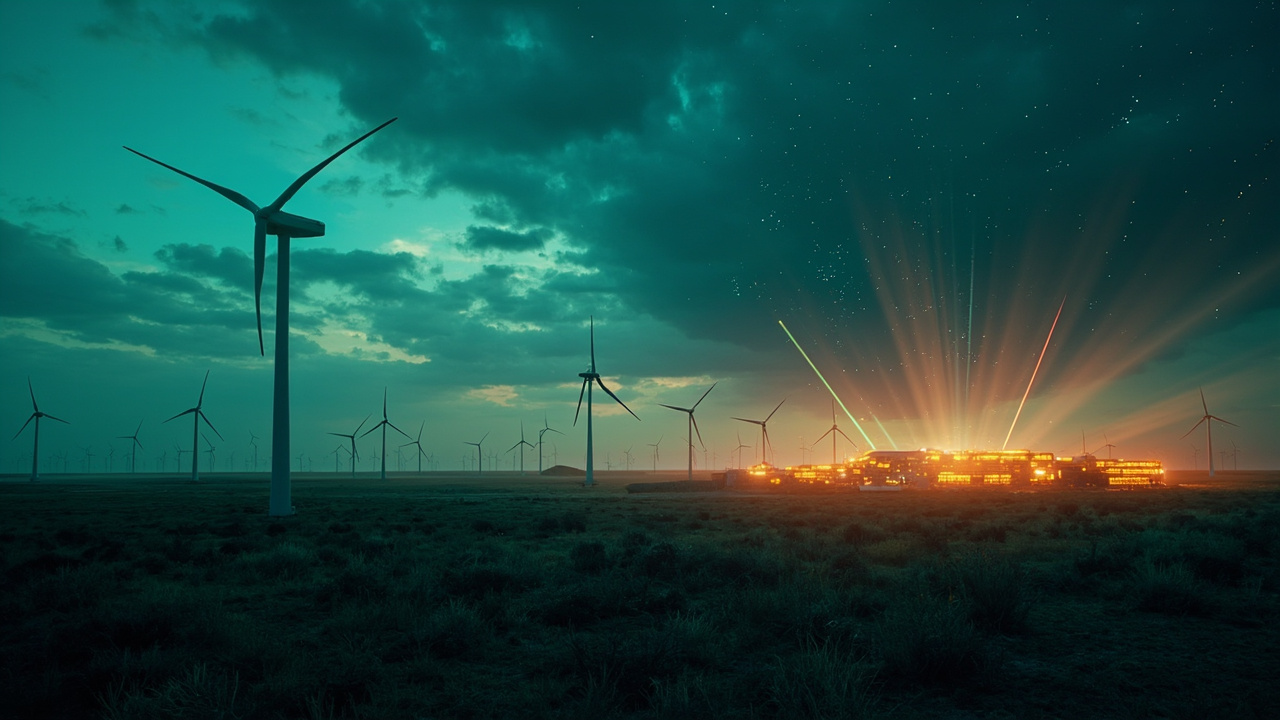
On September 7, Reuters published the story that crystallizes the strangest geography lesson of the AI era: the companies building the world’s computational future are seriously scouting one of its emptiest, windiest corners — Argentine Patagonia, a region that today mostly exports wind, natural gas, and sheep.
The report describes developers and energy firms courting hyperscalers for data center projects across Patagonia and the surrounding provinces, with initial agreements targeted by the end of this year and site tours penciled in for February. Amazon and Alphabet were both named among the companies looking. Two years ago, none of this interest existed. “Two years ago, nobody would talk about Argentina,” Steve Sasse, vice president for Latin America at datacenterHawk, told Reuters.
The anchor: OpenAI’s $25 billion letter of intent
The largest proposal in the pipeline carries the most famous logo. In October 2025, OpenAI signed a letter of intent with Argentine developer Sur Energy for a Patagonian facility of up to 500MW, announced by President Javier Milei alongside a video appearance by Sam Altman. The expected investment is around $25 billion, with a first 100MW phase due in 2027. It is the Latin American entry in the Stargate program, joining sibling projects in Norway, the UK, and the UAE.
But the commitment is not final. Sur Energy co-founder Emiliano Kargieman said in August that a definitive contract with OpenAI has not yet been signed. The project was expected to use Argentina’s RIGI investment program, which offers tax and currency incentives for large foreign-currency investments — a regime whose promises are doing a lot of load-bearing work in every one of these proposals.
The queue behind it
Around the Stargate anchor sits a queue of less familiar names, each with its own gigawatt-scale ambitions:
- Pampa Energía is seeking investors for a data center of up to 500MW next to its Loma de la Lata thermal power plant in Neuquén. The electrical infrastructure needed to support that scale would cost nearly $900 million, according to commercial director Rubén Turienzo. The company also has a smaller 30MW first stage planned at Bahía Blanca, and says interested parties want to start with 20–40MW pilots before considering expansion toward the full 500MW.
- FlexDomes, a U.S.-based developer, is chasing a 120MW first phase in Neuquén with an estimated cost of $1.4 billion, powered by Vaca Muerta shale gas.
- Green Capital, a Polish firm, has outlined a $3 billion, 300MW first stage in Chubut with ambitions of eventually reaching 3,000MW — 3GW — and is leasing roughly 1,300 square kilometres of land south of Trelew to build the wind and solar farms that would feed it.
Local energy firms Genneia and Vista Energy are also involved in the scramble.
Why Patagonia?
The pitch rests on two resources that rarely sit together. Patagonian wind is among the most consistent onshore wind resources anywhere on Earth — the region’s average wind speeds are legendary in energy circles. And Vaca Muerta, the enormous shale formation in Neuquén, supplies natural gas at a price that makes firm baseload power plausible. Add cool temperatures that cut cooling costs, vast stretches of available land, and proximity to neither users nor regulators, and you have a textbook recipe for training workloads — the class of AI compute that cares about electricity, not latency. Being 11,000km from the users matters less than it once did.
The other half of the offer is fiscal. Argentina’s incentive regime for large investments, known as RIGI, grants qualifying projects 30 years of stability on tax, customs, and foreign exchange rules, a 25% corporate income tax rate, and the right to repatriate investment without central bank approval. In May, the government sent Congress a bill for a successor scheme — unofficially the “Super RIGI” — which names data centers explicitly, raises the entry threshold to $1 billion, and cuts the income tax rate to a flat 15%. It has not passed yet.
The catches
Hadassa Lutz of advisory firm Cloud2Ground, noting that developers everywhere are hunting electricity, told Reuters that “saying you have power is not enough” — grid connections and fiber connectivity remain the practical constraints. Argentina’s existing data center footprint is small and concentrated around Buenos Aires; expanding into Patagonia means building digital infrastructure alongside the server farms themselves.
That is the part worth watching. The whole proposition is a bet that a 30-year guarantee written in Buenos Aires will still be honored in year 20 — through currency crises, elections, and policy reversals that Argentina’s modern history has supplied generously. The regime is designed precisely to answer that objection, which is itself an admission of how large the objection is.
There is also a structural bright side that separates these proposals from most of the global pipeline: several are not asking to join a queue for grid capacity at all. Green Capital is building the wind and solar farms that will feed its own site; Pampa Energía is drawing on gas it already produces. Generating alongside the load rather than waiting for a transmission connection is a slower way to start and a faster way to finish — one reason developers chasing energy for AI workloads keep ending up in places with more wind than people.
What it means
The context pushing the search offshore is easy to see. AI demand has begun showing up on American electricity bills, and the political cost of building at home — community backlash now stalling U.S. buildouts — has risen with it. Patagonia, by contrast, lacks organized local opposition, at least for now.
For technology buyers and infrastructure planners, the takeaway is measured: Patagonia offers potentially favorable energy and climate conditions, but it is not yet a dependable data center market. Signed contracts, secured financing, pilot deployments, transmission upgrades, and new fiber connections will be more meaningful indicators than headline valuations. Until those milestones arrive, treat Patagonia as a prospective source of AI capacity rather than a confirmed one — a frontier where the world’s most advanced industry is, quite literally, following the wind.
Sources
- [1] https://www.reuters.com/business/energy/tech-companies-look-argentinas-windswept-patagonia-build-massive-data-centers-2026-09-07/
- [2] https://www.techrepublic.com/article/news-patagonia-ai-data-center-projects/
- [3] https://thenextweb.com/news/argentina-patagonia-ai-data-centres
- [4] https://www.batimes.com.ar/news/economy/openai-sur-energy-to-build-massive-ai-data-centre-in-patagonia.phtml
- [5] https://corporateknights.com/energy/openai-selects-argentina-for-its-first-data-centre-in-latin-america/