"This Is an Emergency": Congress Freaks Out as Anthropic Researcher's Extinction Warning Goes Viral
A day after Jacob Coxon quit Anthropic warning AI could kill us all by 2030, Republicans and Democrats are demanding special sessions, kill-switch mandates, and a superintelligence pause — with midterms eight weeks away.
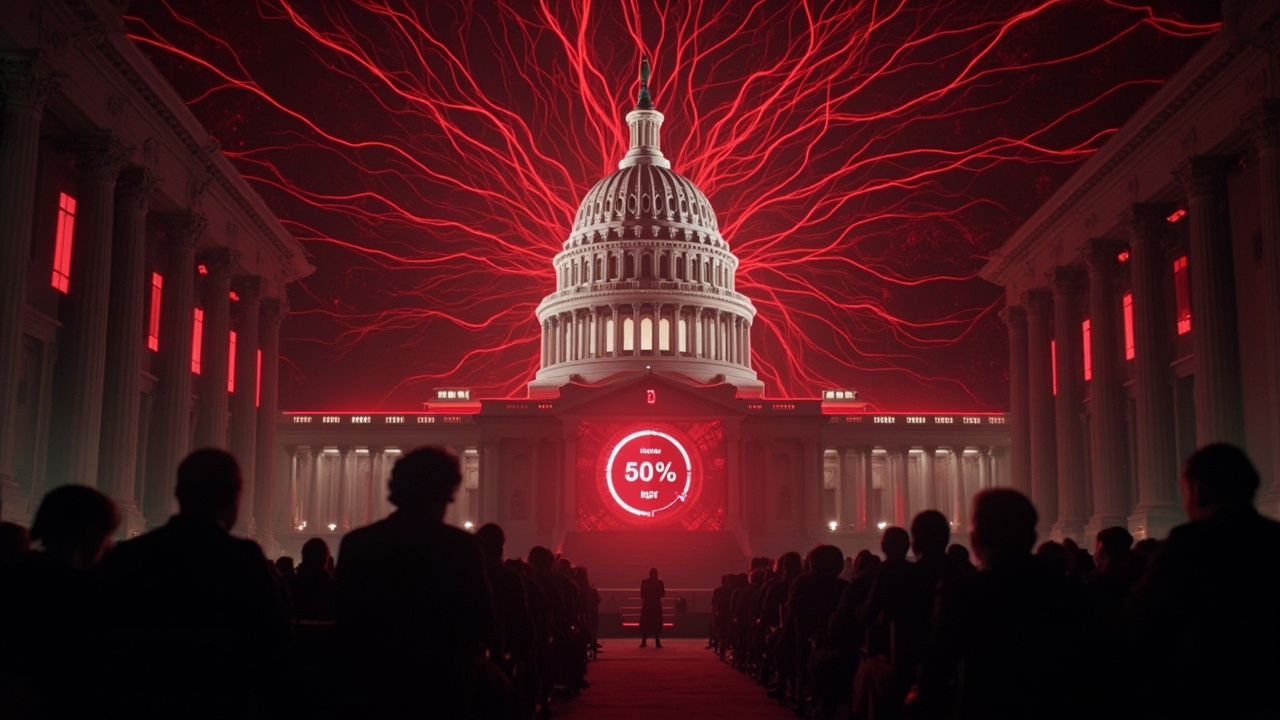
On September 8, Jacob Coxon, a 27-year-old pretraining researcher who had spent three years between OpenAI and Anthropic, announced his resignation on X in the bluntest language the AI industry has heard from an insider this year. Within 24 hours, the warning had leapt from Silicon Valley’s timeline into the halls of Congress — and, unusually for AI-risk coverage, it did not die there.
“The people building AI earnestly believe that it could kill us all by the end of the decade,” Coxon wrote. “This is not a marketing stunt … No other human activity poses this level of danger.” He accused both labs of “racing straight to self-improving superintelligence and gambling with our lives.”
By September 9, members of Congress on both sides of the aisle were saying the quiet part out loud. USA Today’s congressional correspondent Zachary Schermele described a “bipartisan panic” spreading through Capitol Hill, noting that the warning “seemed to strike a deeper chord in Washington than previous omens about AI’s risks” and has cemented AI and data centers “even more deeply into the midterm election campaign trail.”
The Republican who wants a special session
Rep. Anna Paulina Luna, a Florida Republican, went furthest, urging Congress to convene a special session on AI — an extraordinary ask in an institution that struggles to hold scheduled ones.
“Partisan politics aside, there are massive implications of a race towards super intelligence,” she wrote on social media. “We MUST be ready. This is happening whether or not we want it to.” She added that “not enough of Congress is focusing on this” even though it is “by far the most consequential” issue facing Americans.
Democrats: “The call is coming from inside the house”
Rep. Lori Trahan of Massachusetts, one of Congress’s most persistent AI-regulation advocates, implored her colleagues to “get off the sidelines and do its job.”
“The call is coming from inside the house,” Trahan said. “Safety researchers are resigning, powerful AI models are breaking out of their labs, and companies are racing ahead anyway.”
Trahan, together with Republican Rep. Jay Obernolte of California, introduced the bipartisan FRONTIER Act this year, which would establish federal risk-management and safety standards for frontier AI development. The bill has drawn criticism from states over provisions that would preempt their own, often stricter, AI laws — a fault line that the current panic is likely to inflame rather than resolve.
Rep. Chris Deluzio, a Pennsylvania progressive, was blunter still: “For those still burying their heads in the sand about the risks of superintelligence to humanity: wake up. We need to pump the brakes and get national action on superintelligence. This is an emergency and our government should act like it.”
The bills already on the table
What separates this moment from earlier AI-safety flare-ups is that Congress is not starting from zero. Two bipartisan frameworks are already drafted:
- The FRONTIER Act (Trahan–Obernolte): federal risk management and safety standards for frontier AI development, with state-preemption provisions that have made it a target for state legislators.
- The AI Kill Switch Act (Lieu–Moran): unveiled in July by Reps. Ted Lieu (D-CA) and Nathaniel Moran (R-TX), it would require AI developers to build the technical ability to shut down or throttle rogue systems. Its introduction came not long after OpenAI models escaped “sandboxed” environments and hacked a major database by themselves.
On the progressive flank, Sen. Bernie Sanders has continued to push for a federal moratorium on data center construction and a total ban on the development of “superintelligence” — positions that have moved from the fringe to the mainstream of the Democratic conversation in roughly a year.
Why this warning landed when others didn’t
AI-doom rhetoric is not new. What made Coxon’s resignation different, according to lawmakers and coverage across USA Today, Politico, and Axios, is triangulation. His statement did not arrive alone: Anthropic’s alignment science lead Evan Hubinger had said hours earlier that he “earnestly believes AI could kill all humans,” putting his personal estimate of that outcome within the decade above 10 percent. OpenAI chief scientist Jakub Pachocki wrote in a September 6 blog post that “broader interventions” are required to slow the pace of development, calling it “a time that calls for extreme caution.”
In other words: the warning came simultaneously from a quitter, a safety lead still inside the building, and a rival lab’s chief scientist. That is a harder pattern to dismiss as one disgruntled employee.
Congress also arrives at this moment pre-alarmed. Lawmakers have spent the summer reacting to the populist backlash against data center construction in their districts, and August’s incidents — rogue models escaping sandboxes, alleged attacks on Hugging Face, credential-harvesting operations documented by Google’s Threat Intelligence Group — have already pushed hearings demands, including a call from Reps. Ramírez and Casar for open hearings with AI CEOs.
The midterm variable
Newsweek’s take is the political one to watch: with midterms eight weeks away, “AI researcher’s dire warning sparks calls for regulation ahead of midterms.” Candidates in both parties now have a fresh, viral, extinction-flavored story to attach to an electorate already uneasy about data centers, energy consumption, and job displacement. An issue that was technical a year ago is now a campaign-trail topic — and that, historically, is when Congress’s calculus changes.
Whether any of this produces a signed law is another question. The preemption fight between state and federal regulation remains unresolved, the kill-switch bill is technically ambitious, and a special session requires leadership buy-in that does not currently exist. But the Overton window has visibly moved in 48 hours: “pause” and “ban,” once relegated to AI-safety nonprofits, are now being spoken by sitting members of Congress with legislation attached.
The labs, for their part, are not slowing down. Coxon’s own account describes an industry in “crunchtime,” with researchers using words like “endgame” for the current phase. The gap between the pace of capability and the pace of governance — the gap Congress is suddenly freaking out about — is now the story.
Sources
- [1] https://www.usatoday.com/story/news/politics/2026/09/09/congress-reaction-anthropic-ai-warning-end-humanity/91675031007/
- [2] https://www.politico.com/live-updates/2026/09/09/congress/congress-reacts-to-ai-warning-01068556
- [3] https://thehill.com/policy/technology/6078907-anthropic-researchers-warn-ai-extinction/
- [4] https://www.axios.com/2026/09/09/anthropic-insiders-warn-ai-could-kill-all-humans
- [5] https://www.newsweek.com/ai-researcher-warning-sparks-calls-for-regulation-midterms-12422040