3 Million Robots, 1 Million Autonomous Vehicles, 100,000 Drones: JD.com Goes All-In on Physical AI
At JDDiscovery 2026 in Beijing, JD.com launched a Physical AI Acceleration Plan targeting six 'world's largest' milestones, anchored by JD Logistics' plan to procure 3 million robots over five years.
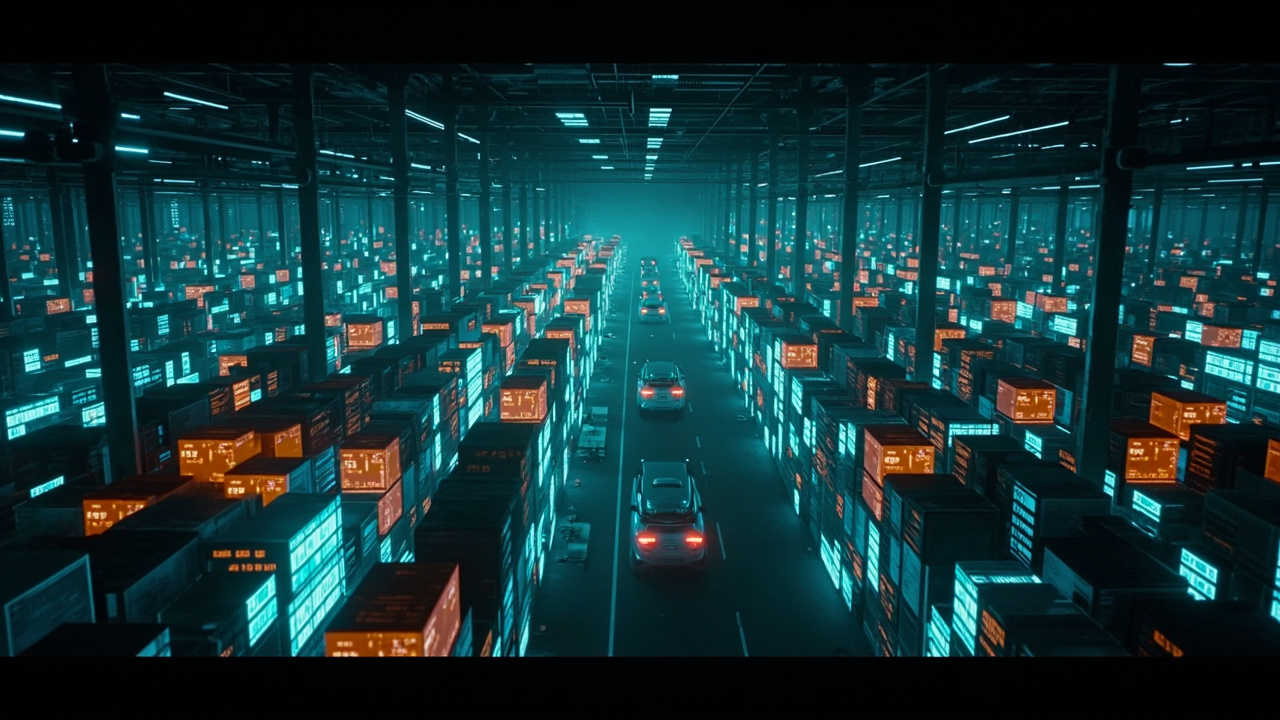
At JDDiscovery 2026 in Beijing on September 9, JD.com did something unusual for a company better known in the West as an e-commerce rival of Alibaba: it declared its intent to become the “World’s Largest Operational Platform for the Physical World.” The vehicle is a new Physical AI Acceleration Plan — a five-year program spanning data, components, manufacturing, retail, logistics, and after-sales service, with six explicit “world’s largest” goals. The headline number is the one from JD Logistics: over the next five years it plans to procure 3 million robots, 1 million autonomous vehicles, and 100,000 delivery drones to push its supply chain toward full automation.
Announced by Cao Peng, chairman of JD’s technology committee and president of JD Cloud, the plan is less a single product launch than a full-stack bet: build the embodied-AI data engine, manufacture the machines, deploy them atscale in its own logistics network, sell everyone else’s robots through its retail channel, and then service them all. It is one of the most concrete “physical AI” roadmaps any major company has published to date.
The Wolf Robots arrive
The most tangible announcement came from JD Logistics, which unveiled its industrial Wolf Robot series — machines designed to pick, sort, transport, and deliver goods with minimal human intervention. According to Liu Lige, head of embodied intelligence robots at JD Logistics, the line-up includes specialised units built for harsh conditions: cold-environment robots rated for minus 20 degrees Celsius, automated pharmacy dispatch systems, autonomous delivery vehicles, and drones.
These are not concept units. JD Logistics already runs a large automation estate that the new procurement will compound:
- LangzuTech Goods-to-Person automated warehousing deployed in 30+ warehouses across China, with launches in the UK and Germany as of June 30
- 1,800+ self-operated warehouses plus 2,000+ third-party cloud warehouses covering over 36 million square metres
- Thousands of unmanned vehicles in regular operation across 20+ Chinese provinces
- 100+ drone routes already flying, covering parcel and food delivery, emergency medicine transport, and disaster relief — including a rural network in Zizhong, Sichuan covering 78 administrative villages, where mountain-village deliveries can complete in as little as seven minutes
Meta Brain 3.0 and the software layer
Hardware is only half the story. JD Logistics connects its physical fleet to Meta Brain, the AI system coordinating decisions across warehousing, transportation, and delivery. Version 3.0, announced at the conference, can compute optimal routes for hundreds of millions of parcels in seconds rather than minutes.
Meta Brain also powers the LangzuTech Packer robotic arm, which fuses the model with multimodal sensor data to track, grasp, and place parcels of arbitrary shapes. A first-quarter regulatory filing revealed that the Packer uses parallel reinforcement learning in simulated environments to optimise parcel-placement sequences and loading layouts. JD upgraded the arm’s force-control technology in Q2 for more precise cage-loading, and by June the Packer was operating around the clock at multiple JD Logistics parks.
The six “world’s largest” ambitions
The Physical AI Acceleration Plan organizes JD’s ecosystem companies around six scale targets:
- Data — JD Cloud will build the world’s largest embodied-AI data collection centre, gathering 10+ million hours of real-world human-activity video within two years, blending internet data, simulation, and real robot telemetry into unified embodied-intelligence models.
- Robotics bases — JINGDONG Property will establish 80+ RoboBase hubs across China over five years, integrating demonstration, R&D, pilot assembly, data collection, manufacturing, and maintenance.
- Components — JINGDONG Industrial launched an alliance connecting robot manufacturers with component suppliers, aiming to become the world’s largest robotics-component supplier.
- Retail channel — JINGDONG Retail commits RMB 10 billion in resources by 2028 to become the largest robotics retail channel, helping 100 robotics brands each reach RMB 1 billion in sales and reaching 10 million users.
- Application scale — JD Logistics aims for the world’s largest deployment of embodied robots across the full logistics process.
- After-sales — extending from 8 existing repair centres to support creation of 100,000+ robotics service engineer jobs over five years.
Beyond logistics, JD also unveiled JoyAI-Echo WM, an interactive audiovisual world model; JoyIndustrial 2.0, which converts natural-language mechanical designs into 3D-printed prototypes; and Dongdong, an AI shopping assistant in the JD app v16.0 that accepts voice and video context. The JoyInside smart-home AI brain has already been adopted by 200+ brands.
The compute and the money
Feeding all of this requires serious infrastructure. JD Cloud is working with Chinese GPU maker Moore Threads on a planned 100,000-GPU cluster for large-model training, inference, and embodied-AI workloads — building on an existing 10,000-GPU deployment. Specific GPU models were not disclosed.
JD did not publish a total cost for the five-year procurement, but its financials show the ramp: JD Logistics spent RMB 2.3 billion on R&D in H1 2026, up 23.7% year-on-year, while equipment depreciation rose 18.7% to RMB 2.6 billion and property/equipment purchases reached RMB 3.09 billion.
The 700,000-person question
The plan’s most delicate tension is labor. JD and its ecosystem employ roughly 700,000 delivery and logistics personnel. Founder Richard Liu (Liu Qiangdong) has said robots will eventually take over courier work — but the company is pairing automation with its Nirvana Plan, a retraining initiative moving couriers and warehouse staff into technical roles such as robot servicing and maintenance. The 100,000-robotics-engineer target is, in part, the landing zone for that transition. The Financial Times reported in June that JD signed agreements with around 120 educational institutions to support the retraining pipeline.
Why it matters
The announcement lands amid a strategic shift in China’s platform economy: Reuters reported on September 3 that competition between JD, Alibaba, and Meituan has moved from delivery subsidies toward logistics infrastructure and order-level economics, with the instant-retail market projected to hit RMB 1.2 trillion (~$178 billion) by end-2026. In that race, physical AI is not a research curiosity — it is the cost curve.
For the broader industry, JD’s plan is a signal that “physical AI” is graduating from demo videos to procurement contracts. Few Western companies operate logistics networks with this density, and fewer still control the retail channel, component supply chain, and after-sales network in one corporate umbrella. If even part of the five-year plan materializes, JD becomes not just a deployer of robots but one of the world’s most important robot distributors and service operators — and the embodied-AI data centre it is building will train models on operational scale that competitors cannot easily replicate.
Sources
- [1] https://www.artificialintelligence-news.com/news/jd-com-physical-ai-logistics-3-million-robots/
- [2] https://www.scmp.com/tech/big-tech/article/3366884/jdcom-deploy-3-million-robots-fully-automate-logistics
- [3] https://jdcorporateblog.com/from-ai-models-to-the-physical-world-highlights-from-jddiscovery-2026/
- [4] https://aiglobalwire.com/article/jd-com-s-real-target-with-3-million-robots-physical-ai-f5ce88b0-b6b1-4ad6-b6a6-6f81f28aad74