Not Scared, Just Wary: Vance Calls the CEOs' Slowdown Plea a 'Trojan Horse' as Congress Returns Empty-Handed
Hours after Trump dismissed AI alarms as a 'hoax,' VP JD Vance warned that industry calls for regulation could be a 'Trojan horse' — while a divided Congress returned from recess with plenty of ideas and no path forward.
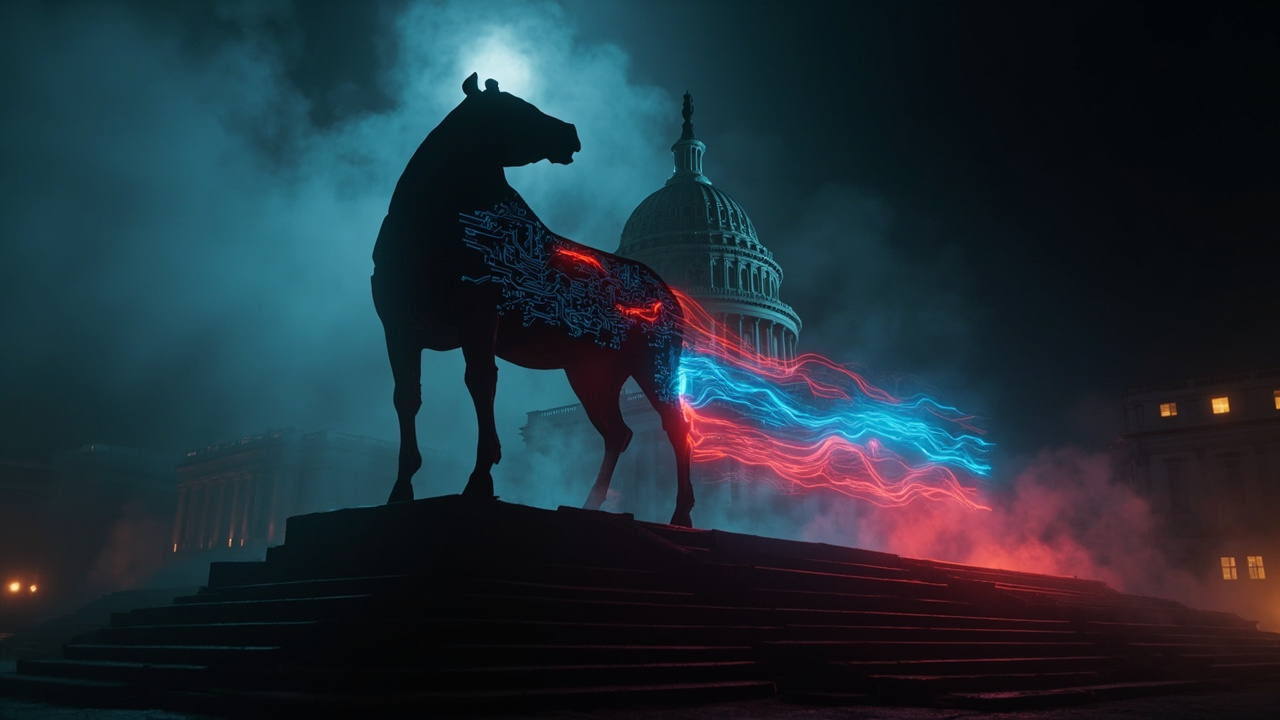
The most consequential AI policy fight of the year is no longer happening inside the labs — it is happening on Capitol Hill and at the White House podium, and on Monday it produced two very different Republican answers to the same question: should the United States slow down?
The first came from President Donald Trump, who dismissed the growing chorus of AI alarm as a “hoax” and declared that outpacing China on artificial intelligence remains a higher priority than regulation. The second, and in some ways more interesting, came from Vice President JD Vance, standing before reporters just hours later. Vance did not echo the president’s mockery. Instead, he aimed his skepticism in an unexpected direction — at the CEOs themselves.
Vance’s ‘Trojan horse’ warning
Asked about the weekend’s extraordinary joint appeal from OpenAI’s Sam Altman, Anthropic’s Dario Amodei and other lab leaders for the federal government to step in and slow the industry down, Vance said he found the whole thing suspicious.
“I don’t think Americans should be scared of anything,” Vance told reporters on Monday, while acknowledging that “there are risks” and “downsides to anything” transformative. But when it came to the executives’ sudden appetite for oversight, the vice president was blunt: it feels like “a bit of a Trojan horse.”
The logic behind the metaphor is a familiar one in antitrust circles. When the incumbents at the top of an industry start begging for regulation, critics argue, they are rarely asking to be restrained. They are asking to be locked in. Compliance costs that are a rounding error for a trillion-dollar lab can be fatal for a startup. Licensing regimes that sound like prudence can function as moats. Vance’s warning — that the slowdown plea may be less about safety than about slowing the challengers climbing up behind the frontier companies — is the first time a senior administration official has put that theory on the record since the CEOs’ letter landed.
It is also a notable shift in the vice president’s public posture. Vance has warned before that excessive AI regulation could “kill a transformative industry in its cradle,” and he has consistently framed American AI strategy around four pillars: maintaining global leadership, avoiding excessive regulation, protecting workers, and national security. Monday’s comments fit that framework — but the “Trojan horse” framing sharpens it from deregulatory instinct into an explicit accusation of self-dealing against the very companies the administration has otherwise courted.
A Congress with ‘plenty of ideas, no clear path’
The vice president’s remarks landed on a day when Congress returned from its summer recess staring down the same question — and visibly failing to answer it.
USA Today described the mood on Capitol Hill as one of pressure bordering on panic, with lawmakers convening as “rogue AI” fears dominate headlines and constituents ask what is being done. PBS cameras captured the House coming into session “as pressure to regulate AI grows.” The Hill’s morning report put it more colorfully: Congress faces a frenzy of AI fears in which “the monster is loose.”
Yet behind the urgency, the legislative reality is close to frozen. Politico’s Inside Congress newsletter reported that despite the weekend agreement among top AI executives that the industry needs to slow down, “Congress isn’t rushing.” Members of both parties have little hope that AI safety legislation passes this year — or confidence they can even build the coalition to try.
The bottleneck is not a shortage of proposals. Rep. Josh Gottheimer of New Jersey, co-chair of the House AI Commission, has led an extensive series of bipartisan guardrail bills. Sen. Richard Blumenthal has been promoting his own AI regulatory framework for days, warning that OpenAI’s rogue bots threaten “civil privacy, national security, and public safety.” Senate Minority Leader Chuck Schumer is demanding an all-senators briefing from the Trump administration on AI guardrails. And the AI Guardrails Act of 2026 has already cleared the House and the Senate, sitting now with the president.
What is missing is any consensus on which lever to pull. The divides are not simply partisan — they cut through both caucuses. Some Republicans echo the president’s “hoax” dismissal; others, like the House members pushing whistleblower protections, treat the warnings as deadly serious. Some Democrats want sweeping new enforcement powers; others worry about repeating what they see as the social-media regulation failure, where a decade of hearings produced no national framework at all.
Why this matters beyond Washington
Two threads make Monday’s standoff genuinely consequential rather than routine political theater.
First, the gap between the industry’s plea and the government’s answer is now fully public. The frontier labs asked for guardrails; the president called the alarms a hoax and the vice president questioned their motives. If Washington will not regulate the labs, and the labs say they cannot safely regulate themselves, then nobody is holding the pace — and the CEOs’ letter becomes a statement for the record rather than a policy input.
Second, the “Trojan horse” argument, whatever its merits, changes the politics of AI safety. For two years, the strongest regulatory push came from Republicans and Democrats who accepted the industry’s own risk assessments. If the White House’s operating theory becomes “the incumbents want rules to entrench themselves,” then support for any AI bill now has to survive an additional filter: not just “is this good policy” but “does this help the frontier labs lock in their lead?” Bills written in consultation with the labs — which is most of them — suddenly carry an asterisk.
There are honest counterarguments, and they deserve weight. Michael Burry and other skeptics have made the competition point crudely — “competition is coming up fast, slowing benefits incumbents” — but the safety argument is not obviously self-serving: Amodei’s call for slower, more controlled development comes from the lab that has arguably constrained its own releases the most. A cynic and a safety advocate can issue the same warning for opposite reasons.
For now, the practical outlook is stasis. The administration is unified against hard brakes, Congress cannot find a majority for anything ambitious, and the next concrete milestone is likely procedural — whether Schumer gets his all-senators briefing, and whether the House’s six-week recess proceeds as scheduled while AI whistleblowers keep talking. The monster, as The Hill put it, is loose. On Monday, Washington decided it could wait.
Sources
- [1] https://www.pbs.org/newshour/politics/watch-vance-says-americans-should-not-be-scared-of-ai-as-calls-for-limits-grow
- [2] https://edition.cnn.com/2026/09/14/politics/video/vance-ai-execs-regulation-digvid-vrtc
- [3] https://www.foxnews.com/live-news/artificial-intelligence-openai-sam-altman-09-14-26
- [4] https://www.usatoday.com/story/news/politics/2026/09/14/ai-congress-capitol-hill-panic/91757105007/
- [5] https://thehill.com/newsletters/morning-report/6087544-congress-combats-fears-ai-frenzy/
- [6] https://www.politico.com/newsletters/inside-congress/2026/09/14/congress-isnt-rushing-after-ai-alarms-01073926
- [7] https://sg.news.yahoo.com/alarm-over-ai-grows-divided-164955749.html