Out of the Cage: Agility's Digit 5 Is the First Humanoid Built to Work Beside People Without Barriers
Agility Robotics unveils Digit 5, a 50-lb-payload humanoid with a 10:1 run-to-charge ratio and an NVIDIA Halos-powered safety stack designed to eliminate physical safety cages — backed by more than $300 million in multi-year orders.
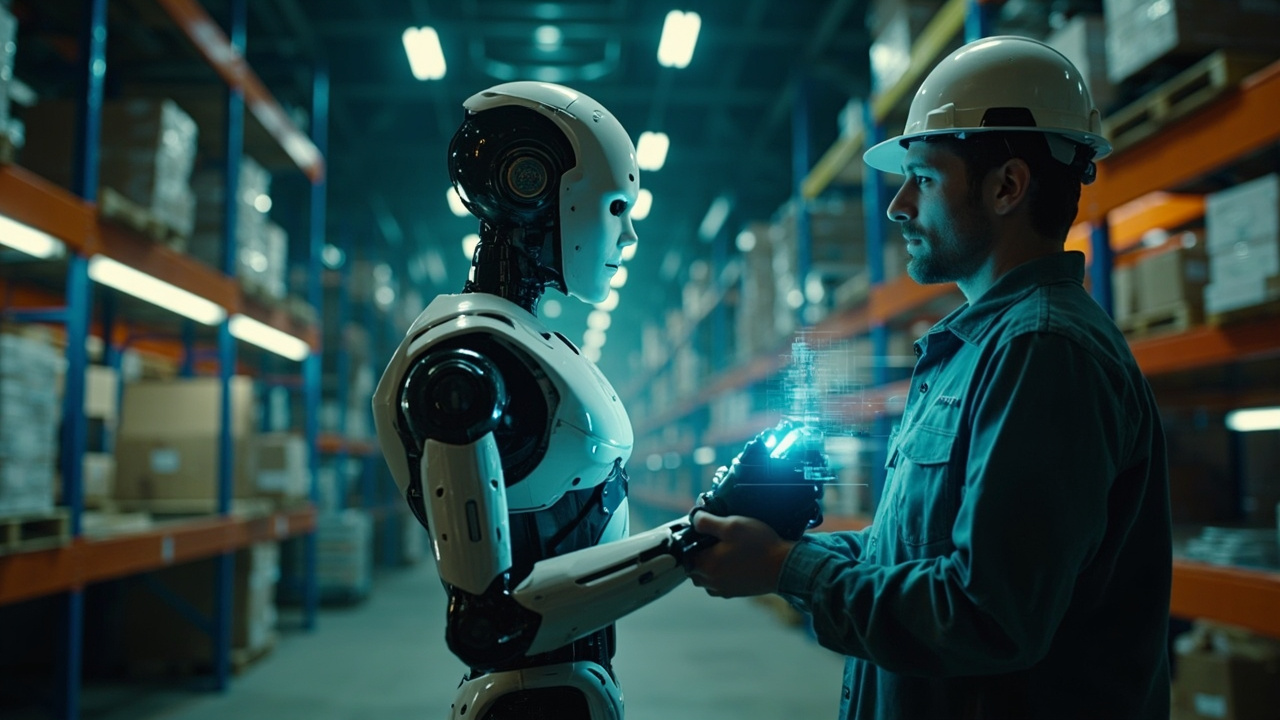
For nearly as long as industrial robots have existed, they have lived behind fences. Cages, light curtains, pressure mats — the entire apparatus of factory safety exists because a robot that can lift forty pounds of steel can also crush a human being. On September 15, 2026, Agility Robotics made the most aggressive bet yet that this era is ending: the Oregon-based company unveiled Digit 5, its fifth-generation humanoid, engineered for what it calls “cooperatively safe work at scale” — meaning the robot is designed to operate in close proximity to people without physical safety barriers.
It is easy to dismiss such language as marketing. It is harder to dismiss when the company behind it has logged more than 65,000 hours of real-world operation across commercial sites including GXO, Schaeffler, Amazon, and Toyota Motor Manufacturing Canada, and when customers have already signed more than $300 million in multi-year orders for the new machine, contingent on contractual milestones.
What “cooperatively safe” actually means
Every humanoid deployed commercially today — Digit 4 included — works inside a caged workcell whenever it presents motion and stability risks. The workcell is the tax the industry pays for a robot that cannot fully guarantee it will not hurt someone. Agility’s own engineering retrospective is candid about how incremental the road has been: the third-generation Digit carried only a remote E-stop. A later version added an external safety controller, which introduced a new failure mode (if communications dropped, the robot could fall). The fourth generation added an onboard safety PLC and Category 1 stop functionality — a controlled deceleration before power is cut. Even so, every fielded unit still operated behind barriers.
Digit 5’s safety architecture is built to finally retire the cage, through three interlocking layers:
- Safe human detection — proprietary AI algorithms combined with multiple sensor modalities continuously monitor for people, and the robot autonomously avoids them, stops, or — remarkably — assumes a seated position to reduce its footprint and instability risk.
- Safety cues — visual and auditory signals communicate motion intent to nearby workers, making the robot’s behavior legible to the humans sharing its space.
- Safe motion control — an independent safety controller supervises the robot’s response whenever a person enters an unsafe distance, instantly triggering the appropriate protective response even if the main control stack fails.
Critically, Digit was already the first humanoid to pass an independent field evaluation on a customer production line against industrial safety standards administered by OSHA — a milestone Agility achieved with the previous generation. Digit 5 extends that lead rather than starting from zero.
The NVIDIA factor: Halos for Robotics
The most strategically significant detail in the announcement is the silicon underneath. Agility is the first launch partner for NVIDIA’s Halos for Robotics platform, pairing its safety systems with the NVIDIA IGX Thor compute platform and Halos Core infrastructure. IGX Thor runs Digit 5’s onboard safe human-detection functions — a workload that must execute with deterministic, safety-certified latency, not the best-effort scheduling of a general-purpose GPU.
Deepu Talla, NVIDIA’s vice president of robotics and edge AI, framed the stakes plainly: “Safely operating around people and assets is what moves humanoid robots from pilots to industrial deployments at scale.” NVIDIA originally built Halos for autonomous vehicles; extending it to robotics gives the emerging humanoid industry something it has never had — a full-stack, off-the-shelf safety compute platform that a regulator or certifier can evaluate as a unit.
A working animal, not a demo robot
The hardware upgrades tell you who this machine is for. Digit 5 lifts 50 lb (22.7 kg) — 40% more payload than its predecessor — powered by a new leg design with proprietary cycloidal actuator technology engineered for repetitive lifting. That number was not chosen at random: it covers the full range of single-person lift tasks under OSHA rules, which means Digit 5 can legally and physically take over every ergonomic-lift job a facility has.
The battery math is even more decisive. A 90-minute runtime battery recharges in 9 minutes, yielding a 10:1 run-to-charge ratio — up from Digit 4’s 2:1 — and enabling more than 20 hours of productive work per 24-hour day. A robot that needs twelve hours of charging per day is an experiment; a robot that works twenty is a shift replacement.
Other upgrades: swappable end-effectors with ISO-standard mounting flanges (tote handling in the morning, machine tending in the afternoon), a 7.2-foot (2.2 m) reach on a human-scale 5’11” (1.81 m), 284 lb (129 kg) frame — tall enough to hit the same shelves workers use, narrow enough for the same aisles and doorways.
The workflow ambition follows from the hardware. Digit 4 automated tote-based material handling. Agility says Digit 5 will expand across a facility’s full workflow: depalletizing inbound goods, machine tending, kitting and sequencing, quality inspection, and palletizing for shipment — coordinated through the Agility Arc cloud platform with existing AMRs, conveyors, and warehouse management systems.
The commercial and political context
Digit 5 does not launch in a vacuum. Agility is in the middle of a merger with Churchill Capital Corp XI that values the company at roughly $2.5 billion and would make it the first U.S.-listed pure-play humanoid company under ticker AGLT. The order book — $300 million as of May 2026, per the release — is the strongest evidence yet that humanoid demand is converting from YouTube demos to signed contracts.
The safety claim also carries regulatory weight beyond one company. Agility leads projects drafting ANSI/A3 TR R15.108 (the U.S./Canada technical report for dynamically stable industrial mobile robots) and contributes to ISO 25785-1, the first international safety standard for humanoids — standards that barely existed as a category two years ago. Digit 5 will carry a CE mark for planned expansion into the EU and UK, its first deployments outside North America, with early access beginning in the first half of 2027 and general availability by the end of that year.
All of it is assembled at RoboFab, Agility’s 70,000-square-foot factory in Salem, Oregon — designed for up to 10,000 robots per year — with engineering in Pittsburgh and a new hardware and physical-AI hub in Fremont opened this July.
Why it matters
The humanoid industry has spent a decade arguing about whether robots belong in homes, hospitals, or warehouses. Agility’s bet is that the winning path runs through the most boring, most regulated environments first — and that safety architecture, not backflips, is the actual moat. Every safety milestone unlocks an environment; every environment generates operational evidence; every hour of evidence feeds the next tier of certification. As the company’s own engineers put it, the companies that capture the biggest markets “aren’t the ones moving fastest today — they’re the ones building the safety foundation that makes those markets accessible at all.”
Digit 5, with its $300 million order book, NVIDIA-powered safety stack, and 20-hour workday, is the clearest statement yet of that thesis. The cage, it turns out, was never protecting the robot from people. It was protecting an industry from its own immaturity. That protection is now being dismantled — deliberately, one standard and one sensor at a time.
Sources
- [1] https://www.agilityrobotics.com/content/agility-unveils-digit-5-humanoid-robot-built-for-cooperatively-safe-work-at-scale
- [2] https://www.agilityrobotics.com/content/built-for-the-real-world
- [3] https://www.wsj.com/finance/agility-maker-of-humanlike-robots-to-go-public-in-2-5-billion-spac-deal-62c3cb32