Canada's Largest-Ever Private Investment: Bell to Quadruple Its Saskatchewan AI Data Centre to 1.2 GW
At the Canada Investment Summit, Bell and Saskatchewan signed an MOU adding 900 MW to the Regina-area AI Fabric site — a 1.2 GW, $50B+ 'sovereign AI' bet with natural-gas power Bell brings itself.
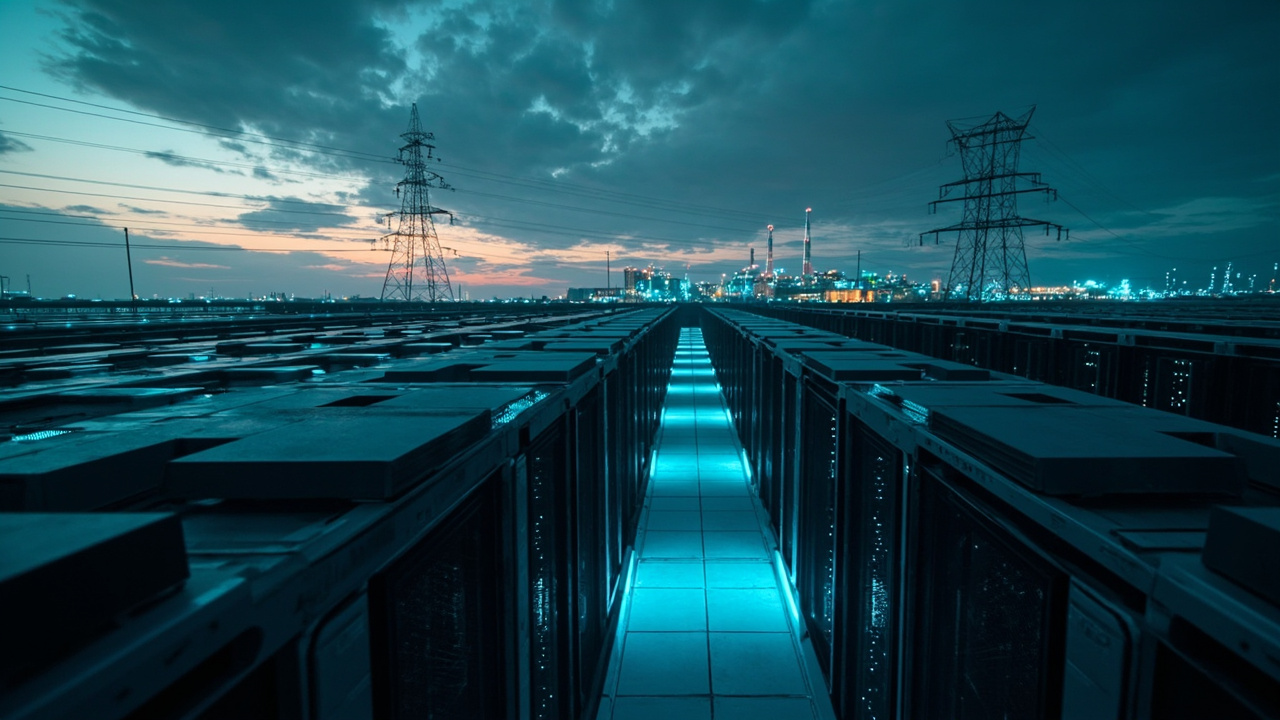
On the closing day of the first Canada Investment Summit in Toronto, Prime Minister Mark Carney, Saskatchewan Premier Scott Moe, and Bell CEO Mirko Bibic announced an agreement that instantly redraws the map of North American AI infrastructure: Bell will expand its AI Fabric data centre near Regina by up to 900 megawatts, quadrupling the site to a planned 1.2 gigawatts and pushing total capital investment past $50 billion — a figure Carney called the largest private capital investment in Saskatchewan’s history, and which provincial officials described as the single largest private-sector capital investment in the history of Canada.
The deal, signed as a non-binding memorandum of understanding on Monday, September 14, 2026, builds on the original 300 MW data centre in the Rural Municipality of Sherwood, just outside Regina, that Bell and Saskatchewan announced in March 2026. That first phase — already under construction, with two data halls scheduled to enter service in the first half of 2027 — was already set to be Canada’s largest AI data centre. The expansion makes it something categorically different: a gigawatt-scale AI campus intended to anchor what the province is calling a sovereign AI infrastructure hub.
Why a telecom is betting $50 billion on Prairie real estate
For Bell, a 141-year-old telephone company better known in recent years for dividends and layoffs than for moonshots, the deal is a pivot of existential scale. The company’s AI Fabric network — now billed as the largest sovereign AI infrastructure network in Canada — is its bid to convert legacy telecom assets (fibre, real estate, enterprise relationships, and now generation capacity) into the layer that Canadian governments and enterprises reach for when they need compute that stays inside Canadian jurisdiction.
The timing is no accident. Sovereignty was the explicit subtext of the announcement. “There’s two ways to manage this,” Carney said on stage. “You can have your data sent elsewhere, or you can build it right here, on Canadian ground, with Canadian power, and Canadian law, and with the confidence that comes from being a stable and open partner.” Premier Moe struck the same chord: keeping Canadian data “stored by a Canadian company and protected under Canadian rules,” so that “Canadians set the rules and remain in control.”
In a year when Washington has openly floated tariffing Canadian data flows, that pitch writes itself. And Bell is not the only one making it — but with this expansion it becomes by far the largest Canadian-owned bet that sovereignty sells.
The unusual structure: bring your own power
What makes the expansion technically notable is how the extra 900 MW gets energized. The original 300 MW draws from the provincial grid through SaskPower. The additional capacity will be provided by Bell itself, under Saskatchewan’s “Bring Your Own Power” principle — with reporting from EnergyNow indicating the new capacity will be powered largely by natural gas generation that Bell develops.
That structure matters for two reasons. First, it sidesteps the grid constraint that has throttled data centre proposals across North America: Saskatchewan’s grid could not plausibly serve an additional gigawatt without years of interconnection queues, so Bell self-supplies instead. Second, it shifts the emissions and fuel-security conversation onto Bell’s generation portfolio — natural gas at 900 MW scale is a serious carbon commitment, and the province noted that projects “may also be subject to an Environmental Impact Assessment,” with municipal permitting still to come.
The expansion was approved under Saskatchewan’s Data Centre Framework, released in August 2026, which sets six principles for major data centre investments: Canadian ownership and headquarters, data sovereignty, local jobs and partnerships, operating experience, bring-your-own-power, and centralized provincial intake through Crown Investments Corporation and the Ministry of Trade and Export Development. The framework is effectively a checklist written for this deal — and a gate designed to exclude foreign-owned hyperscalers from the same terms unless they restructure.
Jobs, headquarters, and the Saskatchewan effect
The province says the expansion is expected to create up to 500 permanent jobs in data centre operations and power generation, roughly 3,000 additional jobs in security, logistics, and maintenance, and about 100 management positions at a new Bell AI Fabric headquarters to be established in the Regina area. Crown Investments Corporation Minister Jeremy Harrison called the “historic $52 billion expansion” a powerful endorsement of the province’s economic potential. (The $52 billion figure circulating in provincial materials sits slightly above the “$50 billion+” total capital investment cited elsewhere; either way, it is an order of magnitude beyond anything the province has seen.)
There is a boomtown risk, of course. Regina’s metro population is roughly a quarter-million people; absorbing thousands of construction and operations workers, plus the indirect services they demand, will strain housing and labor markets that have spent a decade flat. The March announcement already projected 800–1,200 construction jobs and roughly 500 permanent roles for the 300 MW phase alone.
The race for Canadian AI compute
The Bell expansion leapfrogs the previous Canadian record holder: Meta’s one-gigawatt, AI-optimized data centre northeast of Edmonton, announced under Alberta’s more permissive framework. At 1.2 GW, Bell’s site would be the largest data centre development in the country — though “would” is the operative word. The MOU is explicitly non-binding, phasing is contingent on permitting, environmental assessment, and Bell actually building generation, and the first new capacity beyond the original 300 MW remains years out.
Still, the direction is unmistakable. Earlier the same day at the Canadian Global Growth Forum, Cohere CEO Aidan Gomez argued Canada could become a data centre superpower. Carney’s government has set a goal of catalyzing $1 trillion in total investment over five years through the Canada Investment Summit, run with the Canada Pension Plan Investment Board and the Public Sector Pension Investment Board. Notably, Bell’s Saskatchewan project was absent from the pitchbook of data centre projects circulated to summit attendees ahead of the event — meaning Monday’s announcement was the reveal, not a re-announcement.
What to watch
Three things will determine whether this becomes real infrastructure rather than a headline. First, financing: $50 billion is roughly three times Bell’s (BCE Inc.’s) current market capitalization, so expect project financing, partners, or pension-fund involvement — the summit’s co-hosts are the natural suspects. Second, power: whether the natural-gas buildout clears environmental assessment, and whether Bell commits to carbon capture or offsets for a gigawatt-class fossil fleet. Third, demand: sovereign AI infrastructure only pays if Canadian enterprises and governments actually buy Canadian compute at hyperscale — the bet is that in a world of tariff threats and foreign intelligence worries, they will.
For now, the Prairies have the largest AI data centre project in Canadian history, a provincial framework designed to keep it Canadian, and a telecom willing to build its own power plants to make it happen. The home ice advantage, as Moe put it, just got a lot more literal.
Sources
- [1] https://www.saskatchewan.ca/government/news-and-media/2026/september/14/single-largest-private-sector-capital-investment-in-history-of-canada-through-bell-ais-saskatchewan
- [2] https://betakit.com/bell-announces-50-billion-buildout-to-produce-canadas-largest-data-centre-in-saskatchewan/
- [3] https://energynow.ca/2026/09/dramatic-expansion-bell-ai-fabric-expansion-could-bring-more-than-50-billion-in-investment-to-saskatchewan/
- [4] https://www.ctvnews.ca/northern-ontario/regina/article/bell-ai-data-centre-project-near-regina-to-quadruple-in-size/
- [5] https://datacenternews.ca/story/bell-and-saskatchewan-plan-1-2gw-ai-hub-expansion-project