70% Cheaper Sensors, Same Brain as Its Robotaxis: Pony.ai Unveils Gen-4 Robotruck With GAC at IAA 2026
At IAA Transportation 2026, Pony.ai and GAC Commercial Vehicle debuted a Level 4 battery-electric Robotruck built on the T9 platform — ADK costs down 70%, a shared Virtual Driver stack with Gen-7 robotaxis, and mass production starting this year.
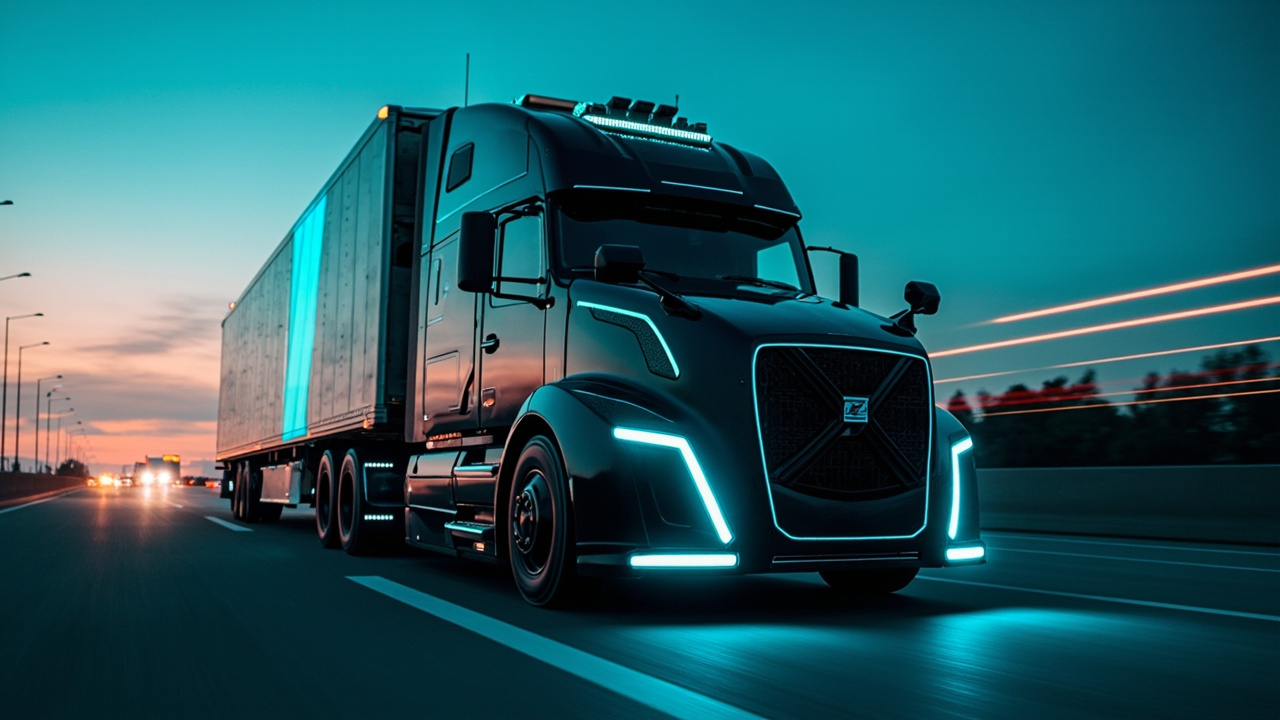
At IAA Transportation 2026 in Hanover, autonomous-driving company Pony.ai and GAC Commercial Vehicle pulled the covers off a fourth-generation (Gen-4) Level 4 autonomous heavy-duty truck — a battery-electric rig that the partners say is ready for volume production before the end of 2026. The unveil, staged at one of the world’s largest commercial-vehicle trade fairs, marks the global debut of the T9 Robotruck and signals that China’s autonomous-trucking push is now aimed squarely at international freight corridors.
What was announced
The new vehicle combines GAC Commercial Vehicle’s T9 battery-electric heavy-duty truck platform with Pony.ai’s Gen-4 Level 4 autonomous driving system. Level 4 means the truck is designed to operate without a human driver within defined operational domains — long-haul freight, dedicated logistics corridors, and port transport operations are the initial targets.
The partnership itself moved fast. A strategic agreement was signed on 16 April 2026, and the two companies completed vehicle validation in just five months, bringing the truck to production readiness in time for the Hanover show. Initial routes will focus on long-haul line haulage, fixed logistics corridors, and port operations — freight use cases where routes are repetitive and the economics of removing the driver are largest.
He Xing, VP of Pony.ai and head of its Robotruck business, called the debut “another important step in accelerating the mass production and commercial deployment of Pony.ai’s Robotrucks,” and said the company will “deepen our collaboration with GAC Commercial Vehicle, continue advancing volume production and deployment of the T9 Robotrucks, and bring our jointly-developed autonomous trucking solutions to markets around the world.”
The sensor stack: nine lidars, three radars, thirteen cameras
At the heart of the truck is an automotive-grade autonomous driving kit (ADK) built around 360-degree sensing: nine lidars, three millimetre-wave radars, and 13 cameras blanket the vehicle’s surroundings. For a heavy truck — with its long wheelbase, trailer articulation, and massive blind spots — full-perception coverage is less a luxury than a baseline requirement, and the sensor count reflects that.
The more striking number is cost. Pony.ai says the bill-of-materials cost for the Gen-4 ADK has fallen 70 percent versus the previous generation. That decline matters because sensor and compute costs have long been the choke point in autonomous-trucking unit economics. The company projects that transportation operating costs per ton-kilometre will drop by 30 percent once the trucks are deployed at scale.
Energy efficiency gets attention too. The T9 cab’s 0.4 drag coefficient — unusually slippery for a heavy hauler — works alongside Pony.ai’s control algorithms to cut energy consumption by roughly 10 percent compared with conventional diesel trucks, compounding the savings from electrification itself.
One brain, two bodies: the robotaxi connection
Perhaps the most strategically interesting detail is architectural. The Gen-4 Robotruck shares its central domain controller with Pony.ai’s seventh-generation (Gen-7) robotaxi fleet, running the same unified “Virtual Driver” software stack. The company applies identical core software across passenger robotaxis and heavy transport vehicles, with the software paired directly to GAC’s fully redundant drive-by-wire chassis.
For driverless operation, the truck carries full hardware backups across every critical domain: steering, braking, power supply, computing, sensors, and communications. Redundancy is what separates a genuine Level 4 platform from an advanced driver-assistance system — any single failure must leave the vehicle controllable and safe.
The shared-brain approach is a bet on scale. Development cost, validation effort, and software improvements amortize across two businesses at once. A perception improvement for night driving in Shanghai robotaxis flows into highway trucks in Shandong, and vice versa. It mirrors the strategy Tesla attempts with its FSD stack across cars and the upcoming Cybercab, and contrasts with Western rivals like Aurora and Kodiak, which truck-only.
From domestic routes to global corridors
Pony.ai has pursued autonomous trucking since 2018, building a fleet portfolio across heavy- and light-duty platforms. Its commercial logistics programme already involves vehicle manufacturers and transport operators spanning bulk commodity shipping, port logistics, urban delivery, and long-haul line haulage.
After the initial domestic production run this year, the plan turns outward: Pony.ai intends to expand Robotruck operations into European and Middle Eastern markets over the next two years. That expansion will lean on footholds the company has already established through robotaxi deployments in the UAE, Qatar, Croatia, Luxembourg, Singapore, and South Korea.
The European target is notable. The unveiling at IAA — the continent’s flagship transportation trade show — was a statement of intent, not a coincidence. European long-haul freight suffers from a persistent driver shortage and dense, high-volume corridors between ports and inland hubs, conditions that favor autonomous operation. But it is also a market with no permissive Level 4 regulatory framework for driverless trucks yet, meaning Pony.ai’s two-year timeline will be a test of both technology and regulatory patience.
Why it matters
The autonomous trucking field has consolidated around a few serious players, and the battleground is shifting from demos to unit economics. Pony.ai’s Gen-4 announcement bundles the three variables that decide whether driverless freight pays: a 70 percent cheaper sensor kit, a 30 percent cut in per-ton-kilometre operating costs, and a shared software platform that lets robotaxi R&D subsidize trucking and vice versa.
If the T9 Robotruck hits volume production on schedule this year, and if the international expansion lands within its two-year window, the partnership will have compressed the classic autonomy timeline — partnership to production intent in five months — into something the industry’s first decade rarely achieved. The freight world will be watching whether the math holds on real roads.
Sources
- [1] https://www.artificialintelligence-news.com/news/pony-ai-autonomous-electric-truck-for-logistics-fleets/
- [2] https://www.automotiveworld.com/news/pony-ai-and-gac-unveil-gen-4-level-4-robotruck-at-iaa-2026/
- [3] https://ir.pony.ai/news-releases/news-release-details/pony-ai-inc-unveils-new-gen-4-robotruck-collaboration-gac