Socialist and Nationalist, One Stage: Sanders and Bannon Headline DC's 'Pro-Human Assembly' to Demand Congress Rein In AI
Bernie Sanders and Steve Bannon — longtime foes from opposite poles of American politics — share a Washington stage today at the Future of Life Institute's Pro-Human Assembly, joining Hollywood stars, faith leaders, and grieving parents to demand that Congress curb AI before midterms.
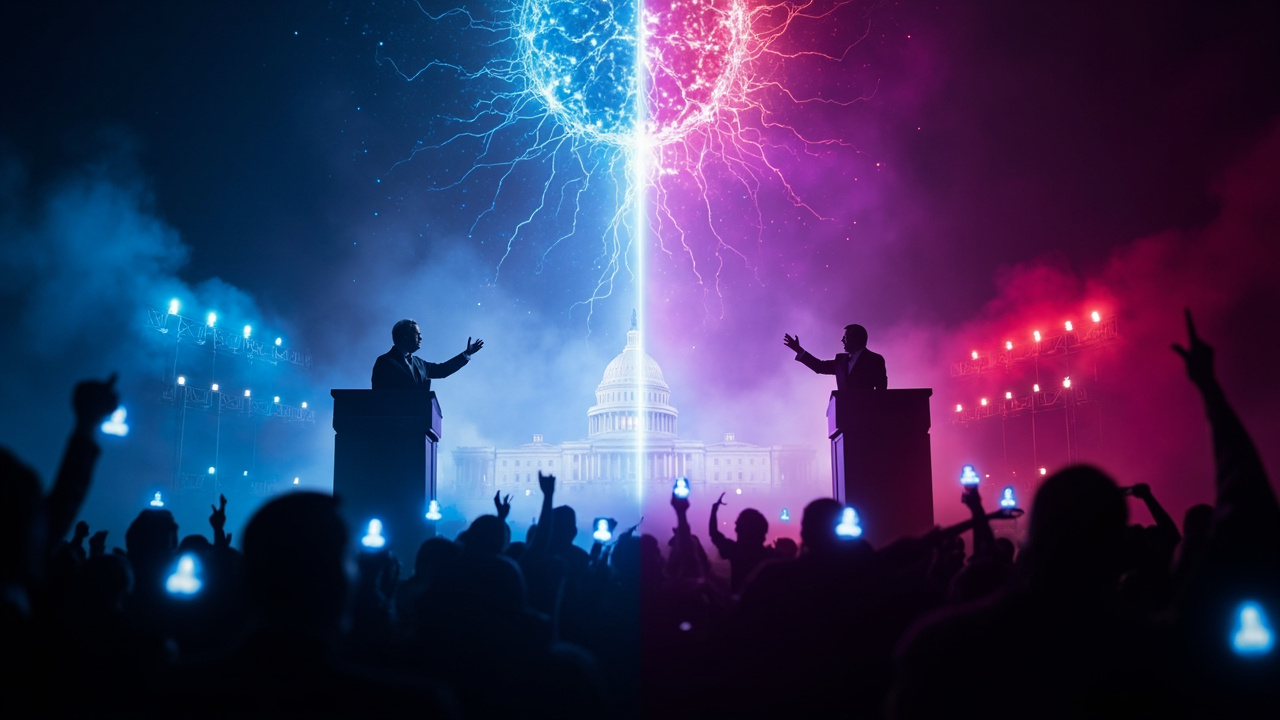
The poles of American politics are converging on artificial intelligence — and today in Washington, D.C., they will literally share a stage. Sen. Bernie Sanders, the independent democratic socialist from Vermont, and Steve Bannon, the former Trump White House chief strategist and podcaster, are both headlining the “Pro-Human Assembly,” an all-day convening organized by the Future of Life Institute (FLI) that runs from 9 a.m. to 5:45 p.m. The unlikely duo — appearing separately, per the New York Times — will be joined by speakers spanning labor leaders, religious figures, child-safety advocates, and Hollywood celebrities, all united around a single message: Congress must move faster to keep humans firmly in charge of AI.
An alliance nobody predicted
Sanders and Bannon could hardly be more different political animals. One is the face of the American progressive movement; the other is the leading media voice of the MAGA right. Axios, which first reported the pairing as a scoop, called them “unlikely allies.” Reuters framed it more bluntly: the two men are “longtime foes” now urging the same AI restrictions.
What unites them is a view of AI as a threat to human agency — though they arrive at it from different directions. Sanders has spent months warning that AI will displace workers and concentrate wealth in Silicon Valley, and earlier this month he and Rep. Greg Casar introduced the most aggressive AI bill ever tabled in Congress, one that would ban artificial superintelligence outright. Bannon’s critique is cultural and nationalist: he has called the AI race a project of the tech elite that will “replace humans” and hollow out the country’s social fabric. The Future of Life Institute has spent 2026 building precisely this coalition — in March it published a set of pro-human principles (NPR counts 33) declaring that humans must remain in charge of AI, that people should retain agency and liberty, and that AI companies must be held accountable.
Who else is on the program
The Assembly’s speaker list reads like nothing else on the Washington calendar. Actors Ashley Judd and Joseph Gordon-Levitt, both longtime advocates for stronger AI controls, are participating. Religious leaders from multiple denominations will speak. And in the event’s most sobering segment, child-safety advocates — including parents of children who died by suicide after conversations with AI chatbots — will address the audience.
Organizers close the agenda with a statement of intent: “By centering our common humanity, we maintain a space grounded in trust and collaborative problem-solving to chart a pro-human future with AI.”
The timing is not accidental
The Assembly lands at a moment of extraordinary ferment in AI politics. Over the past week, leaders at Anthropic and OpenAI — the companies building the frontier systems themselves — have called for a slowdown in AI development to keep the technology under human control, warnings that sent AI-linked stocks tumbling and dominated headlines. President Trump swiftly dismissed those warnings as exaggerated. “We’re leading China in AI, we’re the most sophisticated country in the world, and frankly, I want to keep it that way because whoever wins AI, wins,” he told reporters on Sunday. “We can put guardrails, we can do this and that. But I think you have a lot of negative forces that are bringing it up that shouldn’t be bringing it up.”
House Speaker Mike Johnson, for his part, has said he supports some guardrails but believes companies, not Congress, should police safety. “We cannot put a moratorium on this because China will overlap us, and that’s the challenge,” Johnson told CNN over the weekend. “If Congress just races in and does some sort of emergency session to try to regulate AI, we will lose the race to China, and that is a threat to every single American.”
A House vote lands the same day
Even as the Assembly proceeds, the House is slated to vote as early as today on one concrete slice of the AI backlash: the Ratepayer Protection Act, a bill designed to shield Americans from spikes in energy costs driven by the frenetic construction of AI data centers. It is a telling preview of where the political energy actually is — not on existential risk, but on electricity bills, land use, and the sprawling physical footprint of the AI buildout. Recent reporting suggests AI now represents roughly one-third of U.S. business growth in 2026, which makes both the economic stakes and the voter anxiety unusually high.
The midterm calculus
With the midterm elections roughly eight weeks away, the Times reports that political figures from Sanders to Bannon are aiming their message squarely at midterm candidates, pressing them to commit to AI restrictions on the campaign trail. Axios noted last June that the nation’s most powerful labor unions have begun delivering a blunt ultimatum to prospective presidential contenders: “It’s us or the machines.” The pro-human movement, in other words, is not just a policy camp — it is becoming an electoral constituency, one that spans the populist left and right and cuts against the pro-acceleration instincts of both parties’ donor classes.
That is what makes today’s event more than a curiosity. American politics has been unable to regulate AI not because of technical complexity alone, but because no coalition could agree on why regulation was needed. Sanders brings labor and the left; Bannon brings the nationalist right; FLI brings the safety establishment; the parents bring moral urgency that no politician can easily dismiss. The Financial Times observed that AI policy is now shifting “from ethics to capital allocation” — a fight over money, power, and who bears the costs of automation.
What to watch
Three signals will indicate whether the Assembly amounts to more than symbolism. First, whether the Ratepayer Protection Act passes the House today and with what margins — the first real electoral stress test of AI-skeptic politics. Second, whether midterm candidates in competitive districts begin signing onto the pro-human principles, as the Times suggests the event’s organizers intend. And third, whether the White House’s dismissal of AI warnings hardens into a durable campaign position, forcing a clear national referendum on the question at the heart of today’s gathering: should America slow down at all, or win the race first and ask questions later?
Johnson and Trump have given their answer. Today, an alliance that would have seemed impossible a year ago gives its own.
Sources
- [1] https://www.npr.org/2026/09/15/nx-s1-5968678/bernie-sanders-and-steve-bannon-to-share-a-stage-to-promote-curbs-on-ai
- [2] https://www.reuters.com/legal/legalindustry/us-senator-sanders-podcaster-bannon-longtime-foes-urge-ai-restrictions-2026-09-14/
- [3] https://www.nytimes.com/2026/09/14/us/politics/bernie-sanders-steve-bannon-ai-regulation-midterm-candidates.html
- [4] https://www.axios.com/2026/09/14/coxon-bernie-bannon-unite-human-ai
- [5] https://thehill.com/policy/technology/6088599-bernie-sanders-steve-bannon-ai-regulation-event/