A Century of Breakthroughs in a Decade: Novo Puts Claude Science at the Heart of Its Drug Discovery Pipeline
Fresh off its rebrand, Novo (formerly Novo Nordisk) is deploying Anthropic's Claude Science workbench and frontier models across R&D — aiming to become 'the world's most AI-driven healthcare company.'
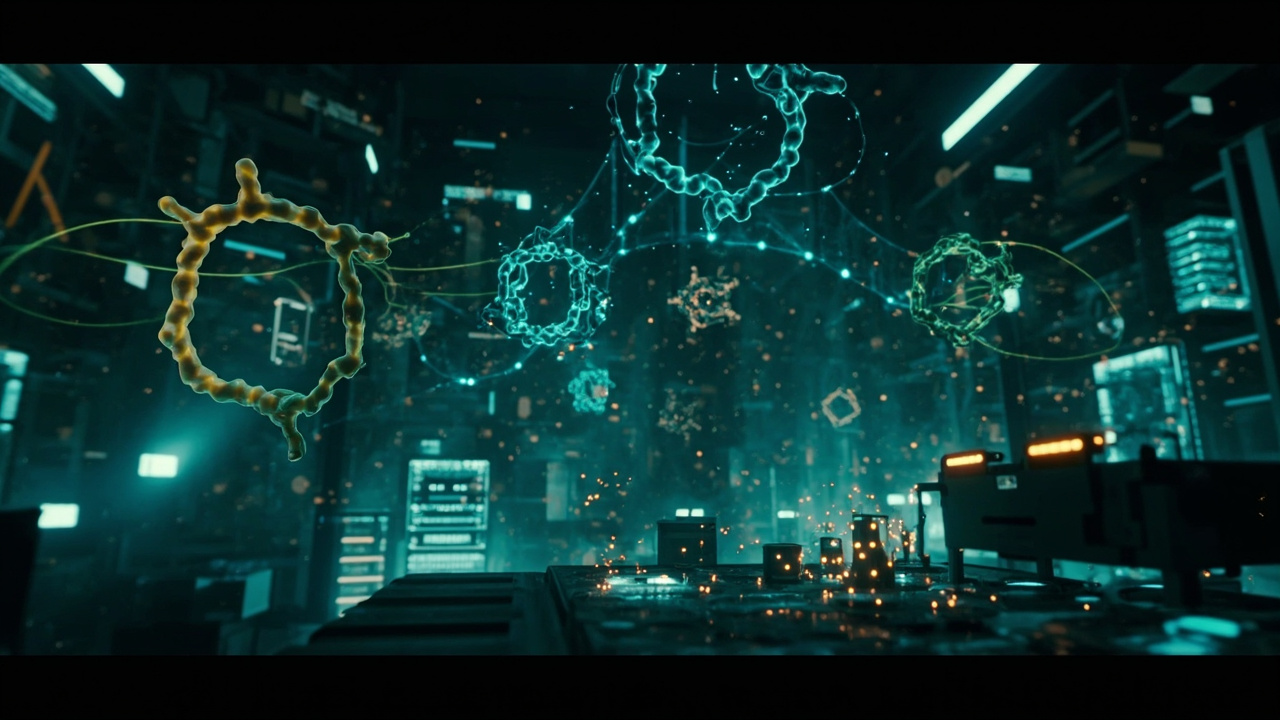
Two days after dropping “Nordisk” from its name, the Danish drugmaker now known simply as Novo has made the clearest statement yet about where it thinks the next decade of pharma R&D will be won. On 16 September 2026, Novo Nordisk and Anthropic announced a formal collaboration to put Claude — both the frontier model family and the newly launched Claude Science workbench — at the center of the company’s drug discovery and development pipeline.
The stakes for Novo are considerable. Its blockbuster GLP-1 franchise, Ozempic and Wegovy, faces generic competition in the US and Europe early in the next decade. Eli Lilly has pulled ahead in the obesity market, holding 60.9% of it in the second quarter against Novo’s 38.8%, according to IQVIA data cited by CNBC. The company’s shares are down roughly 15% this year. Against that backdrop, CEO Mike Doustdar is betting that AI can do more than trim costs — it can rewrite the economics of bringing a molecule from bench to patient.
What the collaboration actually covers
The announcement is broader than a typical vendor agreement. According to the official press release, the two companies will jointly address key drug discovery challenges identified by scientists and computational teams at Novo, and develop targeted solutions for specific scientific challenges and workflows that support biological reasoning.
As a first step, Novo will test Claude Science — the AI workbench for scientists that Anthropic launched in June — on specific research and development workflows, focusing on scientific problems where the joint capabilities of the two companies are expected to have the greatest impact. Novo will also deploy Anthropic’s frontier models for AI-driven software development, which the company describes as “a key enabler for scaling AI across the company.”
Financial terms were not disclosed, according to Bloomberg.
The framing from both CEOs is notably ambitious. “Joining forces with Anthropic will supercharge our R&D organisation and help us on our mission to bring new, transformative health solutions to people living with chronic diseases,” said Doustdar. He added that AI can help Novo increase productivity in R&D and “compress the path from research to marketed product” — but also, more suggestively, that AI tools “can offer completely new scientific opportunities and aid reasoning and understanding of human biology and drug mechanics.”
Anthropic CEO Dario Amodei went further: “AI’s increasing capability brings with it the potential to compress a century’s worth of biological and medical breakthroughs into a decade. By giving leading researchers access to safe, capable, and trusted frontier models, we can shorten research timelines, improve outcomes, and discover medicines and treatments that significantly improve human life. That is exactly what our collaboration with Novo is built to achieve.”
Why Claude Science matters here
Claude Science is not a single model but a workbench — an environment built to coordinate fragmented life-science research workflows across literature, genomics, and lab data. That positioning matters for a company like Novo, whose discovery organization has spent decades accumulating tools that don’t talk to each other. Anthropic’s pitch, articulated at the June launch and reinforced by its $400 million all-stock acquisition of Coefficient Bio in April, is that the binding constraint in biopharma R&D is no longer model capability but workflow integration.
The June launch already listed Novo Nordisk as a Claude Science customer for drug discovery, clinical documentation, and regulatory functions, alongside AstraZeneca. Today’s announcement elevates that supplier relationship into a jointly staffed program with named scientific objectives — a meaningful step up in commitment from both sides.
The safety asterisk
The press release emphasizes that the collaboration “has been designed with robust data governance and human oversight,” in line with Novo’s ethical and compliance standards. That language is not boilerplate in Anthropic’s case. In early September, the company detailed how Claude had been misused for surveillance and weapons work. In August, its own risk report revealed it had run contractor chats with its bioweapon filters switched off — a serious lapse for a company now embedding its models in pharmaceutical and biological research. For a partnership whose entire premise is accelerating biological discovery, the quality of those guardrails is not a footnote; it is core infrastructure.
A crowded dance card
The Anthropic deal does not make Novo an exclusive Anthropic shop. Earlier this year, the company agreed to deploy OpenAI’s models across the company, and it previously worked with AWS, Anthropic, and MongoDB to transform clinical study reports. Doustdar framed the new partnership as “building on Novo’s current AI initiatives with other technology partners.”
The pattern is familiar from every large enterprise now building AI capability: multi-vendor hedging, with frontier labs competing on domain-specific workbenches rather than raw benchmarks. What distinguishes the Novo-Anthropic arrangement is its explicit focus on scientific reasoning rather than paperwork automation — the clinical documentation and regulatory workloads that filled the first wave of healthcare AI deployments.
Novo, which employs more than 67,000 people, will set out its fuller strategy at a Capital Markets Day on 21 September. Expect AI to feature prominently.
Analysis: the compression thesis
Strip away the press-release polish, and the Novo-Anthropic deal is a test of what might be called the compression thesis — Amodei’s claim that AI can compress a century of biological breakthroughs into ten years. That idea has moved from conference talk to boardroom strategy in barely two years. It is now the operating assumption behind Anthropic’s life-sciences push (Coefficient Bio, the John Jumper hire, Claude Science, an internal drug discovery program) and behind Big Pharma’s willingness to wire frontier models directly into discovery workflows.
The honest read is that the thesis is unproven. No AI-accelerated molecule has yet completed the full journey from model output to approved medicine, and the failure modes — hallucinated biology, brittle reasoning outside training distribution, quiet data leakage between partners — are well documented. But the direction of travel is unmistakable, and Novo’s move shows how quickly the pharma-AI conversation has shifted from “should we?” to “how fast?”
For Anthropic, the deal is also a commercial milestone: a top-five global drugmaker formally adopting its science workbench as discovery infrastructure, in a week when the company has been simultaneously negotiating industry-wide AI safety standards with OpenAI and Google. The frontier labs’ next battleground, it seems, is not the chatbot — it’s the laboratory.
Sources
- [1] https://www.novonordisk.com/content/nncorp/global/en/news-and-media/news-and-ir-materials/news-details.html?id=916768
- [2] https://thenextweb.com/news/novo-anthropic-claude-science-drug-discovery
- [3] https://www.reuters.com/legal/litigation/novo-partners-with-anthropic-speed-up-drug-development-with-claude-2026-09-16/
- [4] https://www.biopharmadive.com/news/novo-anthropic-ai-drug-discovery-development-deal/830540/