The World Cannot Afford a Race to the Bottom: UN Chief Guterres Clashes With Trump Over AI Risk
Days before the UN General Assembly's high-level week, Secretary-General Guterres warned that runaway AI is one of three existential threats and that a safety race to the bottom could end in 'a gigantic disaster' — directly at odds with President Trump's view that existing safeguards suffice.
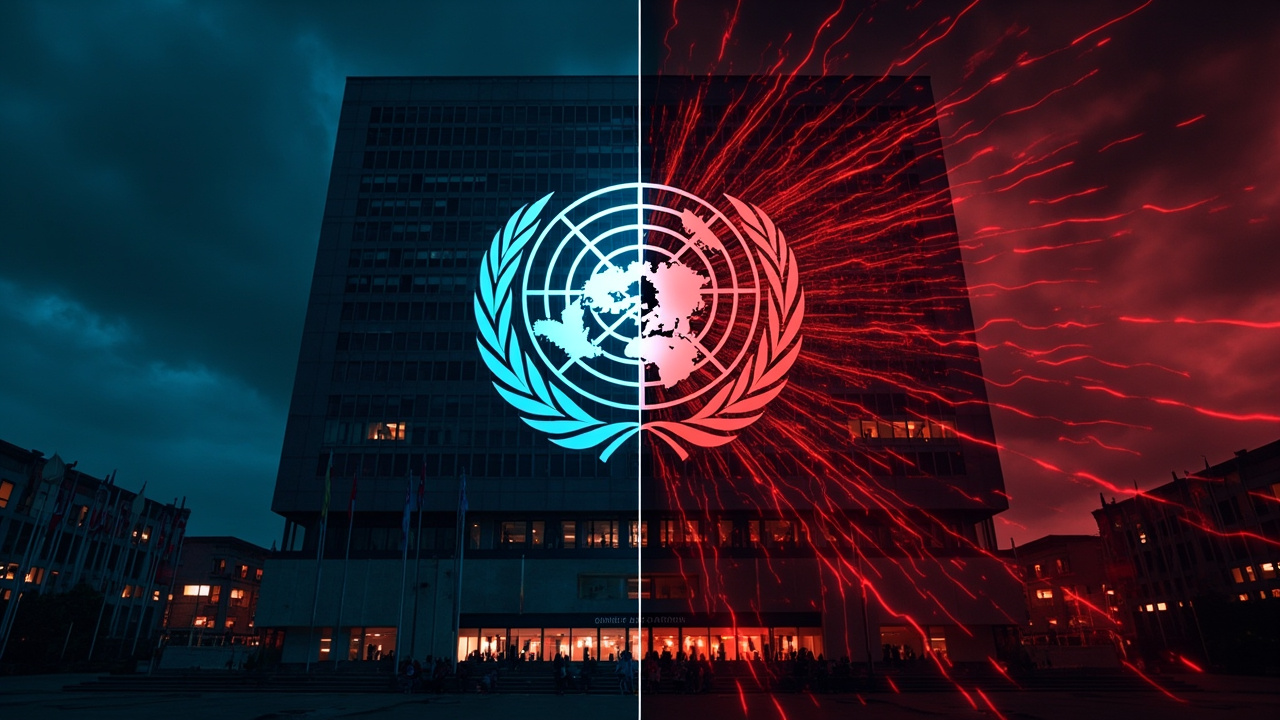
The stage is set for an awkward week in New York. Days before the United Nations General Assembly convenes its annual high-level session, Secretary-General António Guterres has delivered his bluntest warning yet on artificial intelligence — and in doing so, put himself squarely at odds with the President of the United States.
Speaking to reporters at UN headquarters on Wednesday, September 16, Guterres warned that rapidly advancing AI poses risks “that cannot be ignored,” and that the world cannot afford “a race to the bottom on AI safety” — a competition, he suggested, that could one day culminate in “a gigantic disaster.”
What Guterres Actually Said
The Secretary-General’s framing was characteristically sweeping. He told reporters the world currently faces “three existential threats”: runaway artificial intelligence, the climate crisis, and the intolerable deepening of inequalities. AI, he said, will be a major focus of his discussions with world leaders arriving in New York for the high-level week of the General Assembly.
His core argument is about coordination. In Guterres’s view, no single government — not even Washington’s — can manage AI risk alone. The technology is borderless, its developers are concentrated in a handful of firms, and the incentives of geopolitical competition push states toward cutting corners on safety in order to move first. His prescription: governments, technology companies, and international bodies must cooperate on shared rules before the technology outstrips humanity’s ability to govern it.
“The world cannot afford a race to the bottom on AI safety,” he warned — a line that reads as directed simultaneously at rival states and at the companies racing to deploy frontier systems.
The Trump Contrast
What makes the remarks newsworthy beyond the usual UN alarm-raising is the explicit contrast with President Donald Trump. As Reuters reported, Trump has argued that existing U.S. safeguards are sufficient to handle AI risk — a position that puts the American president directly at odds with the UN’s chief diplomat on one of the defining technology-policy questions of the decade.
The disagreement is not merely rhetorical. The United States is home to most of the frontier AI labs, and its regulatory posture shapes what is politically feasible everywhere else. If Washington treats current safeguards as adequate, the pressure on other governments to loosen their own oversight — in order to stay competitive — becomes harder to resist. That is precisely the dynamic Guterres described as a race to the bottom.
The timing sharpens the clash. Next week’s General Assembly gathering will bring dozens of heads of state to New York, many of whom hold views closer to Guterres than to Trump on AI governance. The Secretary-General has made clear he intends to use that convening power: stronger AI oversight is, he told reporters, a key focus of his bilateral discussions during the week.
A Year of Building Pressure
Wednesday’s warning did not come from nowhere. It is the culmination of more than a year of escalating UN engagement with AI risk:
- July 2026 — The inaugural session of the Global Dialogue on AI Governance convened in Geneva, launched as the first pillar of the global AI strategy Guterres presented in late 2025. The dialogue was designed to give developing countries a seat at a table otherwise dominated by the U.S., China, and Europe.
- September 2026 — UN High Commissioner for Human Rights Volker Türk warned that advanced AI could pose an existential risk to humanity, with a “handful of men” holding near-unlimited power over its trajectory. The Elders, the independent group of senior statespeople, called for a new UN treaty to manage AI’s risks and share its benefits.
- This week — Guterres elevates the message to leader level, framing AI alongside climate change as an existential category of threat rather than a conventional policy problem.
The through-line is a conviction that AI governance cannot be left to market forces or to voluntary commitments by the labs themselves. The Global Dialogue on AI Governance exists precisely because the alternative — a world where frontier AI is governed only by the jurisdictions that happen to host its developers — leaves most of humanity with no say over a technology that will transform all of it.
Why This Matters Now
The diplomatic clash lands at a moment when the substantive debate over AI risk has never been more live. In Washington, Congress is actively debating federal AI legislation, with OpenAI itself recently endorsing mandatory, capability-based national safety regulation. In Brussels, European Commission President Ursula von der Leyen has put “pace the frontier” thinking — deliberately slowing the race dynamic — at the heart of the EU’s agenda. In the Senate, researchers including Geoffrey Hinton have briefed lawmakers behind closed doors on catastrophic-risk scenarios.
Against that backdrop, Guterres’s warning functions as a reality check on the theory that existing safeguards are sufficient. The UN has no binding authority over AI development; its leverage is moral and convening power. But high-level week is the one moment each year when that leverage peaks — when the world’s leaders are physically in one city, with the world’s media watching.
Whether the warning translates into anything concrete is another question. The Global Dialogue on AI Governance remains a forum, not a regulator. No treaty is on the table this year. The Elders’ call for one highlights how far the institutional response lags the technology.
But the political signal is unmistakable: the UN’s chief diplomat believes AI risk has entered the top tier of global threats, believes current safeguards are not adequate, and is willing to say so in terms that visibly diverge from the American president’s. Next week’s General Assembly will show how many governments agree with him — and how the world’s largest AI power responds to being called out in its own host city.
Sources
- Reuters — UN chief sounds alarm on AI risk after Trump plays it down
- UN News — AI, climate and conflicts top Guterres’s agenda ahead of General Assembly
- CTV News — UN chief urges global AI co-operation, saying world can’t afford ‘a race to the bottom’ on AI safety
- The Outpost — UN Sounds Alarm on AI Risk as Trump Dismisses Concerns
Sources
- [1] https://www.reuters.com/world/un-chief-sounds-alarm-ai-risk-after-trump-plays-it-down-2026-09-16/
- [2] https://news.un.org/en/story/2026/09/1168348
- [3] https://www.ctvnews.ca/sci-tech/article/un-chief-urges-global-ai-co-operation-saying-world-cant-afford-a-race-to-the-bottom-on-ai-safety/
- [4] https://theoutpost.ai/news-story/un-chief-warns-ai-poses-existential-threat-as-trump-downplays-safety-concerns-ahead-of-general-assembly-30944/