Noon in Fort Worth: Judge Gives Musk's Companies Hours to Hand Over the Secret Apple Deal
After X Corp and SpaceXAI abruptly dropped Apple from the ChatGPT antitrust case without disclosing terms, Judge Mark Pittman ordered them to produce any Apple agreement for private review by noon on September 17 — while OpenAI, the remaining defendant, fights to see it too.
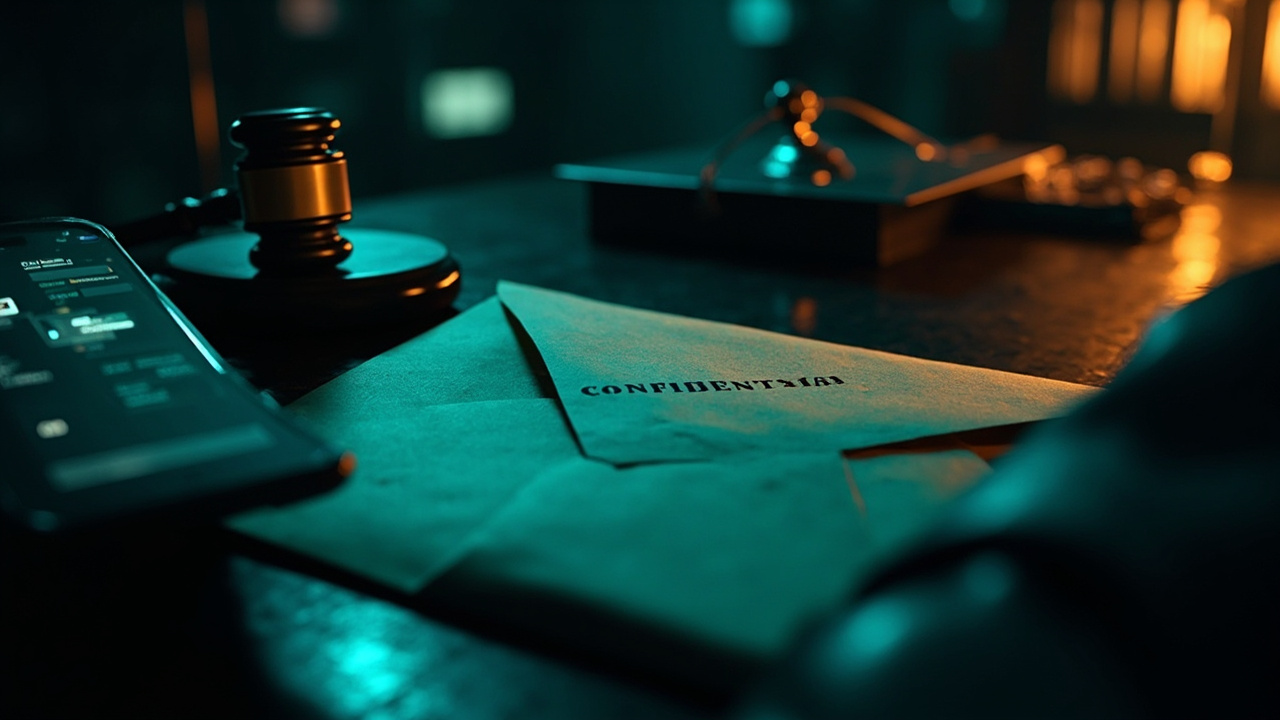
One of the stranger subplots of the AI wars landed on a federal judge’s desk this week, and today it comes to a head. On September 14, X Corp and SpaceXAI — Elon Musk’s social platform and his AI company, the maker of Grok — filed a one-paragraph motion to drop Apple from their year-old antitrust lawsuit “with prejudice,” meaning permanently. The filing said only that the companies “have resolved their claims” against Apple. It did not say how, why, or for how much. Two days later, US District Judge Mark Pittman gave them until noon on September 17 to hand over “any agreement or combination of agreements with Apple” relating to that resolution, for his private, in-camera review.
That deadline is today. And the company most eager to read those documents is not the court — it is OpenAI, which is now the only defendant left in the case.
The case that shrank
The lawsuit, filed on August 25, 2025 in the Northern District of Texas, Fort Worth Division, told a story of two monopolists joining forces. The complaint alleged that Apple’s June 2024 deal to integrate ChatGPT into Siri and Apple Intelligence made OpenAI’s chatbot the only generative AI assistant baked into the iPhone — handing it exclusive access, by the plaintiffs’ math, to a meaningful slice of the 1.5 billion daily requests Siri was fielding. X and SpaceXAI claimed Apple holds about 65 percent of the US smartphone market and OpenAI at least 80 percent of the generative chatbot market, and that the pairing locked Grok out of the most valuable distribution surface in consumer technology.
The alleged mechanics were blunt: Grok and X deprioritized in App Store rankings, delayed app review for Grok updates, and a refusal to integrate Grok with iOS at all. The complaint brought Section 1 and Section 2 claims under the Sherman Act plus Texas state antitrust law, and sought damages it described in the billions.
The case survived every early attempt to kill it. Judge Pittman rejected a venue challenge in October 2025, denied both Apple’s and OpenAI’s motions to dismiss in November 2025, and the defendants answered the complaint that December. Trial was set for October 2026 — the middle of the AI news cycle — before being pushed to January 11, 2027 at OpenAI’s request, with discovery closing July 31, 2026 and motions due September 15, 2026.
Then, with the motions deadline upon them, the plaintiffs did something antitrust plaintiffs almost never do: they voluntarily dismissed half the case, against the deeper-pocketed defendant, with prejudice, and disclosed nothing.
Why “with prejudice” set off alarms
In litigation, dropping a claim “without prejudice” means you might refile; dropping it “with prejudice” means it is over forever. A plaintiff who has survived motions to dismiss, completed discovery, and stands months from trial does not typically give away that position for free — especially not against Apple.
OpenAI’s response was immediate. On September 15 it filed an emergency motion to compel, arguing that whatever Musk’s companies got from Apple may directly undermine the claims still being pursued against OpenAI. Law360 reported the company’s core concern plainly: the terms of the Apple resolution “may undermine the antitrust allegations SpaceXAI is still pursuing against OpenAI.” If Apple, say, paid a settlement, that is evidence the plaintiffs’ injuries were real; if Apple promised Grok better App Store treatment or an iOS integration path, that reshapes the market-definition story; if the agreement contains cooperation or non-disparagement clauses, it could bear on how the remaining claims are litigated. Under discovery rules, a defendant is entitled to know whether its co-defendant bought its way out on terms that affect the case it still has to defend.
Judge Pittman — a Fort Worth-based judge who has overseen the case since its filing and had already denied dismissal once — agreed that the question needed answering, ordering production of any Apple agreements for in-camera review and setting the noon deadline. Apple did not oppose the dismissal motion but reserved the right to respond by the same deadline.
What it means that OpenAI stands alone now
The remaining case is narrower but arguably stranger. Musk’s companies are still pursuing OpenAI Foundation, OpenAI L.L.C. and OpenAI OpCo LLC — three entities from a company Musk co-founded and left, whose nonprofit-to-profit restructuring he has litigated and campaigned against on separate tracks. OpenAI has previously characterized Musk’s various suits as a “campaign of lawfare” against the company. The Fort Worth case is now that campaign’s main surviving antitrust front, aimed at a single defendant, on a theory whose strongest half — the platform side, the App Store conduct, the 65-percent smartphone share — left with Apple.
There is also an uncomfortable optics problem for the plaintiffs. The complaint’s theory rested heavily on the ChatGPT-iPhone exclusivity. But the world has moved since August 2025: Apple has reportedly signed a new agreement to integrate Google’s AI services into its products, Siri’s AI story has cycled through multiple partners, and Grok itself has been distributed through channels the 2025 complaint treated as closed. A jury in January 2027 will be asked to evaluate a market definition frozen in mid-2025 — unless the Apple agreement, once unsealed, rewrites it first.
The quiet backdrop: money, models, and leverage
The timing invites speculation, and the filing invites it by saying nothing. SpaceXAI is in the middle of the most expensive race in corporate history — building frontier models, robotaxis, and now its “Grok Bot” agent ecosystem — and Musk has spent September publicly benchmarking a ladder of unshipped Grok models against OpenAI’s and Anthropic’s current ones. OpenAI, for its part, is reported to be in early talks for a funding round at a valuation north of $1 trillion, and its ads business just crossed a $1 billion annualized run rate. Settling with the co-defendant who controls your iOS distribution, while continuing to sue the company you consider your chief rival’s chief rival, is a coherent strategy: take the platform concessions, keep the war.
Or perhaps the resolution is smaller than it looks — a routine, undisclosed settlement that both parties preferred to discovery about App Store ranking algorithms. That is exactly what Judge Pittman’s in-camera review exists to determine: whether the dismissal is what it appears, or whether the agreement contains something that changes the case against OpenAI.
What happens at noon
Three outcomes bracket the day. The companies produce the agreement, and the judge decides — privately at first — whether OpenAI gets to see it, in whole or in redacted part. They produce nothing and argue no agreement exists, in which case “resolved” becomes a word doing very heavy lifting and the court will want to know what consideration changed hands. Or they miss the deadline, which at this point in a judge-managed case is its own statement.
Whatever lands in the filing docket, the structural fact is already public: the first big antitrust test of how AI distribution deals are judged will now be decided with one monopolist absent from the room, on terms sealed at least for now, while the AI industry’s defining personal feud — Musk versus the company he founded — heads toward a January 11, 2027 trial date in Fort Worth. The trillion-dollar question of who gets to sit at the default layer of the iPhone was, as of this morning, being answered in a sealed envelope.
The case is X Corp. and SpaceXAI LLC v. Apple Inc., OpenAI Foundation, OpenAI L.L.C. and OpenAI OpCo LLC, No. 4:25-cv-00891, US District Court for the Northern District of Texas, Fort Worth Division. Trial is set for January 11, 2027.
Sources
- [1] https://www.politico.com/news/2026/09/15/elon-musk-antitrust-apple-openai-01078840
- [2] https://9to5mac.com/2026/09/16/judge-scrutinizes-musks-move-to-drop-apple-from-antitrust-lawsuit-involving-openai/
- [3] https://www.law360.com/articles/2525790/openai-wants-to-see-details-of-spacexai-s-deal-with-apple
- [4] https://www.unite.ai/x-corp-moves-to-dismiss-apple-from-antitrust-suit-keeping-openai-claims/
- [5] https://www.aljazeera.com/news/2026/9/14/elon-musks-x-corp-and-spacexai-drop-antitrust-lawsuit-against-apple