Claude Gets a Wet Lab: Anthropic Quietly Opens a Physical Biology Lab in the Bay Area
Reuters confirms Anthropic has set up a wet lab for physical biology experiments in the San Francisco Bay Area, testing whether Claude can direct robotic systems while drawing hard lines around drug discovery and clinical trials.
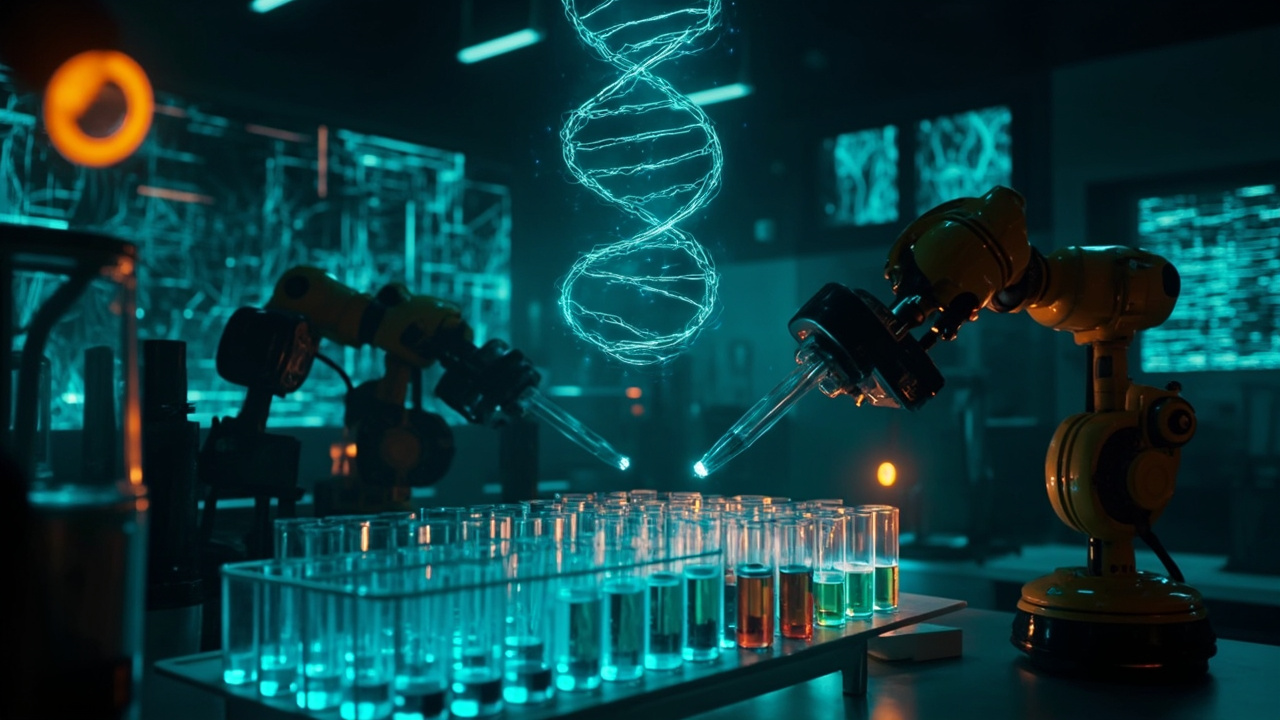
For most of its existence, Anthropic’s biology ambitions lived entirely inside computers: models predicting protein structures, agents navigating scientific databases, partnerships that gave pharmaceutical giants access to Claude. This week, that changed. Reuters reported on Friday that the company has quietly established a wet lab in the San Francisco Bay Area — a physical laboratory where actual biological experiments are run, not just simulated.
The disclosure came from Eric Kauderer-Abrams, Anthropic’s head of life sciences, who confirmed the lab’s existence in an interview. His framing was blunt about why a software company is now buying lab benches and reagents: “We believe that to do biology, the final test is still and will be for a while in real lab work,” he told Reuters. “We absolutely are doing that today.”
What the lab actually is
According to the Reuters report and subsequent coverage, the facility supports physical biology experiments — the kind that require pipettes, incubators, and physical samples rather than GPU clusters. Anthropic says some experiments are conducted in its own facilities while other work is sent to external partners, putting the company on both sides of the lab-work divide: it is building in-house capability while retaining outside capacity.
Notably, an Anthropic spokesperson was careful to scope down what the lab is for, saying it is “not specifically for drug discovery” and declining to elaborate further. The company also confirmed it has set a boundary against running clinical trials for now.
That caution is telling. Anthropic’s public positioning around life sciences has consistently emphasized early-stage research on diseases that traditional pharmaceutical companies find financially unattractive — rare diseases with small patient populations that don’t justify billion-dollar development programs. Kauderer-Abrams first signaled this ambition at a June gathering in San Francisco, telling the audience the company would concentrate on early-stage work in territory that established industry players had passed over for financial reasons.
The robotic frontier
The most consequential detail in the report concerns automation. According to CNBC, which cited two people familiar with the matter, Anthropic is testing whether Claude can instruct robotic systems to run experiments with minimal staffing — following the broader biotech industry’s move toward laboratory automation.
The company moved quickly to qualify that. A spokesperson emphasized that human involvement remains a safety requirement, and the automation work is described as exploratory rather than evidence of a deployed autonomous laboratory. The distinction matters: a Claude-directed robotic lab, even a small one, would be a fundamentally different kind of artifact than a chatbot that helps write a grant proposal.
It also connects to standards work Anthropic has already done in this space. The company has introduced what it calls the Model Hardware Standard, a specification meant to help AI models operate laboratory equipment. A wet lab gives that standard a place to be exercised against reality.
A life-sciences division built across a year
The wet lab did not appear from nowhere. Anthropic has been assembling the pieces of a serious life-sciences operation across the past year:
- Research infrastructure: the company operates a scientific research workbench connecting to more than 60 scientific databases, with toolkits spanning genomics, proteomics, and structural biology.
- Board-level expertise: Novartis CEO Vas Narasimhan joined Anthropic’s board, bringing pharmaceutical-industry governance experience to a company best known for chatbots.
- Acquisition: Anthropic purchased Coefficient Bio for roughly $400 million in stock — a deal the company confirmed will help advance its drug development capabilities.
- Commercial partnerships: Novo Nordisk partnered with Anthropic this week to accelerate drug discovery using Claude, and earlier arrangements gave Bristol-Myers Squibb’s workforce access to Claude for research and development. Anthropic also provides AI services to Roche’s Genentech.
Kauderer-Abrams told Reuters that the life-sciences division has grown into one of the company’s most heavily staffed and resourced departments. For a company that raised its profile on coding agents and enterprise chat, that is a striking allocation of firepower.
Not competing with pharma — for now
The boundary Anthropic has drawn is deliberate. “We’re not competing with pharma and biotech companies that make their business in bringing drugs to market,” Kauderer-Abrams said. The company’s stated theory of value is to occupy the early-stage research layer — hypothesis generation, target identification, experimental validation — where AI can compress timelines dramatically, and to leave the expensive, regulated business of clinical trials and commercialization to established players.
Whether that boundary holds is an open question. Anthropic is simultaneously selling AI tools to pharmaceutical companies and building physical laboratories of its own — a dual position that invites the kind of scrutiny any platform operator faces when it competes with its customers. The company’s answer, so far, is that the lab exists to make Claude better at biology, not to become a drugmaker.
There is also a safety dimension that fits Anthropic’s brand. Physical biology capability at an AI company is exactly the category of work that biosecurity researchers watch closely, and the company’s emphasis on human oversight and exploratory (rather than deployed) automation reads as an attempt to set norms before regulators set them instead.
Why it matters
The wet lab marks a structural shift in what frontier AI companies are. OpenAI is building advertising infrastructure; Anthropic is building lab automation and physical experimentation. As the Reuters report notes, frontier AI companies are beginning to cross the boundary between generating scientific hypotheses and physically testing them — and the company that best closes that loop between prediction and physical validation may find it is no longer a software company at all.
For now, the lab is small, scoped, and heavily caveated. But the direction is unmistakable: Claude’s next workplace is not another chat window. It’s a lab bench.