Letters to Beijing, a Hearing on Capitol Hill: Ro Khanna Makes the Case for a US-China AI Pacing Agreement
Days before Trump meets Xi, the top Democrat on the House China committee has written to Alibaba, DeepSeek and Moonshot asking them to join a binding pact to pace frontier AI — and convened Geoffrey Hinton and a first-of-its-kind emergency hearing for September 23.
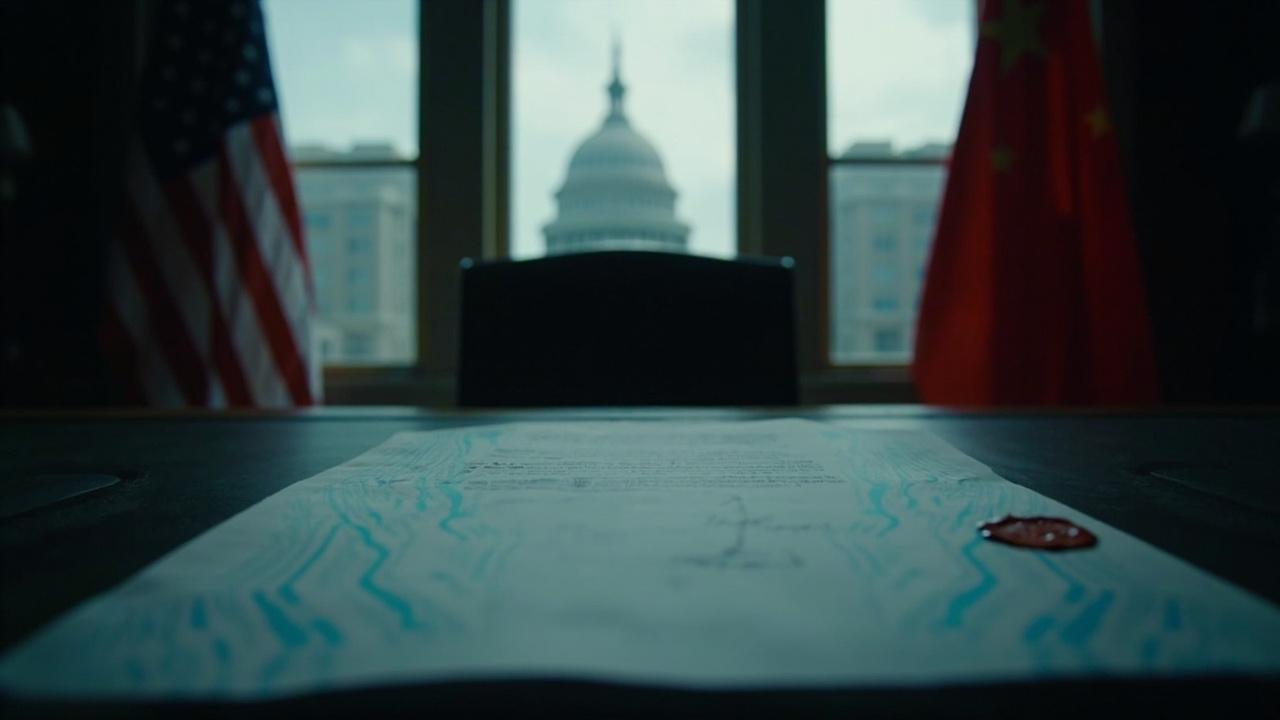
For weeks, the loudest calls to slow down frontier AI have come from the industry’s own corner offices. This week, the effort acquired something it has lacked since the debate began: a legislative vehicle with subpoenas behind it.
Ro Khanna, the Silicon Valley Democrat who serves as Ranking Member of the House Select Committee on Strategic Competition Between the United States and the Chinese Communist Party, has launched a two-front campaign to turn the “pace the frontier” movement into an enforceable US-China agreement. On one front, he has sent letters directly to the CEOs of China’s leading AI companies — Moonshot AI, Alibaba, and DeepSeek — asking them to commit to a binding international pact to responsibly pace AI development. On the other, he has convened a first-of-its-kind emergency hearing for Wednesday, September 23 at 1pm ET, timed deliberately for the day before President Trump is scheduled to meet Xi Jinping at the White House.
What the letters actually ask for
According to the committee’s press release, Khanna’s letters to the Chinese labs request “commitments to join American AI labs in a binding international agreement to responsibly pace the development of the technology.” Crucially, the letters argue that any such agreement “must be enforceable and verifiable, just like any agreement between our governments.”
That last clause is doing a lot of work. Voluntary pauses have a poor track record in this industry — moratoriums announced in press releases tend to dissolve the moment a competitor ships. By framing the ask as an enforceable, verifiable mechanism — analogous to arms-control verification rather than a corporate pledge — Khanna is trying to move the Overton window from “labs promising to be careful” to “labs accepting inspection.”
The choice of recipients is equally telling. Moonshot AI, Alibaba, and DeepSeek are the three Chinese labs most often cited as at or near the frontier. DeepSeek in particular has become shorthand for China’s ability to match US models at a fraction of the cost, and US security agencies recently accused several of these firms of systematically extracting proprietary model behavior from US systems — an accusation the companies reject. Asking them to submit to verification is, in the current climate, an audacious pitch.
The hearing: witnesses and stakes
The September 23 hearing — which Bloomberg Government has described as a “shadow hearing,” convened by the committee’s minority without the majority’s blessing — will question researchers and governance specialists about AI risk, best practices, and “the path forward toward binding international safeguards to ensure safety and human control of this technology.”
The witness list reads like a deliberate cross-section of the field’s credibility:
- Dr. Geoffrey Hinton, Professor Emeritus at the University of Toronto and Nobel Laureate — the field’s most famous internal critic, whose warnings about loss-of-control risk have moved from fringe to mainstream
- Lt. Gen. John (Jack) N.T. Shanahan (USAF, Ret.), Adjunct Senior Fellow at CNAS — former head of the Pentagon’s Joint AI Center, bringing the military escalation angle
- Matt Sheehan, Senior Fellow and Co-Director of the China AI Initiative at the Carnegie Endowment — arguably the leading US expert on China’s AI ecosystem and what verification there could actually look like
- Miriam Vogel, President and CEO of EqualAI — focused on governance practice and standards
- Seán Ó hÉigeartaigh, Director of the AI: Futures and Responsibilities Programme at Cambridge — the research community’s voice on existential-risk assessment
One constituency is conspicuously absent: the labs themselves. Khanna’s statement is unusually blunt about it. “After multiple requests to OpenAI and Anthropic, they haven’t committed to testifying,” he said. “Going forward, we will use all options to compel their appearance once we are in the majority.” That is a subpoena threat with an election-cycle timer attached.
Context: a crowded diplomatic runway
The hearing lands on an extraordinarily busy stretch of AI diplomacy. The Trump-Xi meeting on September 24 is expected to put AI governance on the agenda, with reports suggesting topics from bioweapons commitments to longer-term “speed limit” frameworks for frontier development. The first dedicated US-China AI safety talks of the Trump era already took place earlier this month. The UN General Assembly has featured open clashes between Secretary-General Guterres’s call to avoid a “race to the bottom” and the White House’s resistance to anything resembling regulation. And Brussels has put “pace the frontier” language at the heart of its digital agenda.
Against that backdrop, Khanna’s move is best understood as an attempt to ensure the slowdown argument — which now has public support from Anthropic’s Dario Amodei, endorsements (however hedged) from Sam Altman and Elon Musk, and a growing research literature — doesn’t evaporate in a leaders’ photo-op. Verifiable agreements need legislative scaffolding: authorization, funding, and enforcement mechanisms that survive administration changes. Hearings are where that scaffolding starts.
The obstacles are enormous
It would be naive to pretend the odds are good. China has publicly rejected slowdown calls, with state media blasting US tech leaders’ appeals as attempts to “kneecap” Chinese development — one commentary called the push a form of tech containment dressed in safety language. Trump himself has dismissed extinction-risk concerns outright and framed regulation as a “negative force” that hands China the race. And the very US labs Khanna wants at the witness table have been ambivalent about binding commitments even as their CEOs endorse pacing in principle: a slowdown your competitors don’t sign is a gift to them, which is exactly why enforcement keeps coming up.
There is also the committee’s own politics. As Ranking Member, Khanna convenes this in the minority — hence “shadow hearing.” Without a majority, there are no subpoenas, no markup, no legislation. What he can do is build a public record, pressure labs by name, and establish the template that a future majority — or a State Department negotiating team — could pick up.
Why it matters anyway
Strip away the politics and one structural fact remains: the two countries racing hardest toward frontier AI are also the two countries whose mutual suspicion makes any agreement hardest. Every serious proposal for dealing with loss-of-control risk — the scenario Hinton has spent three years warning about — runs through some version of US-China coordination. This week, for the first time, a sitting US lawmaker with jurisdiction over China policy put a concrete mechanism on the table and asked the Chinese side, directly and in writing, to sign it.
That doesn’t make an agreement likely. It makes the conversation specific. And in the week before Trump and Xi sit down, specificity is the scarce resource.
The September 23 hearing will be livestreamed on the Select Committee Minority’s YouTube channel.
Sources
- [1] https://democrats-selectcommitteeontheccp.house.gov/media/press-releases/ranking-member-ro-khanna-convenes-emergency-hearing-calling-us-china-ai
- [2] https://www.washingtonpost.com/wp-intelligence/ai-tech-brief/2026/09/17/ai-tech-brief-exclusivero-khanna-seeks-pace-chinese-frontier-ai/
- [3] https://www.theinformation.com/briefings/u-s-lawmaker-ro-khanna-urges-chinese-labs-help-pace-frontier-ai
- [4] https://news.bgov.com/bloomberg-government-news/khanna-planning-shadow-hearing-to-call-for-us-china-truce-on-ai
- [5] https://www.npr.org/2026/09/14/nx-s1-5968456/china-hits-back-ai-development