Dead Men Touring: Unit1 Raises £15M to Put Hyper-Realistic AI Avatars on Stage
The UK startup founded by Andrew Lloyd Webber's former empire-runner has raised ~£15M ($20M) from Balderton to stage concerts with hyper-realistic digital avatars of retired and deceased musicians — a low-cost, touring Abba Voyage.
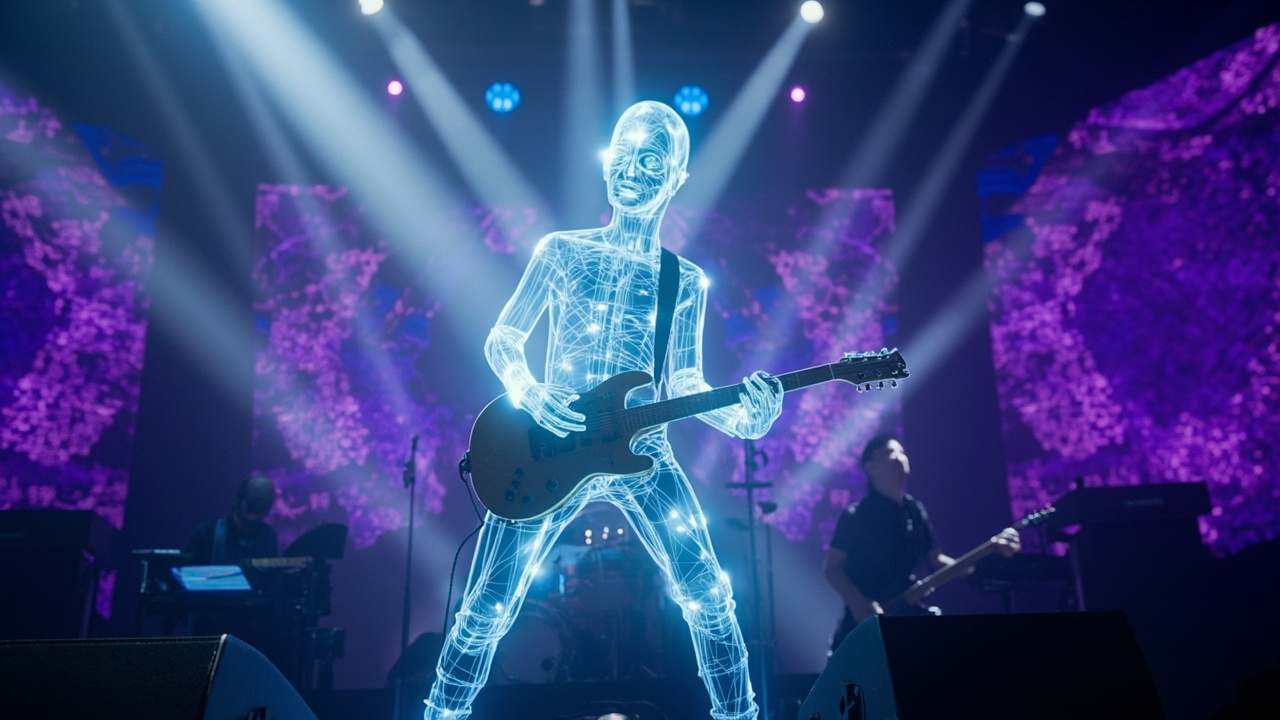
The money flowing into AI music has mostly chased generation — models that write songs, clone voices, or clear licenses. A UK startup called Unit1 is chasing something older and stranger: resurrection. On September 20, the Guardian reported that the London-based company has secured close to £15 million (about $20 million) to stage live concerts fronted by “hyper-realistic” digital avatars of living artists who no longer tour — and, more provocatively, of dead musicians.
The round was led by Balderton Capital, Europe’s largest early-stage VC, through partner Daniel Waterhouse — an early Spotify investor — with participation from existing backers including VC firm Mercuri and Paul McGuinness, the Irish music executive who managed U2 from the late 1970s until 2013. Balderton’s portfolio already includes music-rights firm Kobalt and fintech Revolut.
Who is building this
Unit1 was founded in 2025 by Barney Wragg, an entertainment executive who ran Andrew Lloyd Webber’s Cats-to-Evita empire (the Really Useful Group) for five years from late 2011, after holding digital leadership roles at Universal Music and EMI. This is not a generative-AI lab stumbling into music; it is a music-industry veteran building AI tooling around a live-production pipeline that already exists.
The company’s first showcase came in October 2025 with Grammy-nominated Scottish singer-songwriter KT Tunstall, who worked with Wragg during his EMI stint. Tunstall was filmed by motion-capture cameras in a London studio as she recreated a two-decade-old performance from Later… with Jools Holland, with the avatar system updating her features to the way she looks now. ROE Visual supplied the LED wall; Brompton Technology powered the processing — the same broadcast-grade stacking used for arena shows, not a research demo.
The product: Abba Voyage economics without the custom arena
The reference point everyone reaches for is Abba Voyage, the 2022 London launch that put de-aged digital avatars of the Swedish pop group in a purpose-built venue in east London and became one of the most lucrative residencies in modern live music. It proved the format. It also proved its cost: a custom-built 3,000-seat arena, years of motion capture with the band, and an effectively non-touring show.
Unit1’s pitch is that the same experience can be produced at materially lower cost and without a dedicated venue — giving artists, rights holders, venues, and promoters a route to digital shows using existing infrastructure. Because the show is fundamentally an LED screen, lighting, sound, and props, it can in theory run in several countries simultaneously. One production, N tours.
The staging model matters for how the illusion works: Unit1’s aim is to put real musicians playing live instruments on stage alongside the digital performers. The audience faces a high-definition LED screen combined with additional lights, sound, and physical props designed to make the boundary between digital and physical space disappear.
“For the audience member in the room it is seamless between the digital and the physical room, immersing them,” Wragg told the Guardian. “It’s a teleportation of an audience member to a time and place.”
How the dead-performer avatars get made
For deceased artists, Unit1 says it develops avatars through a mixture of archive footage and hiring actors and musicians who either look like or play like the departed star, then blending the footage together. Wragg has previously named the shows he wishes he could have seen — Queen at Live Aid, the Beatles at the Cavern Club, Jimi Hendrix at Woodstock — while staying tight-lipped about which classic concerts are actually on the company’s slate.
That is where the new money goes: research and development, plus securing intellectual property and licensing deals with artists and their estates. The IP-and-estates pipeline is arguably the harder half of the business. The industry has flirted with digital resurrection before — the 2012 “hologram” of Tupac Shakur performing alongside Snoop Dogg and Dr. Dre at Coachella remains the touchstone — but estate-consent, likeness rights, and fan reaction have kept it niche.
The unease problem
The Guardian’s report is careful to note that fans have not uniformly embraced the idea. Earlier this year, a plan to create a lifesize AI-powered avatar of the late Black Sabbath frontman Ozzy Osbourne was criticized as disrespectful and in poor taste by some fans.
Wragg’s answer is consent and canon: in most cases the company is “dealing with family members of estates to create something which is well documented and understood — extremely well-known concerts or live recordings. We are mindful that you do not want to be distasteful.”
That framing — faithful recreation of famous, estate-approved performances rather than synthetic new material — is the line Unit1 will walk between a new revenue stream for catalogs and the backlash that killed earlier resurrection attempts. It is also a deliberate contrast with the “posthumous hologram” gimmicks of the 2010s: the pitch here is archival fidelity, not novelty.
Why it matters
Three currents converge in this deal. First, the live-music business is a supply-constrained market: catalogs keep growing, touring capacity doesn’t, and Abba Voyage demonstrated enormous per-venue revenue from a show that never exhausts its performer. Second, the cost curve of the underlying tech — motion capture, real-time rendering, LED volumes — has fallen far enough that a startup, not just a stadium consortium, can plausibly productize it. Third, the rights infrastructure (Kobalt-style rights management, estate licensing) is now mature enough to be a fundable moat rather than a blocker.
The open question is whether audiences treat avatar concerts as concerts or as cinema. Unit1’s hybrid format — real band, digital star — is a hedge on exactly that. If live musicianship alongside the screen reads as “authentic” to audiences, the format scales. If it reads as tribute-act-with-a-screen, it stalls at novelty, regardless of how hyper-realistic the avatar becomes.
Either way, with Balderton’s cheque and a U2 ex-manager on the cap table, the music industry’s longest-running science-fiction idea — the immortal tour — now has Series A economics behind it. The dead may not rest; with estate sign-off, some of them are about to go back on the road.
Sources
- [1] https://www.theguardian.com/business/2026/sep/20/uk-startup-15m-investment-concerts-digital-versions-musicians
- [2] https://dealroom.co/news/154699-uks-unit1-raises-15m-to-stage-concerts-with-digital-avatars-of-musicians/
- [3] https://www.musicweek.com/labels/read/avatar-concerts-producer-unit1-studio-launches-to-realise-immense-potential-for-virtual-events/092920
- [4] https://musically.com/2025/10/22/kt-tunstall-is-first-showcase-for-unit1-studios-avatar-concerts/