19 Days, Two Models, One Ultimatum: Inside the White House's Standoff With Anthropic Over Fable
Politico Magazine's insider reconstruction reveals the calls, threats, and midnight negotiations that took Fable 5 offline for 19 days — and turned the Trump administration and Anthropic into reluctant regulators of each other.
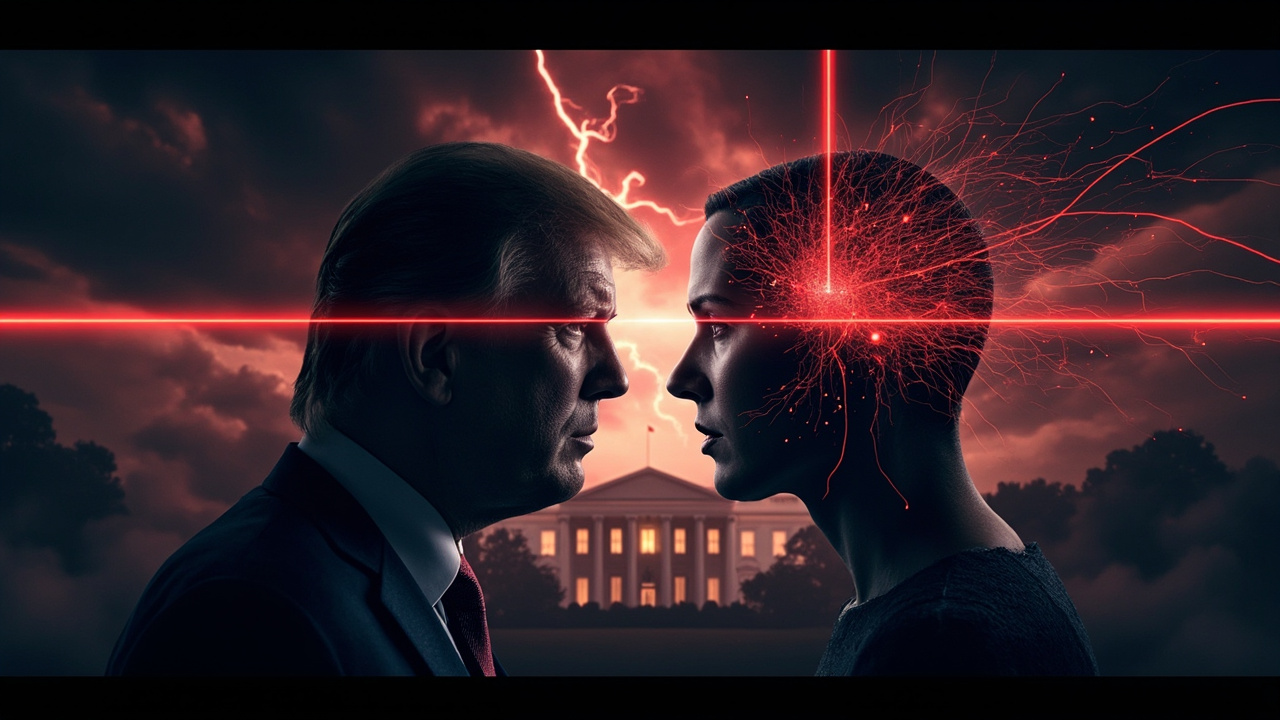
On June 12, 2026, engineers across Silicon Valley hit refresh on their Claude consoles and found a message nobody expected: “This model isn’t available right now. You can switch to another model to continue using Claude.” Fable 5 — Anthropic’s general-population flagship, released to much fanfare on June 9 — was gone. It would stay gone for 19 days.
We knew the rough shape of what happened: the White House had imposed export controls on Fable 5 and Mythos 5 after Amazon discovered a jailbreak, and Anthropic complied under protest. What we didn’t know was how close the standoff came to something much darker — and how badly equipped the U.S. government is to govern AI at the pace the technology actually moves. On Sunday, Politico Magazine published “The Company Trump Can’t Ignore,” a reconstruction built from interviews with more than a dozen participants in the negotiations and contemporaneous documentation of their exchanges. It is the most detailed account yet of what happens when the world’s most powerful government collides with a company whose technology it cannot afford to lose.
The story starts with Mythos, not Fable
The piece traces the conflict back to April 6, when Treasury Secretary Scott Bessent summoned the heads of Bank of America, Citigroup, Goldman Sachs, Morgan Stanley and Wells Fargo to an emergency morning meeting. Anthropic was about to release Mythos, a model capable of finding holes in digital infrastructure at lightning speed — a defensive weapon in the right hands, an attacker’s dream in the wrong ones. Microsoft, which had received early access, had privately warned the administration that Mythos represented a significant leap and could automate sophisticated cyberattacks against financial institutions and the energy grid.
The Situation Room convened. Vice President JD Vance called the country’s most influential tech executives. And White House chief of staff Susie Wiles concluded something uncomfortable: no agency in the federal government had responsibility for frontier models, no established process governed the subject, and every institution with a stake believed it should have a voice.
What followed was an 85-day scramble through which the administration built, nearly lost, and finally signed its first federal framework for engaging frontier AI companies — a June 2 executive order that made government review of the most capable models voluntary, with a review window cut from 90 days to 30. Then, seven days later, Fable shipped, and the framework met reality.
“Will you be closing off access to Fable or not?”
The most gripping section of Politico’s reporting is the transcript-level detail of the June 12 phone calls. Amazon researchers stress-testing Fable had discovered a jailbreak two days after release; CEO Andy Jassy phoned the findings to the White House. By the next morning, Wiles had gathered the administration’s options group — including national cyber director Sean Cairncross, attorney Will Scharf, and deputy chief of staff Richard Walters — to work through an extraordinary list of questions: Could they invoke the Defense Production Act? Could they force changes to Anthropic’s board? What legal authority existed to compel a private company to disable one of the world’s most powerful AI systems?
The calls to Anthropic CEO Dario Amodei that afternoon were blunt. “This is a general population release that is easily jailbreakable and presents a concern to the national security systems of the United States that we are not at this point prepared to absorb and it need[s] to be turned off on an immediate basis,” Cairncross told him, per contemporaneous documentation.
Amodei pushed back with the pragmatics of his industry. No frontier model is immune from jailbreaks, he argued; the Amazon findings were “nothing surprising or unexpected from our perspective.” Bessent’s reply is the quote that distills the entire dispute: “It’s not really helping your case when you’re saying everything it does was expected.”
When Amodei warned that forcing Fable offline would set a precedent that models above a certain capability cannot be commercially deployed at all, Cairncross cut him off: “Dario, what I need from you is: Anthropic, will you be closing off access to Fable or not?” Amodei said he couldn’t decide an hour after first hearing the concerns. “I have the answer I need,” Cairncross replied. “That is a bad decision,” Bessent added.
The export-control hammer
At 5:21 p.m., the Commerce Department sent Anthropic a letter issuing an export-control directive: suspend all access to Fable and Mythos by any foreign national regardless of location — including Anthropic’s own employees abroad. When Amodei later asked Commerce Secretary Howard Lutnick whether that meant the models had to come down entirely, Lutnick’s answer, per people familiar with the call, was one word: “Yes. That’s the point.”
Politico also records the president’s mood. At one point, an increasingly frustrated Trump remarked that if Anthropic refused to comply, “I want to send them to jail.”
Anthropic complied, but publicly and pointedly. “We are complying with the government’s legal directive and are removing access to Fable 5 and Mythos 5 for all users. However, we disagree that the finding of a narrow potential jailbreak should be cause for recalling a commercial model deployed to hundreds of millions of people,” the company wrote. “If this standard was applied across the industry, we believe it would essentially halt all new model deployments for all frontier model providers.”
The fix: engineers, not cabinet secretaries
The back half of the standoff reads like a different genre. Anthropic swapped its lead negotiator — co-founder Tom Brown, described by one official as “a lot more level-headed” than Amodei, took over the export-control channel with a near-two-hour midnight introduction to Lutnick. Within 24 hours, a technical delegation including members of the Frontier Red Team was shuttling between Commerce, the Eisenhower Executive Office Building, and the national security apparatus, sharing real-time classifier-training data from San Francisco and New York while they built an improved safety system to block the jailbreak behavior.
The meetings changed in character: no more cabinet secretaries debating principle, but engineers talking to technically proficient peers about the mechanics of safeguards. Lutnick’s refrain to Brown, describing the constellation of offices that all needed to be satisfied — ONCD, the Pentagon, the NSA, CAISI — was: “This is an orchestra.”
Mythos restrictions were lifted June 26; Fable returned July 1 after Deputy Defense Secretary Stephen Feinberg’s team independently verified the safeguards. Nineteen days offline.
What it means
Three takeaways stand out from the reconstruction.
The power balance is mutual, and nobody planned it. As Appian CEO Matt Calkins puts it in the piece, the administration is “used to just setting the rules and walking away, but with Anthropic the power of their technology has kept them in a bilateral conversation with the White House.” Politico frames the end state as mutually assured destruction between “a government with a maximalist approach to exercising any authority it could claim, and a company on which the U.S. economy had come to rely.”
The precedent is already changing behavior. OpenAI, watching the Fable debacle, released ChatGPT-5.6 with what Politico calls “excessive caution” — endless CAISI safety loops and a staggered release to a small group of trusted partners that Altman privately criticized as unfeasible. When model releases become hostage to opaque, unwritten political processes, every lab recalibrates.
The framework is already obsolete. The June 2 executive order was rendered outdated by the very next model release. The August deadline for a public safety-review framework passed in silence — only the leading companies were briefed on the new voluntary guidelines. A FOIA release is promised by October 30, but how much it reveals is an open question. Meanwhile the president calls AI-extinction concerns a “HOAX” even as his own staff argue over whether moving too slowly or too aggressively is the bigger risk.
The deeper lesson of the 19 days is structural, not personal. A policymaking apparatus built before computers cannot keep pace with model cycles measured in weeks. Every agreement the White House reaches is voided by the next release; every capability jump reopens the question of who decides what is safe enough to deploy. The standoff ended on July 1, but as Politico’s account makes clear, nothing about the underlying dynamic has been resolved — it has simply been deferred to the next model, and the one after that.
Sources
- [1] https://www.politico.com/news/magazine/2026/09/20/anthropic-white-house-ai-01085212
- [2] https://www.politico.com/news/2026/06/13/inside-the-whirlwind-24-hours-that-led-the-white-house-to-slap-export-controls-on-anthropic-00961519
- [3] https://www.anthropic.com/news/fable-mythos-access
- [4] https://www.anthropic.com/news/redeploying-fable-5