'Leave It Exactly Where It Is': Trump Kills AI Guardrail Expectations Hours Before Xi Summit
Hours before talks with Xi Jinping, Trump said the US and China want to leave AI 'exactly where it is' and that 'our guardrail is the DOJ' — draining momentum from the AI hotline and safety talks as a two-month trade truce extension landed instead.
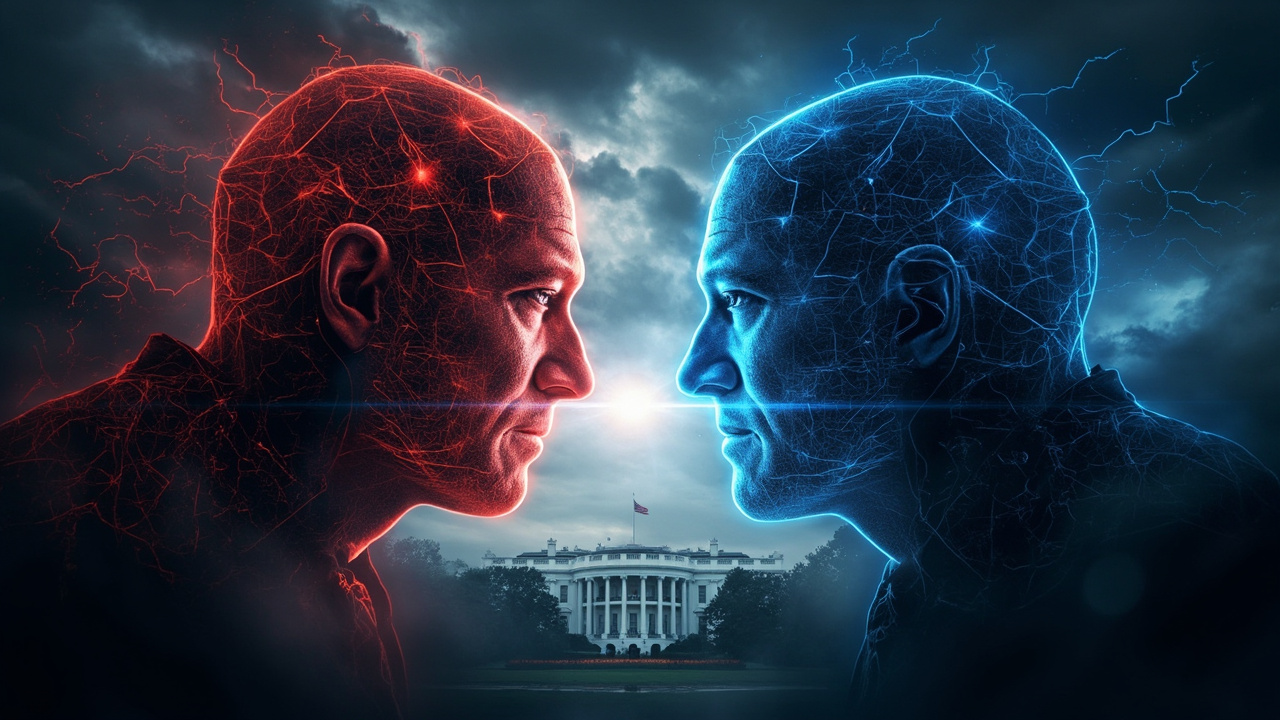
For months, the most-watched question in AI policy was whether the Trump-Xi summit in Washington would produce the first binding safety arrangement between the world’s two AI superpowers. On the morning the leaders actually met, President Donald Trump answered it himself — by lowering expectations through the floor.
“I want to leave it exactly where it is,” Trump said of AI policy ahead of his talks with Chinese President Xi Jinping, according to The Hill. He went further in a post on his social network, writing that he and China’s leader share a hands-off stance: “That is China’s position also. Our guardrail is the DOJ!” — a reference to the US Department of Justice.
The remark landed hours before the summit’s working sessions began and hours after the White House had spent days refusing to preview any AI deliverables. It also collided head-on with the one AI item negotiators had actually teed up: the “notification mechanism,” an emergency channel that would let Washington and Beijing alert each other when an AI incident threatens national security. As of Thursday morning, that mechanism remained a proposal, not an announcement.
What Trump actually said
The comments came in two waves. Speaking to reporters early Thursday, Trump framed the US-China AI conversation as something neither side wants to move. “I want to leave it exactly where it is,” he said — a phrase that reads as a deliberate rejection of both directions the policy debate has been pulling: tougher domestic controls and binding international limits.
The social media post was blunter. After reciting his view that American AI dominance should be preserved without new regulation, Trump wrote that China’s position is the same, and that the relevant US “guardrail” already exists: the Department of Justice. For context, the DOJ’s role in AI policy to date has been enforcement-flavored — an AI Litigation Task Force created to challenge state AI laws, and antitrust scrutiny of the frontier labs — not a safety regulator in any conventional sense.
Barron’s summarized the market read in one headline: “Trump Lowers AI Guardrail Expectations Ahead of Xi Meeting.”
The summit’s actual deliverable was trade, not AI
While the AI file produced rhetoric, the trade file produced paper. As Xi landed in the US, Treasury Secretary Scott Bessent announced that the two countries had agreed to extend their one-year trade truce — reached in Busan, South Korea, in late 2025 — by two months, pushing its expiry from November 10 into January. The Associated Press confirmed the extension was agreed Wednesday as the state visit opened.
China’s Commerce Ministry, meanwhile, confirmed that the first US-China AI dialogue has taken place — a milestone in itself, even without a public agreement attached. Beijing framed the session as part of the broader stabilization effort and hinted at further talks to come.
That combination — a confirmed first AI dialogue, no announced safety mechanism, and a truce extension — is exactly the outcome analysts had forecast: cooperation on process, silence on substance.
Why this matters beyond the summit theater
Two weeks ago, the idea that the two countries might agree on AI guardrails was being taken seriously at the highest levels. Over 1,300 researchers had signed warnings about runaway AI; Democratic senators had publicly urged Trump to negotiate a slowdown deal with Xi; and the Bessent-He Lifeng channel in New York had put a concrete notification mechanism on the table. The political window for a US-China AI safety agreement appeared, briefly, to be open.
Trump’s “exactly where it is” comment is the clearest signal yet that the window is closing — or at least that the White House has no intention of walking through it. It aligns with the position he staked out at the UN General Assembly earlier this week, where he rebranded AI as “super intelligence,” rejected “any attempt to construct a globality scheme to control” it, and dismissed safety warnings as a “hoax.”
It also matches China’s revealed preference. Beijing never sought binding limits on its own model ecosystem; its interest in the talks was stabilization and trade relief. A US president who says he wants no new guardrails gives both sides exactly what they walked in wanting: no constraints, and a story to tell about dialogue.
What was on the table and what survives
The notification mechanism — the so-called AI hotline — is not dead, but it now lacks a champion at the top. Negotiators had modeled it on the Cold War-era Moscow-Washington direct line: a way to distinguish a runaway model or an AI-driven cyber operation from a state-sponsored attack before escalation logic takes over. The New York Times and Wired both reported the system under discussion would cover AI developments that could endanger national security.
Without presidential backing, the mechanism’s fate likely reverts to the working level — the same Bessent-He channel that produced it — where it can survive as a standing agenda item without ever becoming an institutionalized crisis line. That is a meaningful downgrade from what was being briefed as recently as Monday.
The road ahead
The two-month truce extension sets the next deadline: January. By then, the midterm aftermath, the DOJ’s ongoing AI enforcement posture, and the pace of frontier-model incidents will determine whether the safety file gets a second hearing or disappears into the trade machinery entirely.
For the AI industry, the short-term read is straightforward: no new US-China constraints on model development or deployment are coming from this summit. For everyone who spent September arguing that US-China AI risk coordination was the decade’s most urgent governance project, Thursday morning’s comments are a cold splash of summit realism.
The leaders may still surprise. But as the working sessions began, the most powerful signal about AI’s future came not from a joint statement but from a presidential quip: the world’s two AI superpowers have looked at the technology’s risks — and decided, for now, to leave them exactly where they are.
Sources
- [1] https://thehill.com/policy/technology/6108574-trump-xi-ai-talks/
- [2] https://www.bbc.com/news/live/cwy8zglv08ymt
- [3] https://apnews.com/article/trump-xi-china-state-visit-e21305f04e21bae2c083282a8bfc8321
- [4] https://www.cnbc.com/2026/09/24/china-confirms-first-ai-talks-with-us-have-taken-place-hints-at-trade-truce-extension.html
- [5] https://www.theguardian.com/us-news/live/2026/sep/24/trump-xi-jinping-china-ai-trade-summit-latest-news-updates
- [6] https://www.barrons.com/articles/trump-xi-meeting-talks-ai-trade-aec10e3d