Day Two Is for the Builders: Meta Opens the Muse Platform to Every Developer
At Meta Connect's Developer State of the Union, Muse Code hit general availability, the Meta Model API went global, the Wearables Device Access Toolkit 1.0 shipped, WebMCP reached preview, and Horizon Create promised prompt-to-game publishing across Facebook and Instagram.
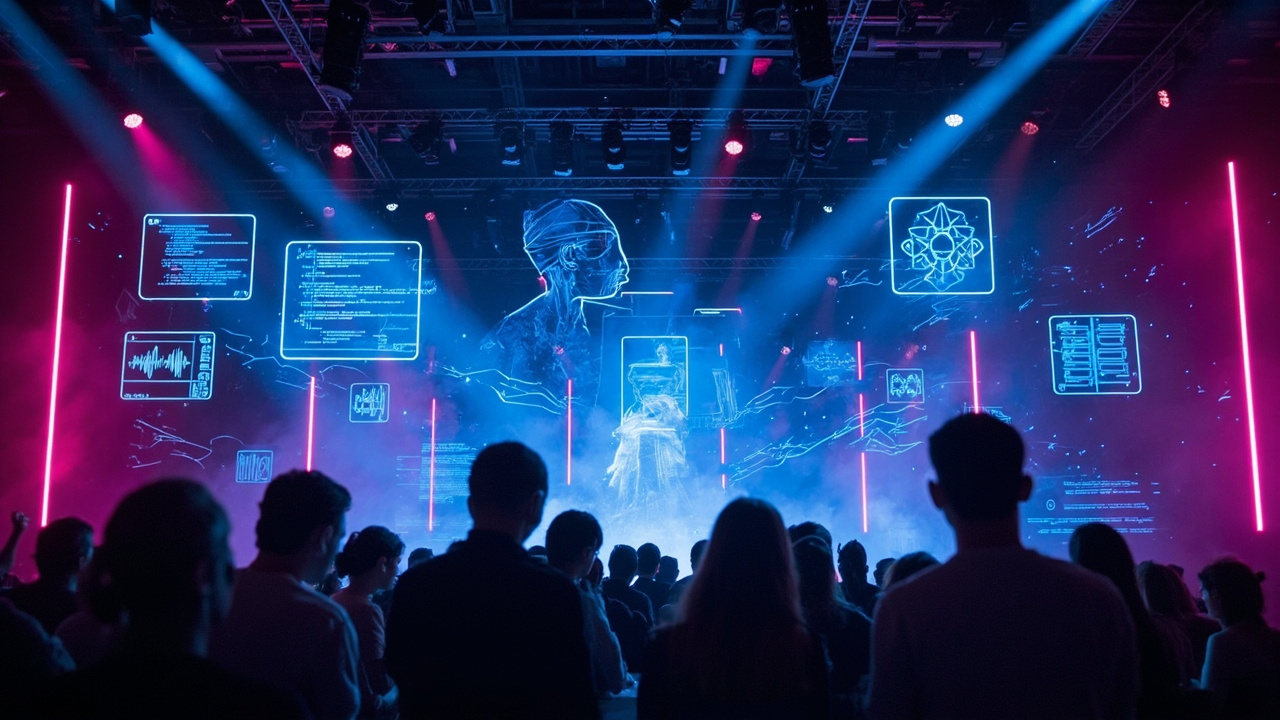
Day one of Meta Connect 2026 belonged to the hardware: a controller-free VR headset, camera-free audio glasses, a surprise AI pendant. Day two — September 24 in Menlo Park — belonged to the people who make the software that justifies the silicon. In its annual Developer State of the Union, Meta laid out the most developer-facing expansion of its AI stack since the Llama era: a coding agent out of beta, a model API going globally available, a toolkit that moves existing mobile apps onto AI glasses, a preview of the Model Context Protocol running inside web apps on Ray-Ban displays, and two new prompt-driven game-creation tools that publish straight into Facebook and Instagram feeds.
The framing Meta chose is telling. “With AI, what matters most isn’t any single benchmark,” the company wrote in its official recap. “It’s velocity, and how quickly frontier intelligence becomes tools you can build with.” After a year in which the AI conversation has been dominated by leaderboard horse races and safety debates, day two of Connect was Meta arguing — with shipping products — that distribution and developer ergonomics are the real frontier.
Muse Code graduates, and the Muse family rounds out
The centerpiece for software engineers is Muse Code, Meta’s multi-agent coding product, which emerged from beta at Connect and is now generally available on Windows alongside its existing platforms. Meta describes it as “a multi-agent machine built for long-horizon engineering tasks” — not a autocomplete, but a system where parallel worker agents write and test code in isolated workspaces while an orchestrator holds the plan. It is aimed squarely at the same “hours-long terminal sessions and multi-file refactors” territory that Anthropic’s Claude Code, OpenAI’s Codex, and Google’s Jules have been contesting through 2026.
Muse Code is powered by Muse Spark 1.3, the latest checkpoint of the frontier model family from Meta Superintelligence Labs, which Meta says “brings frontier-level reasoning to complex coding and agentic workflows.” Spark 1.3 itself launched quietly in early September, but Connect was its formal induction into the developer ecosystem: it is now available not just through Meta’s own API but through Oracle Cloud AI Platform, with Google Cloud availability in private preview — a nod to enterprises that want frontier models inside their existing cloud compliance perimeters.
The family approach is deliberate. Muse Image handles production-grade image generation; an expanded voice API suite now includes Muse Voice Transcribe for speech-to-text; and for developers who want to keep everything local, Muse Glimmer — the 30-billion-parameter open-weights model Meta released under Apache 2.0 in August — is positioned as the on-device option, capable of running agents on a single GPU or a Mac Mini. Meta’s pitch is that you pick the point on the price/latency/privacy curve, and the same tooling and agent formats work across all of them.
Meta Model API goes generally available — globally
The quietest big announcement may be the general availability of the Meta Model API worldwide, with what Meta calls “support and compliance for enterprise workloads” through its first-party API and third-party partners. When Meta pivoted from the open-weights Llama strategy to the closed, API-only Muse family in early 2026, the missing piece was always enterprise trust: regional compliance, contractual guarantees, predictable scaling. GA status — plus the Oracle and Google Cloud distribution — is Meta stating that the Muse platform is now ready for procurement departments, not just hackers.
To pull developers in, Meta also announced a Global AI Developer Hackathon: a ten-day virtual event with hands-on workshops run by engineers from Meta Superintelligence Labs, two tracks (indie and startup), free Model API credits, and a $1 million cash prize pool. Applications open via dev.meta.ai.
Three roads onto the glasses
The AI-glasses track was framed as “a path for every builder” — three distinct integration routes, each targeting a different kind of developer.
The Wearables Device Access Toolkit 1.0 graduated from a year-long developer preview to an official launch. Its promise is incrementalism: an existing mobile app can extend to AI glasses without a rewrite. The codebase, backend, and store listing stay intact; users invoke experiences hands-free with “Hey Meta,” navigate with a swipe on the Meta Neural Band, and the toolkit exposes camera capture, voice streaming, and motion tracking as context sources. A single integration targets both display and displayless glasses. Meta’s example use cases are pointedly unglamorous and vertical: cataloguing inventory, documenting a repair with both hands on the tool, capturing a field observation as it happens.
Web apps on Meta Ray-Ban Display take the opposite approach — no SDK at all. Standard web APIs render on the built-in display; a new UI Toolkit and a shared text composer (accepting dictation, handwriting, or an on-screen keyboard) handle input. And in a genuinely interesting technical preview, WebMCP lets Meta AI call functions the developer chooses to expose inside the web app: the model completes tasks in your app, through the glasses, using only the tools you declared. It is the Model Context Protocol — the emerging standard for connecting AI models to external systems — arriving on a consumer face-worn computer.
Meta AI Connectors complete the trio: services can plug into the Meta AI conversation via API or MCP server, no app required — and because the connector lives in the assistant rather than the device, it travels with Meta AI onto every new surface Meta ships.
Discovery is the other half of the deal. For the first time, experiences built for glasses will be findable on the device itself and in a curated section of the Meta AI app — an App Store moment for face-worn computers, with submission details promised soon.
v207 SDKs: build today for hardware that ships in 2027
For the VR track, Meta addressed the elephant it unveiled on day one: the Meta VR Glasses — the ~100-gram, controller-free headset formerly known as Project Phoenix — do not arrive until spring 2027. The v207 SDKs for Unity, Unreal, Android, and Web are available now, and Meta spent considerable effort on the developer guidance: eyes and hands are the only input (the Store will recommend hands-compatible content), the field of view narrows to roughly 70×66 degrees versus Quest 3’s 110×96 (at higher per-eye resolution), and hover-based UI is explicitly dead because “gaze is private by design.”
Two agentic developer tools accompany the SDKs: a Meta VR CLI that gives coding agents access to platform documentation and device profiling, and Meta XR Operator, which lets an agent “see, navigate, and interact” with an app running in the XR Simulator, verify changes with a screenshot, and iterate — agents testing agents’ apps. An eight-week Meta VR Start Developer Competition runs September 24 through November 18, with $1 million across 20 prizes and winners announced December 11.
Horizon Create and Horizon Studio: prompt-to-game, published to the feed
The Horizon track may have the longest tail. Horizon Create (mobile) and Horizon Studio (web) are built on the agentic creation capabilities of the Meta Horizon Engine: describe a game, get a playable build, then shape progression, difficulty, art direction, and multiplayer through guided controls — no engine, no code. Projects move between phone and browser, carrying assets and iteration history. The strategic hook is distribution: games built with these tools “reach people natively in their feeds across Facebook, Instagram and Horizon.”
That is the full Connect picture: Meta is trying to convert its three-billion-user social graph into the default distribution channel for AI-built software, and to make the building itself something an AI does with you.
The stakes: velocity as strategy
Strip away the product list and a single strategy remains. Meta Superintelligence Labs’ models compete on benchmarks; but Meta’s differentiated asset is the surface area — glasses, headsets, the Meta AI app, and the feeds. Day two of Connect 2026 was the company systematically lowering every barrier it could find between the world’s developers and those surfaces: no rewrite (Toolkit), no SDK (web apps), no app at all (Connectors), no game engine (Horizon Create), no hardware yet (v207 SDKs), and no cloud lock-in (Glimmer, Oracle, Google).
The bets left open are just as notable. There was no news on VR Glasses pricing or a firm ship date beyond “spring 2027.” Muse Charm, the pendant teased on day one, remains a holiday-season question mark. And the “quiet big one” the keynote coverage flagged — Meta’s long-term open-weights strategy after Muse replaced Llama as the company’s flagship brand — got a partial answer in Glimmer’s continued prominence, but no new model. The developers Meta is courting have eight weeks to enter its competition, ten days for its hackathon, and a spring 2027 hardware date to build toward. Velocity, indeed.
Sources
- [1] https://developers.meta.com/blog/meta-connect-recap/
- [2] https://www.theverge.com/tech/998480/meta-connect-2026-biggest-news-announcements
- [3] https://www.engadget.com/2266105/meta-connect-2026-live-blog-ai-vr/
- [4] https://www.marketwatch.com/livecoverage/meta-connect-stock-mark-zuckerberg-keynote-ai