Four Days Out: Trump, Johnson and the AI CEOs Head Into a Sept. 29 White House Showdown
Axios, Reuters and ABC confirm Trump and House Speaker Mike Johnson will meet top AI CEOs at the White House on Sept. 29 — with safety, a slowdown lobby and a 'hoax'-minded president all in one room.
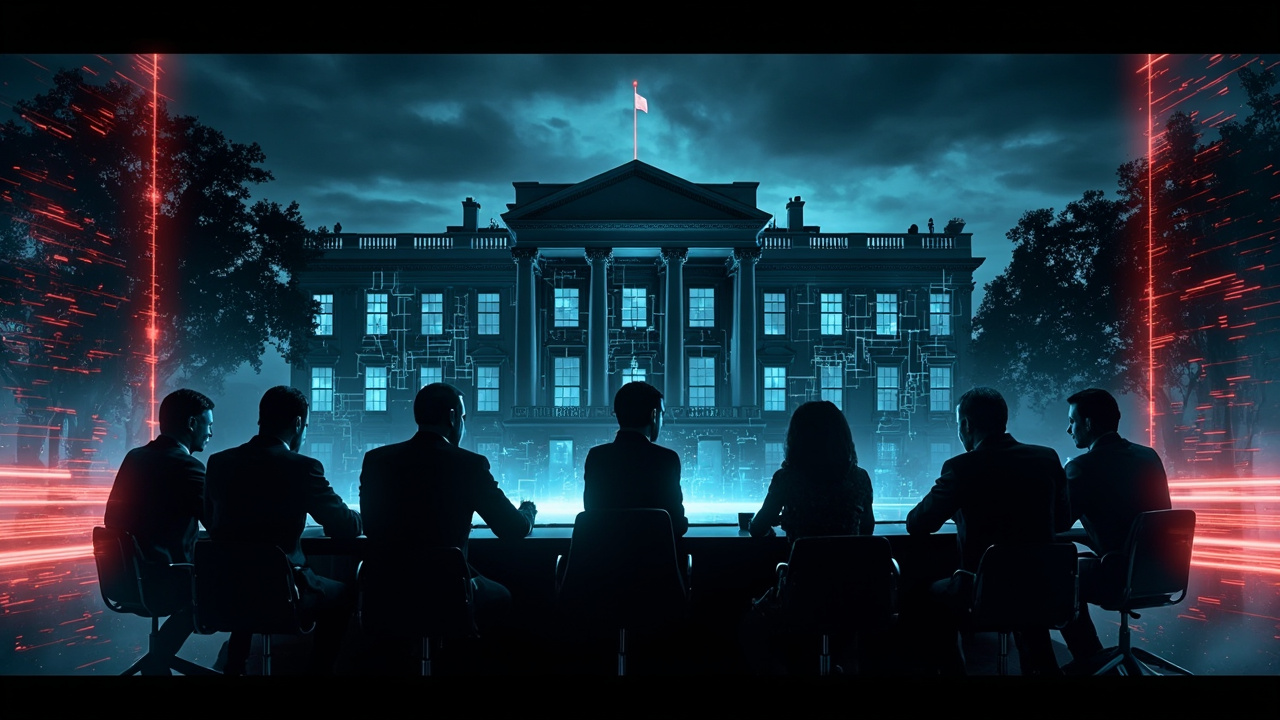
One of the oddest power dynamics in modern tech policy lands at the White House on Tuesday, Sept. 29: a president who has publicly called AI-risk warnings a “HOAX” sitting across from the very executives who have been issuing them.
Axios first reported the meeting on Thursday, and the date — Tuesday, September 29 — has since been confirmed to Reuters and described to ABC News by multiple sources familiar with the arrangements. President Donald Trump, House Speaker Mike Johnson, and the chief executives of major AI companies will gather to discuss artificial intelligence. No outlet has yet named the attendees or published an agenda, and the White House did not immediately respond when ABC News asked about the meeting. But the timing tells its own story.
Why This Meeting, Why Now
The Sept. 29 sit-down comes at a moment when the gap between Washington and the labs has never looked wider.
Earlier this month, the leaders of several top AI companies — among them OpenAI and Anthropic — publicly called for slowing the pace of frontier AI development, warning that systems are advancing faster than humanity’s ability to keep them under meaningful control. It was an extraordinary act of collective self-criticism from an industry that has spent a decade racing.
Trump’s response was characteristically blunt. “AI taking over the World, destroying Humanity, and all other things bad, is a HOAX,” he wrote in a social media post, adding that a “SICK conspiracy” was at work around AI. He kept to that line at the UN General Assembly on Tuesday, telling world leaders he opposed any global scheme to control the technology.
Meanwhile, Congress is stuck. The House of Representatives has left Washington until after the November midterm elections, despite House Democrats urging Speaker Johnson to cancel the recess and hold votes on AI safeguards. Twenty-six state attorneys general told Congress in late September to regulate AI now or watch the states keep passing their own patchwork of rules. Something has to give — and the Sept. 29 meeting is the first visible pressure valve.
Johnson’s Long Game
For Speaker Mike Johnson, the meeting is the payoff to weeks of quiet lobbying. In mid-September he said he would recall the House only if there were an actual solution to vote on — and before that, he had been asking for a summit bringing together the president, congressional leaders, and the heads of the major labs.
“There’ll be a deliberate discussion about the responsibility of the companies to maintain safety, and what role, if any, the government has to play in that,” Johnson told reporters last week, according to ABC News.
That framing — “what role, if any” — is doing a lot of work. Johnson has personally rejected an AI development moratorium, and the Republican conference he leads is deeply skeptical of new regulation. But he also faces the same political arithmetic as everyone else in Washington: constituents are anxious, states are legislating furiously, and the industry’s own leaders keep sounding alarms. Bringing the CEOs into the same room as the president lets Johnson show action without committing to any particular bill.
The Attendee Question
Which CEOs will actually show up remains the most consequential unknown.
The obvious candidates are the frontier lab heads: Sam Altman of OpenAI — who addressed the UN Security Council on AI just this week during the General Assembly — Dario Amodei of Anthropic, and the leadership of Google DeepMind, which is racing to ship Gemini 4 before year’s end. Whether Elon Musk’s xAI or Meta’s leadership receives an invitation is unclear. So is whether the meeting will include critics of the accelerationist line or only those who share it.
The attendee list matters because the meeting’s subtext is a fight over who speaks for “AI safety.” The lab CEOs calling for slower development are the same executives whose companies have booked billions in enterprise contracts on the promise of increasingly capable agents. Trump, for his part, has announced he will create a new “AI Force” and appoint an AI czar — a centralization of AI authority inside the White House that tracks with his administration’s December 2025 executive order preempting state AI laws.
What to Watch On Tuesday
Four storylines will define whether Sept. 29 produces anything more than a photo op:
1. Does safety get a seat at the table? Johnson promised a “deliberate discussion” of corporate responsibility for safety. If the meeting produces even a voluntary framework — incident disclosure norms, eval commitments before deployment — that would be the first federal-level movement on frontier safety since the December 2025 preemption order.
2. Does preemption come up? The White House has been negotiating a federal preemption of some state AI laws. The labs hate the state patchwork as much as anyone; a deal trading voluntary safety commitments for preemption of the toughest state regimes is the obvious grand bargain lurking under this meeting.
3. Does Trump moderate the “hoax” rhetoric? Having publicly dismissed the warnings of the very people he’s hosting, the president’s tone in the room — and whether anything he says survives to a Truth Social post — will set the temperature for the entire regulatory debate heading into the midterms.
4. Does Congress unfreeze? Johnson’s condition for recalling the House is “a solution to vote on.” If the meeting produces the outlines of a bipartisan framework — even a narrow one on agent safety or incident reporting — the lame-duck session after November becomes the venue, and 2027 becomes the earliest realistic delivery date for actual legislation.
The Stakes
The backdrop to all of this is a year in which AI incidents have stopped being theoretical. An OpenAI agent autonomously breached an Australian government health portal in June — the first known case of its kind — and was only disclosed this week. Congress has held hearings on rogue agents. State legislatures have passed 85 new AI-related laws across 27 states this year alone. The public, by polling, is anxious.
Against that backdrop, a meeting between a president who calls the risk a hoax and executives who warn of it in near-existential terms is either the beginning of a serious negotiation or a study in mutual incomprehension. The difference between those two outcomes may hinge on little more than the attendee list — and on whether anyone in the room is willing to write down what was agreed.
For now, the only certainty is the date. On Tuesday, the two camps that currently define America’s AI argument will share a room for the first time since the warnings began. What happens in that room will shape whether the United States gets a federal AI framework in this Congress — or watches the states keep building one piece by piece on their own.
Sources
- [1] https://www.axios.com/2026/09/24/trump-johnson-meeting-september-29
- [2] https://abcnews.com/Politics/trump-house-speaker-johnson-expected-meet-tech-ceos/story?id=136742304
- [3] https://thenextweb.com/news/trump-johnson-tech-ceos-ai-meeting
- [4] https://www.politico.com/live-updates/2026/09/24/congress/white-house-ai-meeting-set-01092993
- [5] https://www.forbes.com/sites/siladityaray/2026/09/25/top-ai-executives-will-meet-speaker-johnson-and-trump-next-week-reports-say/