The Video Meta Refused to Host: Dutch Satirist's Ray-Ban Glasses Critique Vanishes From Instagram
Meta pulled a satirical video — filmed with its own Ray-Ban Meta glasses inside Meta's Amsterdam office — citing 'bullying and harassment', in the first takedown of satirist Roel Maalderink's ten-year career.
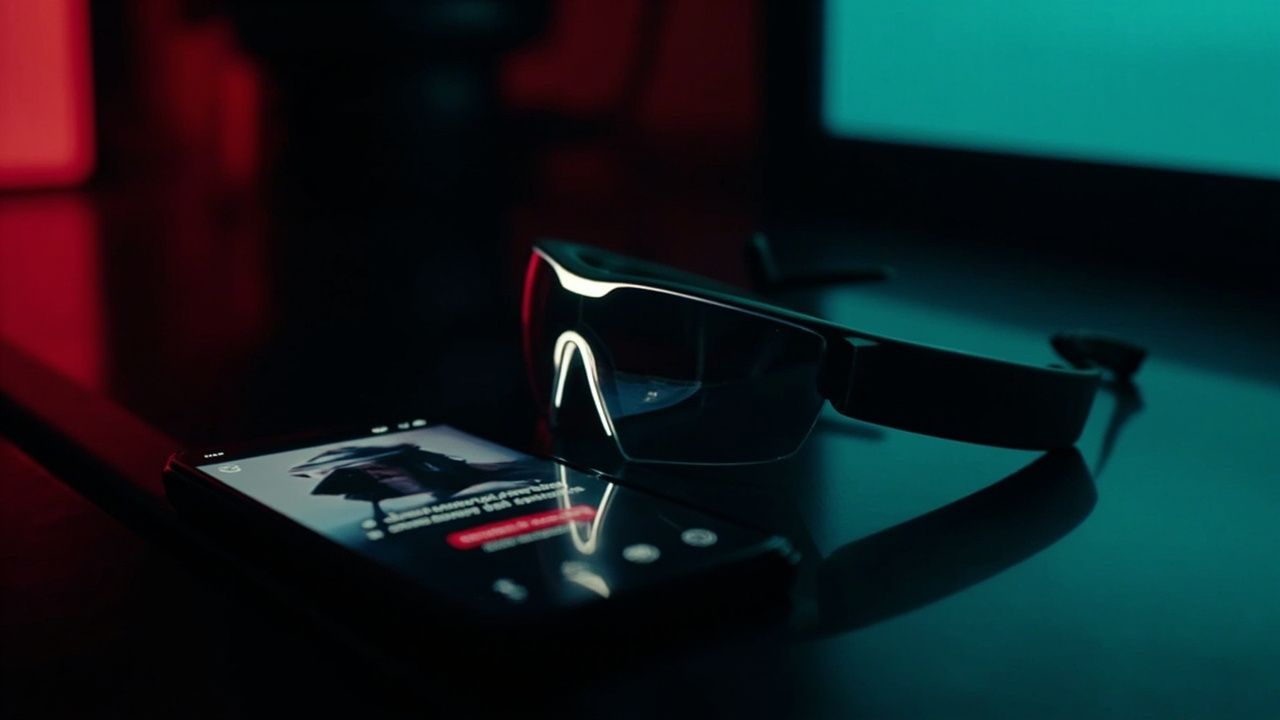
The most revealing AI-glasses video of the year is one you can no longer watch on Instagram or Facebook. This week, Meta removed a satirical clip by Dutch television producer Roel Maalderink — co-produced with the digital-rights group Bits of Freedom — in which he walked into Meta’s own Amsterdam office wearing Ray-Ban Meta smart glasses and asked the company’s employees what they think of the device their employer builds. The stated reason: the video “may contain depictions of bullying and threats.”
The irony is layered so thick it barely needs commentary. A camera-equipped wearable that critics have warned normalizes always-on recording of bystanders was used to record the people who make it — and the platform that belongs to the same corporation decided that this particular act of filming crossed a line. Maalderink’s ten-year archive of satirical work, spanning subjects from Gaza to Ukraine to refugees, has never once been taken down. The video that finally broke the streak was the one aimed at Meta itself.
What the video showed
In the clip, Maalderink visits Meta’s Amsterdam office and films employees with the Ray-Ban Meta glasses while asking them questions about the product. The edit is deliberately pointed: employees appear uncomfortable being recorded without warning, some ask him to stop, and eventually a security guard intervenes. It is uncomfortable viewing — and that is precisely the point. The video holds up a mirror to the everyday experience the glasses create for anyone who did not choose to wear them.
Bits of Freedom, the Dutch privacy advocacy organization that co-produced the piece, drew the obvious conclusion. “Meta appears to have no intention of accepting criticism of itself,” the group said in a statement after the takedown. The clip remains available on YouTube, which is not owned by Meta — a fact that has itself become part of the story, illustrating how platform ownership shapes what criticism can reach an audience.
Meta’s stated position
To be fair to Meta, the removal is not without a defensible policy logic. The company positions Meta Glasses as a tool to support daily life and explicitly does not want the camera function used for harassment. Its user guidelines encourage owners to power the glasses off in private places and to stop recording if the person being filmed expresses discomfort. Instagram chief Adam Mosseri has previously stated that content exploiting or harassing people — including “pickup” videos recorded through smart glasses — would be removed, and Meta has followed through on such removals before.
But that policy was written to protect bystanders from predatory recording. Applying it to a satirical journalist who filmed corporate employees at their workplace — in an act of exactly the kind of accountability journalism satire has always performed — stretches “bullying” beyond recognition. Dutch privacy regulators have separately warned that sharing camera-glasses footage without the consent of the people in it may violate the GDPR. Maalderink’s defenders argue that if filming people without consent is genuinely harmful, Meta has just conceded the core argument against its own product, not against the satire.
A decade of satire, one red line
“For the past 10 years, I’ve made satirical videos about everything from Gaza and Ukraine to refugees,” Maalderink said after the removal. “But I’ve never had a video taken down. This video was well-watched and received positive reactions, but it seems Meta doesn’t want people to see it.”
That framing cuts to the heart of the controversy. Content moderation at platform scale is blunt, and false positives are inevitable — but the pattern matters. When the collateral damage of an anti-harassment policy falls, of all places, on a critique of the policy-maker’s own hardware, the burden of proof shifts to the platform to demonstrate the decision was neutral. Meta has offered no such demonstration beyond the boilerplate bullying citation, and the video’s continued availability on YouTube makes “legal risk” an implausible explanation for the asymmetry.
The bigger picture: wearables, consent, and control
The episode lands at a moment of maximum sensitivity for smart glasses. Meta used its Connect keynote this week to announce Ray-Ban Meta Gen 3 in two models — “Aperol” sunglasses and lighter “Bellini” optical frames — alongside Luna, a camera-free audio-only variant pitched explicitly at privacy-conscious buyers, and a preview of the Project Phoenix mixed-reality headset. The Luna SKU is effectively Meta’s own admission that a meaningful segment of consumers wants nothing to do with a camera on their face — or on yours.
The company has also been promoting countermeasures against surreptitious filming: a white capture LED that lights while recording, and a hardware interlock that disables the camera if the LED is covered. These are genuine engineering concessions to the consent problem, but they do not address the social asymmetry the Maalderink video dramatized: the wearer always consents; the filmed party finds out later, if at all.
There is also a European regulatory backdrop. Privacy regulators in the Netherlands have been among the most active in Europe on camera wearables, and the GDPR’s consent requirements for sharing identifiable footage are strict. A US-style First Amendment satire defense does not apply in the EU the same way, which makes Bits of Freedom’s willingness to co-produce the video — and to defend it after the takedown — a deliberate legal posture, not just a publicity one.
What it means
Three takeaways worth watching as this develops:
First, the conflict-of-interest problem is now concrete. Meta simultaneously makes the glasses, operates the distribution platform, and adjudicates the moderation appeals. Any ruling it issues on criticism of its own hardware inherits an unavoidable appearance of partiality — the same structural critique that has followed the company through years of news-feed and political-ad controversies.
Second, the satirist’s toolkit just lost its most natural venue. Short vertical video is where public critique actually circulates in 2026, and Instagram is one of its two chokepoints. A takedown there does not silence criticism outright, as YouTube’s hosting of the clip shows, but it does fragment its reach and hand a narrative victory to whichever platform is willing to host the controversy.
Third, the episode is a preview of governance questions that scale far beyond one video. As AI wearables add always-on sensors, facial recognition, and real-time inference, the question of who may record whom — and who decides when recording becomes harassment — moves from Terms of Service fine print into the center of digital-rights policy. Bits of Freedom’s line that Meta “determines what becomes publicly discussable” is a fair summary of the stakes.
For now, the video survives on YouTube, the security-guard footage survives in memory, and Meta’s Amsterdam employees have had the rare experience of being on the other side of the lens their company sells. The takedown solved none of the questions the satire raised. It only added one more: why this video, and why now.
Sources
- [1] https://gigazine.net/gsc_news/en/20260925-meta-glasses-video-ban/
- [2] https://www.rtl.nl/nieuws/binnenland/artikel/5655165/meta-kritische-video-roel-maalderink-meta-bril-offline
- [3] https://aiweekly.co/alerts/meta-pulls-dutch-satirists-ray-ban-glasses-video-over-bullying
- [4] https://www.youtube.com/watch?v=dHKhYL3is5o