An Adults-Only Agent in a Teletubby Suit: Meta's Muse Mascot 'Jolly' Draws Child-Safety Fire
Wired's top story reignites the child-safety fight around Meta's Muse agent: an 18+ product whose Labubu-like mascot 'Jolly' and upcoming Tamagotchi-style Muse Charm pendant have Fairplay warning families to just say no.
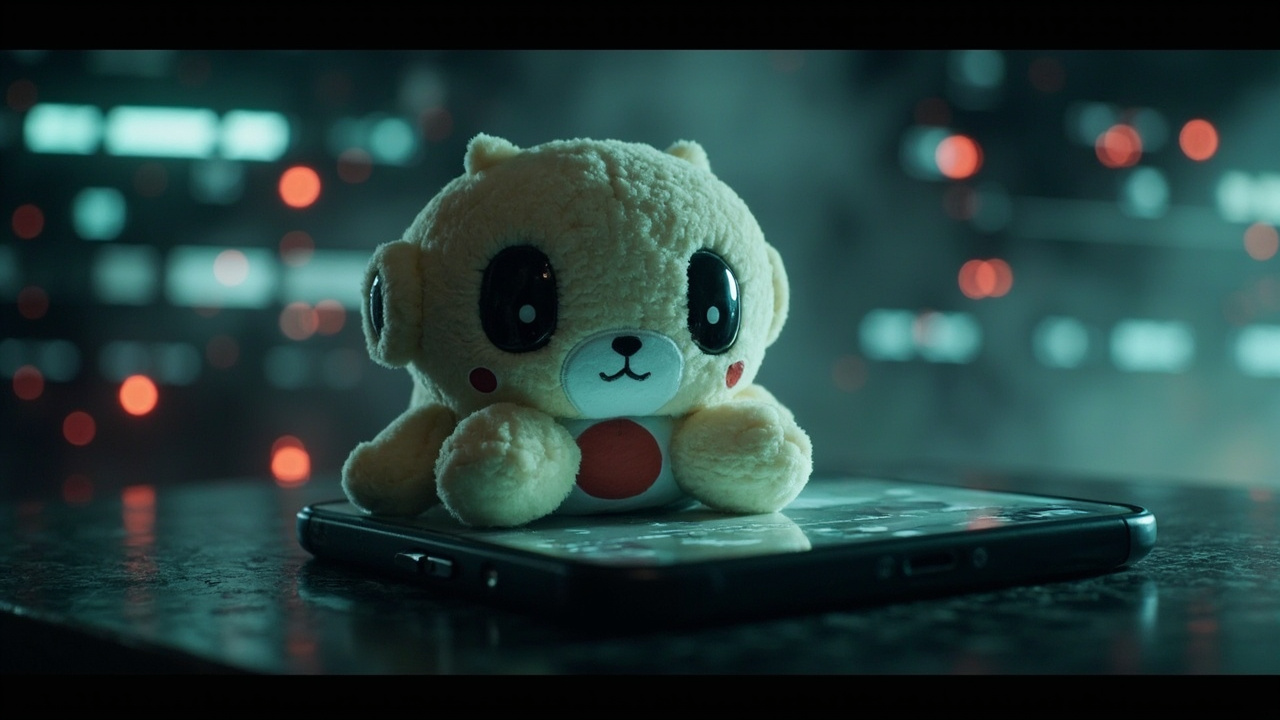
Three weeks after launch, Meta’s Muse agent is still sitting at the top of the app charts — and the conversation around it has quietly shifted from what the agent can do to what its face is doing to us. At the center of that conversation is Jolly, the cream-colored, rosy-cheeked plush mascot that greets every Muse user and can be dressed, named, and customized like a doll. On September 26, Wired published the piece that crystallized the unease: Meta’s Muse is an adults-only product, restricted to users 18 and over — so why does it look exactly like a well-designed children’s toy?
The Mascot at the Middle of It
Jolly is not a side detail of the Muse experience; it is the interface. The customizable character appears across the app, in the Ray-Ban Meta glasses integration, and on the screen of the Muse Charm — the Tamagotchi-style pendant device Meta announced at Connect 2026 and plans to ship “in time for the holidays.” Users dress Jolly in different outfits, give it a name, and address it directly. Alexandr Wang, Meta’s chief AI officer, has spent the weeks since launch posting a stream of Jolly memes, some of them, as Wired’s Reece Rogers dryly notes, in suggestive situations.
The aesthetic reference everyone reaches for is Labubu, the collectible plush creature whose viral popularity turned it into a global phenomenon. Wired describes Jolly as “Labubu-adjacent.” Mona Sarantakos, vice president of product management at Meta Superintelligence Labs, has framed the design as leaning into “delightful” elements and making the experience feel less awkward than chatting with “a corporate logo or entity.”
“Oh My God, It Looks Like a Teletubby”
Youth-safety advocates are not charmed. Josh Golin, executive director of Fairplay — the nonprofit that spent years lobbying against Meta’s targeting of children — gave Wired the quote that is now traveling widely: “Oh my God, it looks like a Teletubby. It’s so clearly a character that would appeal to very young children. People who study children’s media understand that those rounded shapes particularly appeal to kids in the preschool age.”
The timing makes the criticism land harder. In late August, Meta agreed to pay up to $16.7 billion to 47 states to settle claims that it deliberately designed Facebook and Instagram to addict teenagers, and committed to adding restrictive safety features for teens on both platforms. It was the largest settlement of its kind in US history. Now, weeks later, the same company is marketing an AI agent whose public face is a plush preschool-friendly blob — and a wearable version shaped like the most iconic children’s toy of the 1990s.
Golin’s verdict on the Muse Charm is blunter still. “This really feels like a completely inappropriate attempt by Meta to get young kids hooked on Muse,” he told Wired. “This is something that families should say no to, and I think it’s something that regulators should take a hard look at.”
Meta’s Defense: Dates of Birth and Diligence
Meta’s response to Wired reads as exasperated. “This is a story in search of a story,” spokesperson Daniel Roberts said. “People want to be able to create their own avatar with personality and unique style, because it’s fun and brings them joy. We require everyone using the Muse app to provide their date of birth, we block people we detect may be under 18 from creating an account, and we do additional checks to help ensure people who say they’re adults are actually over 18.”
The company points to age verification and blocking as its compliance mechanism — the argument being that a cute character is not a child-safety violation if children cannot get in the door. Whether that door actually holds is the empirical question. Age gates based on self-reported birth dates are notoriously leaky, and Meta’s own history with teen engagement features is precisely what produced the August settlement.
Cute as a Compliance Strategy
The deeper critique running through the Wired piece is not about children at all — it is about what cuteness does to adults. Julian De Freitas, an associate professor of marketing at Harvard who studies AI companions, told Wired that “these types of cute factors can make the product seem warm and less threatening,” while acknowledging that “there’s a high bar that they have to overcome here, because attitudes toward Meta are quite negative after the social addiction rulings.”
Jathan Sadowski, an associate professor at Monash University’s Emerging Technologies Research Lab, goes further, connecting the design to the data economics underneath: “Design features like being cute and frictionless, or tapping into nostalgia for devices that didn’t constantly surveil and intervene in our lives, are sly ways to make people drop their guard, stop asking critical questions, and slip into being passive users. Agents like Muse are trying to convince us they’re just a cute little guy who lives in your pocket, and definitely not an always-open portal into the servers of a major surveillance company.”
That is not a hypothetical concern with Muse specifically. Unless users opt out, Meta trains its AI models on Muse interactions — a default that most users plausibly never revisit while busy dressing up their new plush friend. Meta has said it will release a “confidential” version of the virtual machine powering Muse later in 2026, one that could “cryptographically and verifiably prevent” Meta from accessing a user’s data.
Not Everyone Buys the Sinister Reading
Fairness requires noting that the child-lure interpretation is contested. Several experts Wired spoke with compared Meta’s approach to Japan’s long tradition of using adorable characters — think Sanrio’s entire catalog — to market technology to all ages, not just children. Anthropomorphized assistants are also a technology-industry constant, from Microsoft’s Clippy to the red-shelled OpenClaw lobster. Ryan Calo, a University of Washington law professor and cofounder of its Tech Policy Lab, frames agent trust as closer to hiring a tour guide on vacation: you rely on the guide as intermediary without knowing who is paying them kickbacks — a risk profile that exists regardless of how the interface is drawn.
There is also the cultural context: Axios reported that Meta’s embrace of an adorable mascot amid rising “AI doomerism” is, at least in part, a deliberate strategy to present the technology as a harmless, useful buddy rather than an existential threat. Cuteness as reputational shield.
Why This Story Matters
Strip away the plush aesthetics and the dispute is about the pattern regulators, advocates, and courts have spent two years litigating: engagement-maximizing design choices deployed by a company with a fresh $16.7 billion scar from doing exactly that to minors. If Jolly measurably broadens Muse’s appeal to young children — or if the Muse Charm lands in Christmas stockings this December — Fairplay has promised the pressure will continue, and the settlement’s mandated teen-safety features will be tested against an entirely new product category Meta did not have when it signed.
For now, the mascot is winning. Muse remains the top free app in the US, Jolly memes dominate the agent’s organic marketing, and every viral tweet about the “little guy” is free distribution. The question Wired leaves readers with is the one Fairplay wants regulators to sit with: when a company under the largest child-safety settlement in history ships its next product shaped like a toy, is that a design choice — or a strategy?