One Voice Against the Clones: Japan's First AI Voice Trial Reaches Its Verdict Week
Verdict expected Wednesday in Tokyo: anime star Kenjiro Tsuda's suit against TikTok over 188 AI-cloned narration videos could set Japan's first legal precedent on vocal identity.
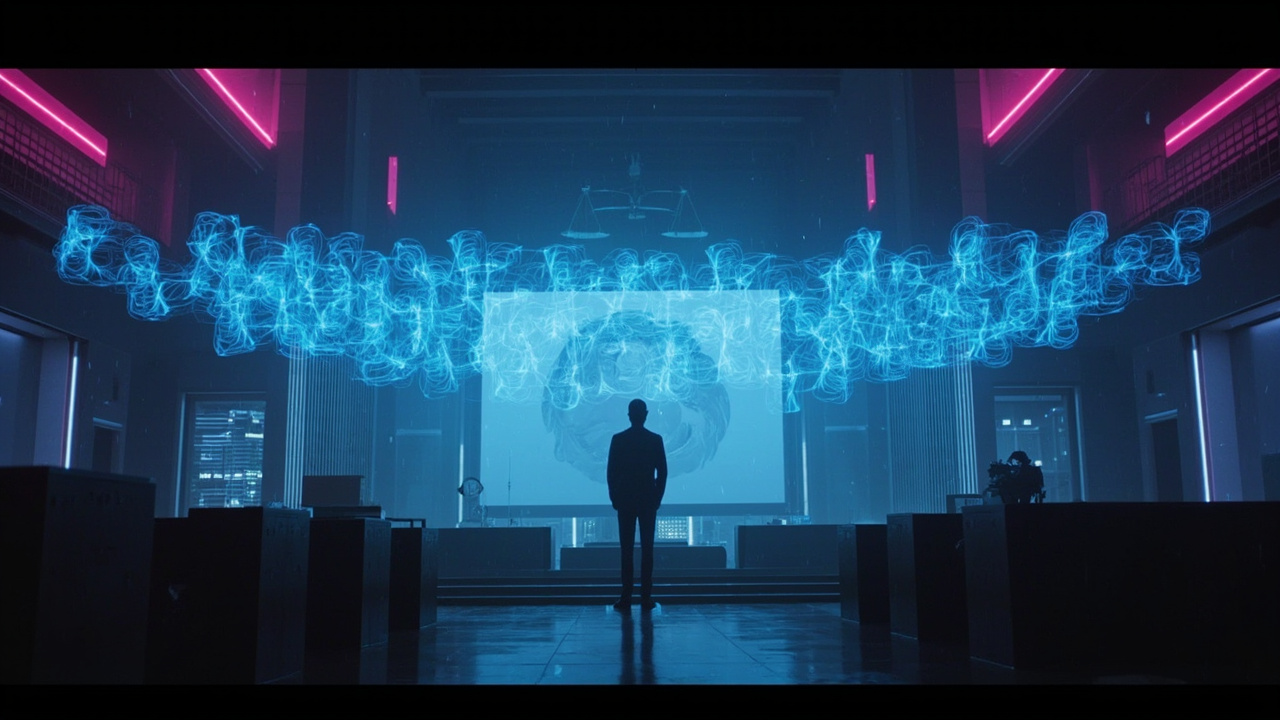
On Wednesday, a courtroom in Tokyo will deliver a ruling that the global entertainment industry is watching far more closely than its docket number suggests. Kenjiro Tsuda — the 55-year-old voice actor whose baritone defined Seto Kaiba in Yu-Gi-Oh! and Kento Nanami in Jujutsu Kaisen — sued TikTok’s operator in Tokyo District Court demanding the removal of an anonymous account that published hundreds of videos narrated, he says, by an artificial clone of his voice. It is believed to be the first case in Japan where an individual’s vocal identity has been defended against AI cloning in court, and the verdict could define how — and whether — performers anywhere can own their own voice in the age of synthetic media.
The case in brief
At the center of the dispute is a TikTok account that amassed more than 200,000 subscribers by narrating urban-legend and conspiracy content. Tsuda’s legal team identified at least 188 videos using AI-generated narration mimicking what filings describe as his “deep and lustrous” baritone — the instrument behind some of anime’s most iconic villains and mentors. The suit, filed late in 2025, demands that TikTok remove the content. The platform has refused, and the case has now traveled the full distance to a merits ruling.
TikTok’s defense is disarmingly simple: the narration is a “generic male voice,” and any resemblance to Tsuda is subjective — a matter of listener perception rather than proven identity. It is the same structural argument platforms have leaned on for years in copyright and impersonation disputes: we host content, we don’t manufacture identity, and similarity is in the ear of the beholder.
Why “publicity rights” is the crux
Japan has no explicit statute protecting voice as personal property. Tsuda’s case therefore rests on so-called publicity rights — the doctrine that individuals control and profit from commercial use of aspects of their identity. Japanese courts have extended publicity rights to names and likenesses over decades of precedent, and Tsuda’s lawyers argue the same logic must cover a voice distinctive enough to be a career.
The timing matters. Japan’s Ministry of Justice issued non-binding guidelines last month treating voice as protectable under publicity rights — a signal that the government sees the gap between technology and law closing, but chose to let courts lead. A win for Tsuda would give that position judicial teeth; a loss would leave the guidelines as little more than a suggestion, and performers with no clear recourse against commercial-scale cloning.
That regulatory gap is precisely what makes the verdict significant beyond Japan. The EU AI Act, now fully applicable since August 2026, requires transparency for synthetic content; U.S. states from Tennessee to New York have enacted voice-protection statutes of their own. But no major jurisdiction has yet produced a full trial-level ruling on whether a platform bears responsibility for AI voices uploaded by third parties. Tokyo District Court is about to.
The stakes for performers
The industry’s own testimony frames the case as existential. “Our industry can be crushed” if a court win for TikTok triggers “unbridled” AI voice cloning on social media, veteran voice actor Bin Shimada told AFP. That is not rhetorical inflation. Voice acting in Japan is a craft economy built on a distinctive instrument — years of training, a narrow band of timbre that casting directors pay premium rates to secure. AI cloning attacks exactly that scarcity. A model trained on enough Tsuda footage can approximate the instrument at zero marginal cost, and the anonymous account at issue demonstrates the demand: conspiracy content drew hundreds of thousands of subscribers precisely because the narration sounded like a star.
Tsuda’s team has leaned on an evidentiary strategy other performers should study: fan comments. Viewers identified the voice as Tsuda’s in droves — not because they were told to, but because recognition was immediate and unprompted. That organic recognition record is arguably stronger evidence of identity appropriation than any spectrogram, because it shows real-world confusion in the market: the clone’s value derived from whose voice people believed it to be.
The platform’s dilemma
For TikTok, the case is also about precedent at scale. The company already operates under regulatory pressure worldwide — including a $400 million COPPA settlement in the United States and intensifying content-provenance rules in Europe. A ruling that platforms must proactively remove AI-cloned voices on notice would create an operational obligation that is genuinely hard to meet: voice clones are trivially cheap to generate, distribute across accounts, and disguise with background music or pitch shifts. Content-moderation systems built for text and image hashing have no robust equivalent for “voice fingerprint at scale.”
A loss would also sharpen the question every platform is currently dodging: if a voice is identity, is hosting a cloned voice a form of impersonation? Platforms have historically won safe-harbor arguments by positioning themselves as neutral conduits. But the Tsuda case pulls that defense into awkward territory — the alleged harm is not the content’s message (urban legends) but its packaging (a stolen instrument), and the packaging is what drove the account’s growth.
What to watch on Wednesday
Three outcomes define the possibility space. A full win for Tsuda — removal ordered, publicity rights extended to voice — would make Japan the first major market with a court-confirmed voice-identity right, and would likely trigger a wave of similar filings from performers’ unions worldwide. A partial ruling, narrow on the facts but silent on doctrine, would push the real fight to legislation already circulating in the National Diet. A win for TikTok would validate the “generic male voice” defense and, in Shimada’s words, green-light unbridled cloning — pushing protection back to the piecemeal state-by-state statutes of the U.S. and the transparency-only regime of the EU.
Whichever way it goes, the ruling lands at a moment when synthetic voice has become AI’s most quietly commercial technology — audiobooks, assistants, dubbing, and social narration all increasingly generated rather than performed. The question Tokyo District Court answers Wednesday is the one every jurisdiction will eventually face: when a machine can copy the thing a performer spent a lifetime building, who owns the sound?
Update, September 27: Japan Today and AFP wire reports confirm the verdict is expected Wednesday, September 30.
Sources
- [1] https://www.france24.com/en/live-news/20260927-japanese-anime-actor-fights-tiktok-over-ai-voice-cloning
- [2] https://www.japantimes.co.jp/news/2026/09/27/japan/crime-legal/japan-voice-actor-court-fight-tiktok-ai-voice-cloning/
- [3] https://www.bangkokpost.com/world/3326988/japanese-anime-actor-fights-tiktok-over-ai-voice-cloning
- [4] https://automaton-media.com/en/news/seto-kaiba-and-kento-nanami-voice-actor-kenjiro-tsuda-sues-tiktok-over-ai-generated-copycat-voiceovers-but-the-platform-argues-its-just-a-generic-male-voice/
- [5] https://www.aplawjapan.com/application/files/1017/9029/7268/EN_Newsletter_SME_004.pdf