The Optimist Turns Auditor: Vinod Khosla Says Most Robotics Startups Are Overvalued and a Shake-Out Is Coming
The investor who predicted robotics' 'ChatGPT moment' now warns that too much money chasing too few winners means most robotics startup valuations will fall by 2030.
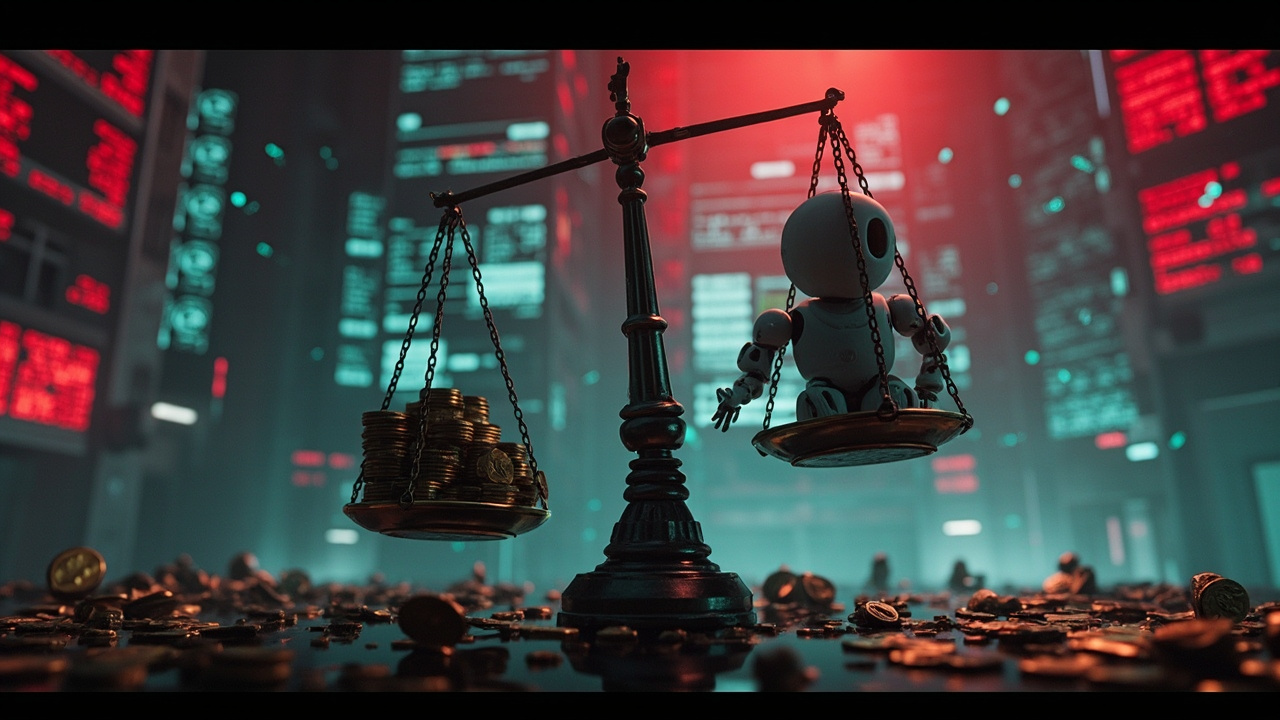
When the most famously bullish investor in a field starts warning about valuations, the market tends to listen. That is exactly what happened on September 28, 2026, when The Information’s AI Agenda newsletter published an interview with Vinod Khosla — the Khosla Ventures founder, early OpenAI backer, and the man who has spent two years predicting that robotics is on the verge of its “ChatGPT moment.” His new message is a striking one: most robotics startups are overvalued, and the majority will see their valuations fall by 2030 as a big shake-out hits the sector.
The man and the reversal — sort of
To understand why this matters, you have to understand who is saying it. Khosla is not a skeptical outside commentator looking in. He has been one of the most optimistic investors in robotics anywhere in Silicon Valley. As recently as mid-2025, he predicted that robotics would have its “ChatGPT moment” within the next two to three years, and that “almost everybody in the 2030s will have a humanoid robot at home.” He has repeated variations of that forecast through 2026, including estimates that AI and robotics together will be able to perform most human labor within 15 years.
That is precisely what makes the new warning land. Khosla is not walking back the technology thesis — he still believes the field will have its breakout moment in roughly the next two years, per the interview. What he is challenging is the price being paid for exposure to that thesis. In his telling, too much investment money is chasing the hottest robotics startups, lofting valuations to levels that most companies in the sector will not be able to grow into. The result, he predicts, is a consolidation: valuations for most robotics startups will fall by 2030.
The numbers behind the unease
The context makes the warning easy to credit. The humanoid robotics sector has absorbed a staggering amount of capital over the past two years. Industry trackers estimate that more than $18 billion in venture funding has flowed into humanoid robotics companies cumulatively, with 2025 alone shattering records at over $6 billion, and 2026 reported to be outpacing even that.
The headline valuations are extraordinary. Figure AI, the most-watched pure-play humanoid company in the West, surpassed $1 billion in Series C funding in September 2025 at a post-money valuation of $39 billion — before it has delivered robots at anything close to consumer scale. Skill-focused foundation-model makers have followed: Skild AI reached a $14 billion valuation after a SoftBank-led $1.4 billion round, Physical Intelligence has been valued around $5 billion or more, and NEURA Robotics raised roughly $1.2 billion with Tether’s backing. In China, analysts count more than 150 domestic humanoid competitors, many propped up by a blend of state capital, industrial conglomerates, and private venture funds.
This is the classic anatomy of a hype cycle: a genuine technology inflection — large models finally transferring to physical systems — met with undifferentiated capital allocation. When investors price dozens of companies as if each could win a winner-take-most market, arithmetic guarantees that most of those marks will be wrong.
Not his first warning shot
Monday’s interview is not Khosla’s first expression of discomfort. In October 2025, he had already told The Information that robotics valuations were “getting bonkers,” and offered a related structural prediction: 2% to 3% of AI startups would account for 85% to 90% of the sector’s total valuation by 2035. The new statement sharpens that view with a time horizon — 2030 — and a specific claim about direction: down, for most.
That earlier framework is worth dwelling on, because it explains how Khosla can be simultaneously bullish and bearish. If a small handful of companies capture nearly all the value, then the correct posture is not to avoid the sector but to be ruthless about which exposures you hold. Extreme conviction in the winners is entirely consistent with expecting carnage among everyone else. It is the venture capital version of “the market can stay irrational” — except Khosla is calling the irrationality now, with a deadline.
Why the shake-out thesis is credible
Three structural forces support the warning. First, the hardware problem has not been solved. The Information’s own reporting has documented how even Tesla’s Optimus — the most resource-endowed humanoid program on earth — has hit snags in hands and suppliers as it attempts to scale up production. Manipulation and supply chains remain hard, and they impose real costs that software startups never face.
Second, the revenue base is thin relative to the valuations stacked on top of it. A handful of companies have begun reporting meaningful deployment revenue — Skild, for instance, crossed the $100 million annual-recurring-revenue mark earlier in 2026 — but figures like that are the exception, and they are small against nine- and ten-figure valuations elsewhere in the sector.
Third, the funding environment itself is tightening. The AI buildout is competing for capital with data centers, model labs, and inference infrastructure, and rising Treasury yields have made long-duration, pre-revenue bets progressively more expensive to hold. When the marginal buyer of a secondary share starts demanding actual evidence of unit economics, marks established in 2025’s frenzy become hard to defend.
What it means for the market
If Khosla is right, the consequences will not be evenly distributed. The shake-out he describes would likely concentrate value in companies that either own the foundation-model layer for physical intelligence or have cracked actual deployment at scale — while hollowing out the long tail of lookalike humanoid makers, especially those whose differentiation is a chassis and a demo video. For the hundreds of Chinese entrants, consolidation pressure may arrive through industrial policy rather than market forces, but the arithmetic is no kinder.
For founders and employees holding options in mid-tier robotics companies, the practical implication is blunt: the value of your equity is more fragile than your last funding round implies. For investors, Khosla’s own portfolio logic — a tiny fraction of companies capturing nearly all the value — argues for concentration rather than basket-buying. And for the rest of the industry, a reset in robotics valuations would be healthy in the way all corrections are healthy: it refocuses attention from fundraising theater to deployment, uptime, and revenue.
The irony is that the shake-out warning and the “ChatGPT moment” prediction can both be true. Breakthroughs and busts have always traveled together in general-purpose technologies — the dot-com crash did not invalidate the internet, it just repriced it. Khosla seems to be making exactly that bet: the robots are coming, and most of the tickets being sold today are overpriced. When the person who called the boom starts calling the correction, it is usually a signal that the easy phase of the trade is over.
Sources
- [1] https://www.theinformation.com/newsletters/ai-agenda/valuations-robotics-startups-will-fall-2030-says-vinod-khosla
- [2] https://www.theinformation.com/briefings/khosla-says-robotics-valuations-getting-bonkers
- [3] https://www.businessinsider.com/robotics-chatgpt-moment-in-the-next-few-years-vinod-khosla-2025-7
- [4] https://humanoidintel.ai/humanoid-robot-venture-capital/
- [5] https://www.figure.ai/news/series-c