Hours With the Machine: Time Reveals Trump Consulted Grok Before Ordering the Maduro Capture
A Time interview reveals Donald Trump spent hours querying Elon Musk's Grok chatbot in a secret December 2025 Oval Office meeting — asking how Venezuelans would react if the U.S. seized their president — months before ordering Operation Absolute Resolve.
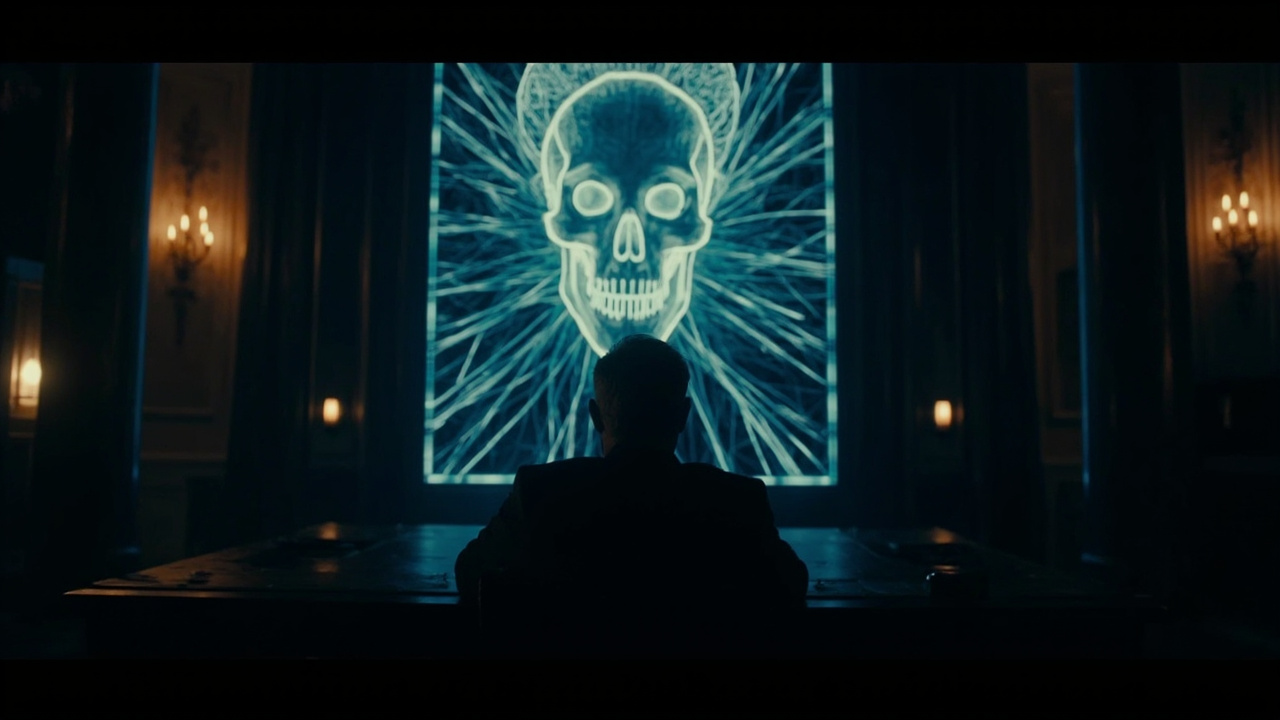
On October 1, 2026, Time magazine published a wide-ranging interview with President Donald Trump timed to the anniversary of his return to office — and buried in its account of a presidency remade by artificial intelligence was a detail that stopped national-security observers cold: in December 2025, roughly a month before the United States invaded Venezuela and captured its president, Nicolás Maduro, Trump spent hours in the Oval Office conversing with Grok, the AI chatbot built by Elon Musk’s SpaceXAI.
The meeting was clandestine. Musk — who had left his role leading the Department of Government Efficiency (DOGE) inside the administration roughly seven months earlier — returned to the White House for the session. According to an official who was present, Trump used the time to ask Grok questions about his presidency and his legacy. One question mattered more than the rest: how would Venezuelans react if the United States captured Maduro?
What Grok said
The chatbot’s answer, as recounted by the official to Time, was unambiguous. Grok assessed that Maduro was “a repressive and deeply unpopular dictator” and that many Venezuelans would likely celebrate his downfall.
The context was live military escalation. At the time, Trump was ordering U.S. missile strikes against Venezuelan boats he alleged were smuggling drugs toward the United States. Public interest in the campaign was already flowing into the same system — The Atlantic reported at the time that people had been turning to Grok to ask about the boat strikes and the political climate in Venezuela.
Then came the decision. On January 3, 2026, U.S. forces executed the operation to seize Maduro. The Wall Street Journal’s reconstruction of the raid describes Trump giving final authorization at 11:46 p.m. for the mission to seize Maduro and his wife, Cilia Flores; Maduro was captured within hours and flown to New York to face charges. And in the streets of Caracas, the prediction Grok had offered came true — celebrations broke out.
According to officials, Trump came away from the episode thinking Grok was “ingenious.”
A pattern, not an anecdote
The December session would be easier to dismiss as a curiosity if it stood alone. It does not.
In June 2026, the Pentagon’s head of AI disclosed that the U.S. military had used Gov Grok to help deploy and strike targets during the Iran War. Earlier this week, the Pentagon announced that Musk and Anduril founder Palmer Luckey have been tapped to co-lead a study on how advanced technology is — and can be — used on battlefields. And in late September, the White House convened tech executives for an AI summit where Trump announced the formation of an “AI Force,” which he now wants to rename the “SI Force” — Super Intelligence Force — as part of a broader national push.
Grok is not the only model serving the Department of Defense. OpenAI holds a government agreement, and Anthropic has been in a running negotiation over how its models may be used for military intelligence and modern warfare. But the Time report sharpens a distinction that matters: those arrangements concern institutional, contracted use. What December 2025 describes is something different — a head of state treating a consumer chatbot as an informal strategic adviser on an imminent military operation, and crediting its forecast when events appeared to confirm it.
Why the epistemics are troubling
Grok’s Venezuela assessment was, in a narrow sense, accurate: much of the country did celebrate. But the mechanics of how that answer was produced deserve scrutiny. A chatbot generating a judgment about “how Venezuelans would react” is aggregating training data and public sentiment — not conducting intelligence collection, not weighing classified reporting, not carrying accountability for being wrong. Its confidence is stylistic, not evidential.
The reinforcement loop is the deeper problem. When a leader consults a model, receives a bold prediction, acts on it, and the prediction appears validated, the lesson learned is not “this tool was right once.” It is “this tool is ingenious” — Trump’s own word, per officials. That ratchets up trust for the next consultation, including on questions where the model has far weaker grounds. Forecasting street celebrations in an impoverished country under an authoritarian government is a materially easier call than, say, estimating adversary responses in a great-power crisis, where feedback is slower, messier, and frequently catastrophic before it is informative.
Safety researchers have warned about exactly this dynamic — sycophantic and confident AI advice amplifying a decision-maker’s existing preferences. Trump was already inclined toward the operation; Grok told him the reaction would be favorable. An adviser who tells a president what he wants to hear is a known institutional risk. A chatbot that does it while presenting as a neutral analytical engine is a new one, because it launders the preference through apparent computation.
The political backdrop
The revelation lands in a tense season for AI politics. Time’s interview portrays a president unmoved by mounting bipartisan calls for AI regulation — “I don’t have to destroy the industry,” Trump told the magazine. “We’re making a lot of money with that industry. That industry is the Industrial Revolution, but bigger. It’s the internet, but much bigger.” His own pollster, Tony Fabrizio, had shown him surveys revealing pervasive public anxiety about AI: fears of lost jobs, rising costs, and technology eventually escaping human control. Aides described him as unfazed.
Meanwhile the industry’s entanglement with the state deepens on every axis: infrastructure (the data-center build-out Trump champions with “let Data Reign” posts), chips (his concerns, reinforced in conversations with Nvidia CEO Jensen Huang, that China could gain a decisive advantage), and now battlefield decision-support — with Musk’s model positioned at the center of all three.
The Time report does not allege that Grok’s answer caused the Maduro operation. The authorization decision, the targeting, and the execution were thoroughly human. What it documents is subtler and arguably more consequential for the years ahead: the most powerful office in the world has integrated a commercial chatbot into its strategic deliberation loop, found the experience validating, and moved on — with no framework, no oversight mechanism, and no public accounting of what else the machine is being asked.
That is the story. Not that Grok encouraged a war, but that nobody seems alarmed that it was in the room.
Sources
- Time — “What Trump Has Built” (October 1, 2026)
- TechCrunch — “Musk’s AI chatbot Grok reportedly encouraged Trump to capture Venezuela’s president” (October 1, 2026)
- The Wall Street Journal — “See How the U.S. Military Captured Maduro in a Matter of Hours” (January 4, 2026)
- Gizmodo — “Trump Asked Grok About Potential Blowback Before Kidnapping Venezuela’s President: Report” (October 1, 2026)
Sources
- [1] https://time.com/article/2026/10/01/donald-trump-2026-interview/
- [2] https://techcrunch.com/2026/10/01/musks-ai-chatbot-grok-reportedly-encouraged-trump-to-capture-venezuelas-president/
- [3] https://www.wsj.com/world/americas/see-how-the-u-s-military-captured-maduro-in-a-matter-of-hours-ee87179c
- [4] https://gizmodo.com/trump-asked-grok-about-potential-blowback-before-kidnapping-venezuelas-president-report-2000820422