The Quarter That Broke the Record: AI Deals Drove Hong Kong to $47.5 Billion
Hong Kong's Q3 share sales hit an all-time record of $47.5 billion as Chinese AI companies led by Z.AI's $9.6 billion haul turned the city into the world's AI listing capital.
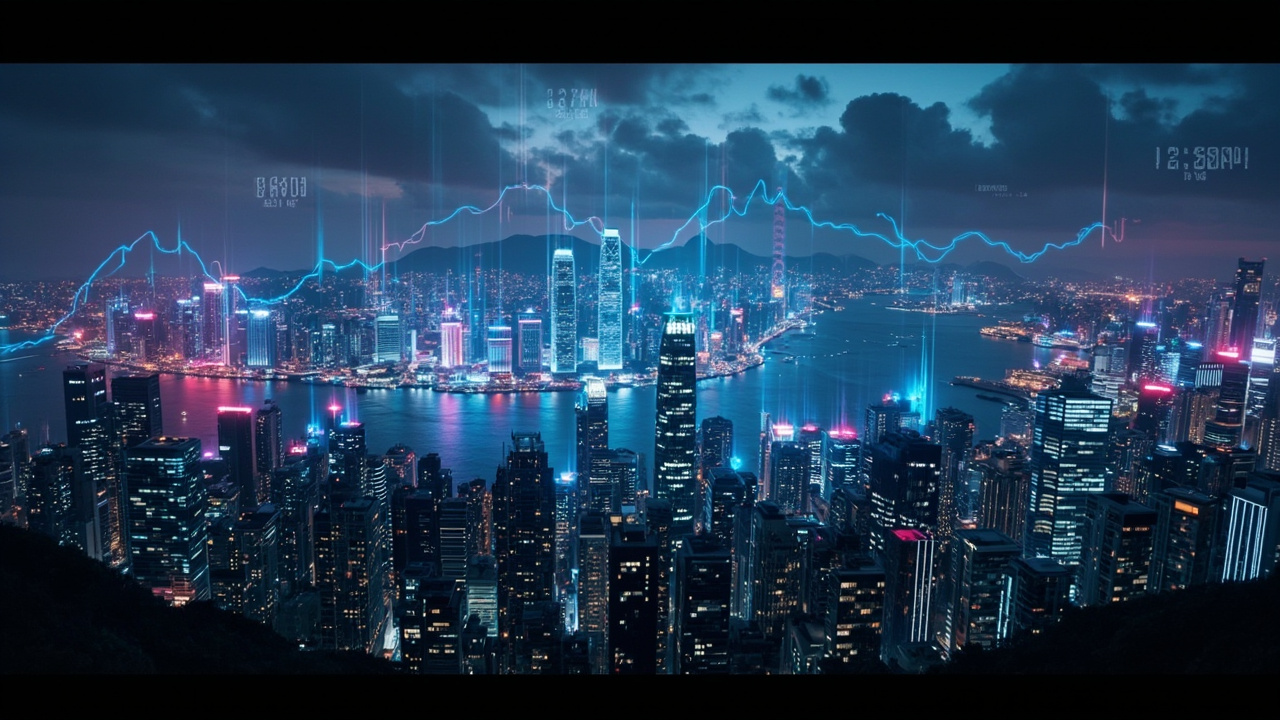
Hong Kong just posted the strongest quarter in the history of its equity capital markets — and artificial intelligence did the heavy lifting.
According to data compiled by Bloomberg, the city’s July-to-September share sales — spanning initial public offerings, placements and block trades — raised a record $47.5 billion, the biggest third-quarter haul ever. The frenzy came despite a steep selloff in local stocks during the same period, a disconnect that says as much about the scarcity of AI assets as it does about investor appetite for them.
The numbers behind the record
The quarterly total pushes Hong Kong’s year-to-date fundraising above $92 billion, putting the city within reach of the $112.5 billion full-year record it set in 2021, with an entire fourth quarter still to run. For context, the exchange raised roughly $36.5 billion from 114 new listings across all of 2025 — meaning 2026 has already delivered more than double last year’s total with three months to spare.
The single largest driver is Beijing-based Z.AI, the model developer formerly known as Zhipu AI and now the most valuable public AI pure play in China. Z.AI alone has raised $9.6 billion this year across its January IPO, follow-on placements, and convertible bond sales. Its most recent maneuver came in mid-September: a $5 billion dual-tranche raise split between a $2 billion share placement of 21.97 million new shares at HK$714 each — a 9.96% discount — and $3.01 billion in zero-coupon convertible bonds.
But Z.AI is only the headline, not the story. The deeper pattern is where Chinese AI companies choose to list.
23 of 27 chose Hong Kong
More than 85% of Chinese AI-related companies that went public in 2026 — 23 of 27 — listed in Hong Kong rather than onshore in Shanghai or Shenzhen, or overseas in New York. That ratio, tracked by Bloomberg earlier in the year and reaffirmed by the Q3 data, cements the city’s role as the offshore gateway for China’s AI sector, a position it last held during the 2020-2021 tech listing wave.
The follow-on market is just as telling. Bloomberg reported in July that Wall Street banks were largely absent from a single week’s $5.8 billion fundraising spree by Chinese AI companies — local and Chinese banks are taking the mandates as US firms navigate restrictions on underwriting certain Chinese issuers. The AI boom is quietly redrawing the investment-banking league table in Asia.
And the pipeline suggests the record is not a peak but a plateau. Moonshot AI, the Beijing developer behind the Kimi models, filed a confidential IPO application in Hong Kong in September and is reportedly targeting a raise of up to $5 billion. DeepSeek is said to be exploring a listing. Alibaba priced a HK$80 billion (~$10.2 billion) share placement at a discount earlier this year specifically to fund its AI infrastructure buildout — a deal that briefly knocked 10% off its own share price and still got done.
Why the money is moving now
Three forces are converging on Hong Kong’s equity market.
Compute is expensive, and growth depends on it. As one Bloomberg analysis of Z.AI’s cash burn put it, computing power has become the binding constraint of the AI race, and public markets are the fastest way to pre-fund years of GPU and data-center spending. Z.AI dashed back to the equity market as soon as its last lockup expired — a cadence that mirrors the repeated placement sprees Alibaba ran in its own buildout years.
Domestic liquidity is deep. Mainland Chinese investors, funneled through the Stock Connect programs, have become the natural buyer base for these listings, letting issuers raise at size without depending on US institutional demand that regulatory politics have made unreliable.
The scarcity premium. With only a handful of investable pure-play AI developers listed anywhere — and US listings of Chinese AI names effectively frozen — Hong Kong offers global investors nearly the only direct public-market exposure to China’s model layer. That scarcity explains how a record quarter could land while the broader Hang Seng index sold off: the money is not betting on Hong Kong, it is betting on AI, and Hong Kong is where the AI supply is.
The risks underneath the record
The same concentration that produced the record makes it fragile. A quarter in which more than 85% of Chinese AI listings land on one exchange, and one issuer accounts for roughly a fifth of the city’s annual total, is a market with a narrow foundation. Placement-led fundraising at 9-10% discounts — Z.AI’s September deal, Alibaba’s placement, MiniMax’s HK$9.5 billion (~$2 billion) July raise at a 9.9% discount — is efficient for issuers but transfers dilution risk to existing holders at speed. And the steep local-stock selloff that ran alongside the fundraising boom is a reminder that liquidity waves reverse faster than they build.
The fourth quarter will answer the obvious question: whether Hong Kong can convert a $92 billion nine-month total into a new full-year record, with Moonshot’s IPO and DeepSeek’s rumored listing as the next tests. Either way, the 2026 AI boom has already re-established something many thought was gone after 2021 — Hong Kong as the world’s most important venue for listing Chinese technology. The difference this time is that what’s being listed is not e-commerce platforms riding a consumer wave, but the capital-hungry core of a national AI strategy.
For the city’s exchange, banks and lawyers, it is the richest quarter they have ever had. For everyone watching where the global AI capital race goes next, the signal is unambiguous: right now, it flows through Hong Kong.
Sources
- [1] https://www.bloomberg.com/news/articles/2026-10-04/ai-deal-boom-drives-hong-kong-fundraising-to-record-summer
- [2] https://sg.finance.yahoo.com/news/ai-deal-boom-drives-hong-024205771.html
- [3] https://www.reuters.com/world/asia-pacific/chinas-zai-raises-5-billion-new-share-convertible-bond-sales-filing-shows-2026-09-13/
- [4] https://www.bloomberg.com/news/articles/2026-09-14/z-ai-s-cash-burn-drives-alibaba-like-hong-kong-fundraising-spree
- [5] https://www.kharon.com/brief/china-ai-stock-news-hong-kong-investment
- [6] https://www.bloomberg.com/news/articles/2026-07-09/wall-street-banks-miss-multibillion-dollar-ai-deals-in-hong-kong