Two Reactors, One Subscription: Oracle Signs Up for 20% of a Nuclear Plant to Power Its $15 Billion AI Campus
Oracle will 'subscribe' to 10–20% of the Point Beach Nuclear Plant's output — and absorb roughly $300 million in rising fuel costs — to feed Project Lighthouse, the $15B Oracle-OpenAI-Vantage AI campus on Lake Michigan, pending Wisconsin PSC approval.
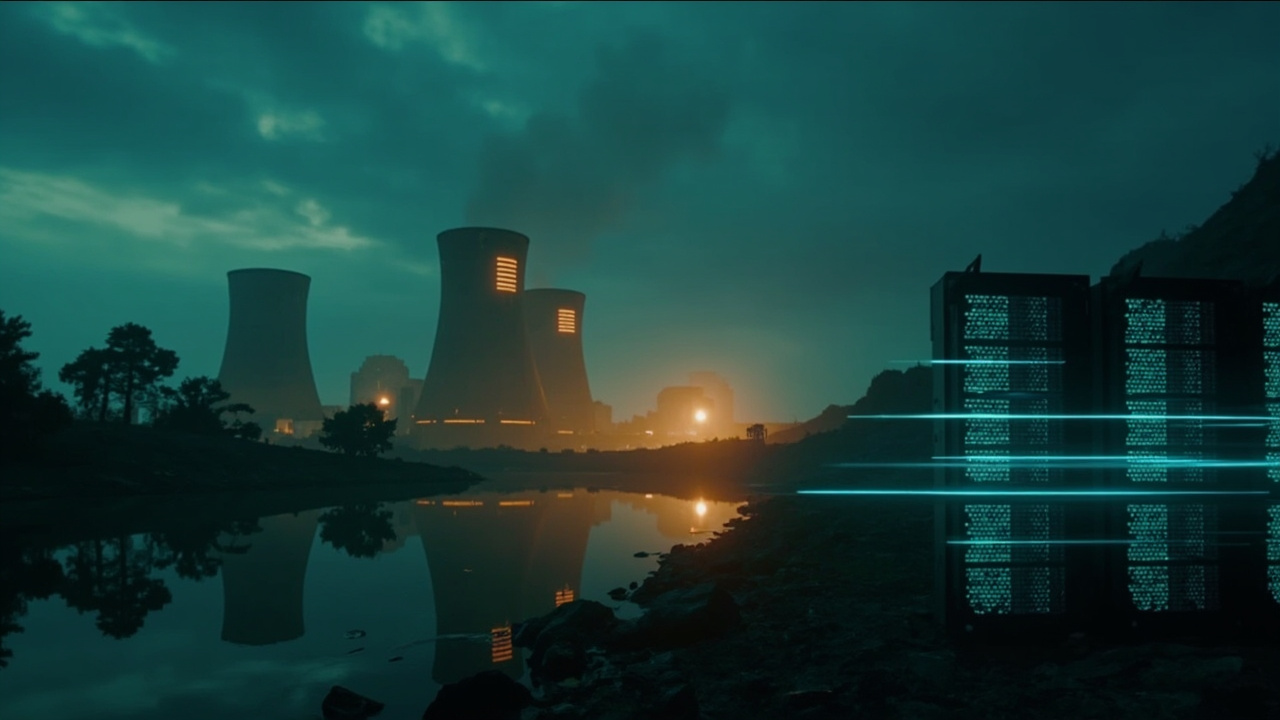
On Friday, October 2, Oracle and Wisconsin utility We Energies announced something that would have sounded like science fiction a decade ago: a cloud computing company “subscribing” to a slice of an operating nuclear power plant. Under the proposed agreement, Oracle would take between 10% and 20% of the Point Beach Nuclear Plant’s electricity generation — roughly 125 to 250 megawatts of carbon-free baseload power — to help feed Project Lighthouse, the $15 billion AI data center campus rising in Port Washington on the shores of Lake Michigan.
The deal, which still requires approval from the Public Service Commission of Wisconsin, is the clearest sign yet that the AI buildout has entered its nuclear era. Not the hypothetical era of small modular reactors promised for the 2030s, but the very concrete era of Big Tech writing checks against reactors that have been spinning since the 1960s and 1970s.
What Oracle Actually Signed
The structure of the agreement matters as much as its size. Oracle is not buying the plant, and it is not building a new one. Instead, it is inserting itself into the existing power purchase arrangement between We Energies and NextEra Energy, the plant’s owner since 2007. We Energies — which sold Point Beach two decades ago but kept buying most of its output — recently signed a new 20-year agreement to continue purchasing roughly 86% of the plant’s electricity. Oracle’s subscription would carve its share out of that arrangement.
The financial hook is what makes the deal politically viable. Point Beach is Wisconsin’s single largest generator, but its electricity is more expensive than the alternatives; We Energies spends about twice as much on fuel as its sibling utility, Wisconsin Public Service, and nuclear fuel for Point Beach accounts for much of the gap. Those premium costs ultimately land on the bills of more than 1 million utility customers. Oracle has now committed to absorbing approximately $300 million of those rising fuel costs through 2033 — money that would otherwise have been passed through to Wisconsin ratepayers.
“Oracle is stepping up with a commitment that will directly benefit more than 1 million Wisconsin utility customers,” said Mahesh Thiagarajan, executive vice president of Oracle Cloud Infrastructure, in the company’s announcement. “By absorbing approximately $300 million in rising energy costs, we are helping protect Wisconsin ratepayers while supporting the reliable, carbon-free power the state depends on.”
For We Energies, the arithmetic is straightforward: a deep-pocketed subscriber takes on the plant’s cost escalations, ordinary households see relief on their fuel surcharges, and the utility keeps the state’s biggest carbon-free generator running at full tilt. Brendan Conway, a We Energies spokesman, said the deal could spare other customers roughly $300 million in fuel costs over the next five years.
Project Lighthouse: The Campus Driving the Demand
The subscription exists because of what is being built 30 minutes north of Milwaukee. Project Lighthouse is the data center campus in Port Washington that Oracle is co-developing with OpenAI, with Vantage Data Centers as the developer — a $15 billion hyper-scale AI facility that has become one of the most watched infrastructure projects in the American Midwest. Vantage has said it is paying for the buildout of 2,000 megawatts of energy capacity, including wind and solar, while expecting the campus itself to need around 1,400 megawatts at full buildout.
Oracle frames Lighthouse as a transformational local investment: more than $11 billion in expected economic impact, over 4,000 skilled construction jobs across three years, roughly 1,000 ongoing operations positions, plus workforce development programs and local infrastructure spending. The company also says it will fully fund the campus’s energy costs to protect ratepayer bills and grid reliability.
The road to this announcement was not smooth. Earlier this year, the Public Service Commission imposed a special rate plan for data-center-scale customers in We Energies territory — including creditworthiness requirements and financial protections designed to ensure that if a hyperscaler walked away, utility customers would not be left holding stranded costs. Oracle sued the PSC in June to roll back those credit rating requirements, arguing they imposed significant financial burdens. The company later dropped the lawsuit, and Friday’s agreement reads, in part, like a peace treaty: Oracle accepting cost obligations in exchange for access to the carbon-free power it needs.
There is a notable geopolitical footnote to the campus’s power strategy. The same day the nuclear subscription was announced, We Energies filed a separate application with the PSC to build a new natural gas plant at the Fox Energy Center site in Outagamie County — one of several moves to shore up generation as AI demand clusters along the Lake Michigan corridor.
The New Template: Corporate Nuclear Subscriptions
The most important thing about this deal is what it signals for the industry. For two years, the dominant narrative around AI and energy has been a choice between two futures: wait a decade for small modular reactors, or burn gas and buy offsets. The Point Beach agreement points at a third path that is available today — hyperscalers underwriting the operating economics of the existing nuclear fleet.
The existing fleet is the obvious target. America’s roughly 90-odd operating reactors produce about 19% of the nation’s electricity, carbon-free, around the clock. Many sit in the Midwest and Southeast near exactly the transmission-constrained zones where AI campuses are clustering. A 10–20% plant subscription — anchored by a 20-year utility PPA renewed through mid-century — gives a data center developer the two things renewables cannot: guaranteed 24/7 megawatts and a politically potent story about saving households money.
It also gives utilities a way out of an awkward position. State regulators from Wisconsin to Georgia have spent 2026 fighting with Big Tech over who bears stranded-cost risk when a data center’s economics sour. Oracle’s $300 million cost absorption flips that script: instead of regulators forcing protections on a reluctant customer, the customer volunteers to eat the plant’s escalating fuel bill in exchange for priority access to its electrons.
Expect more of these. Microsoft’s deal to restart Unit 1 at Three Mile Island, the restart pushes at Duane Arnold and Palisades, and now Oracle’s Point Beach subscription all share the same DNA: the AI industry paying directly for nuclear availability rather than waiting for the grid to catch up. When the largest cloud vendors each need multiple gigawatts of firm power on aggressive timelines, subscribing to an existing reactor is simply the fastest clean option on the menu.
The Open Questions
Approval is not automatic. The PSC must sign off, and commissioners will weigh whether the subscription truly isolates ratepayers — or merely re-slices the plant’s costs in ways that could shift risk when the 20-year PPA and the campus’s load projections diverge. Consumer advocates, including the Citizens Utility Board of Wisconsin, have spent months scrutinizing the special data center tariffs that govern who pays what in We Energies territory; the subscription will get the same treatment.
There is also a fairness question that transcends Wisconsin. Nuclear subscriptions are only available to companies with balance sheets big enough to absorb nine-figure fuel bills. Oracle can pay $300 million to jump the queue for carbon-free power; smaller institutions, municipalities, and rival developers cannot. If corporate subscriptions become the standard mechanism for allocating the existing nuclear fleet, states will need new rules deciding how much of a public resource can be reserved for private AI campuses before everyone else’s costs and carbon intensity rise.
And the demand projections themselves remain a bet. Oracle is subscribing to 125–250 megawatts of a plant whose output totals roughly 1,200 megawatts — a fraction of Project Lighthouse’s eventual 1,400-megawatt appetite. The campus will need wind, solar, gas, and grid purchases on top of its nuclear slice. If AI demand forecasts hold, expect Oracle and its peers back at the table for more; if they do not, the long-term take-or-pay structure of these deals will be tested in exactly the regulatory arena Oracle just left.
For now, though, Wisconsin has become the site of the AI era’s most pragmatic energy bargain yet: two 1960s-vintage reactors on Lake Michigan, quietly keeping the lights on for ChatGPT’s training runs — and, if the deal closes, saving local households $300 million for the privilege.
Disclosure note: Wisconsin Watch, one of the sources for this story, discloses that the OpenAI Foundation recently awarded it a grant with no editorial control.
Sources
- [1] https://www.oracle.com/news/announcement/oracle-announces-commitment-to-absorb-rising-point-beach-energy-costs-2026-10-02/
- [2] https://wisconsinwatch.org/2026/10/wisconsin-we-energies-deal-oracle-data-center-nuclear-energy-power-point-beach-plant/
- [3] https://www.forbes.com/sites/antoniopequenoiv/2026/10/02/oracle-is-absorbing-a-300-million-nuclear-bill-that-wisconsin-ratepayers-were-stuck-with/
- [4] https://dailyreporter.com/2026/10/02/oracle-offers-to-buy-nuclear-power-in-wisconsin/
- [5] https://www.jsonline.com/story/money/business/2026/10/01/oracle-data-center-nuclear-power-deal-could-lower-we-energies-bills/92024983007/