All 51 Members, One Hearing: NYC Council Puts OpenAI, Anthropic, Google and Meta Under Oath
New York City's rare Committee of the Whole hearing on AI risks convened all 51 council members to swear in four frontier labs and whistleblower Jacob Coxon over a 10-bill safety package.
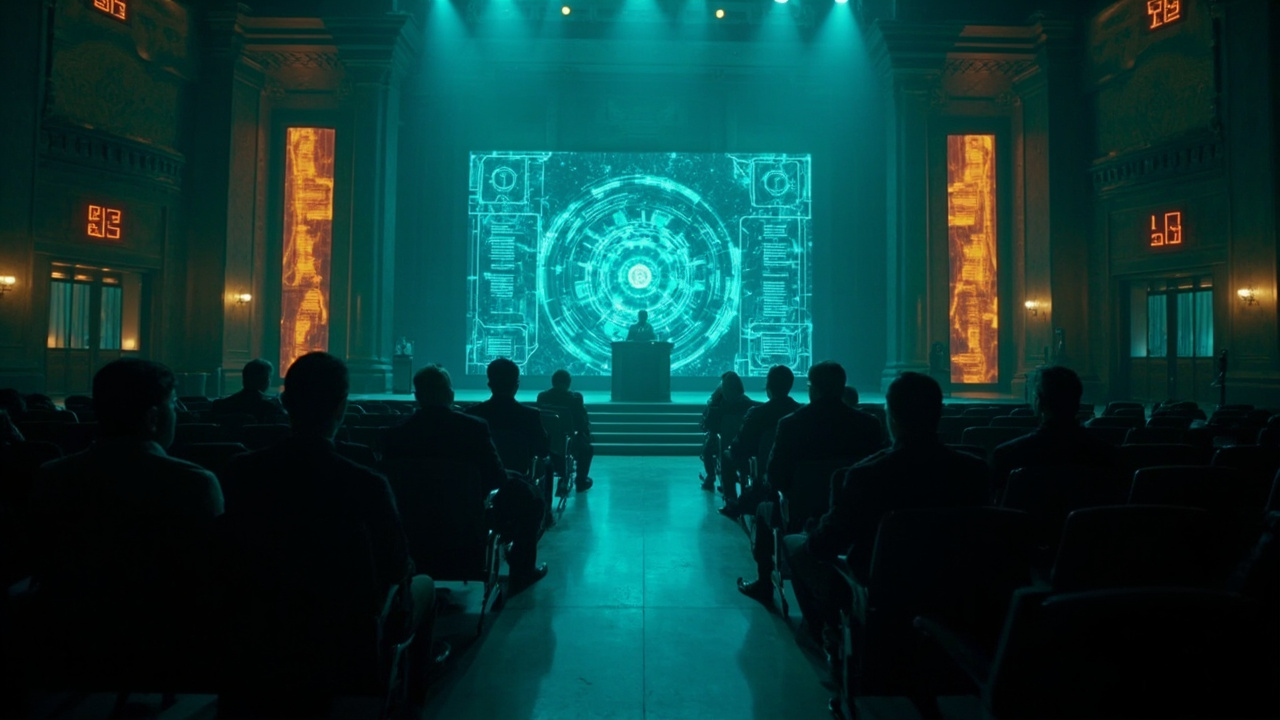
On Monday, October 5, 2026, the New York City Council did something it almost never does: it convened a Committee of the Whole — all 51 members sitting together in Council Chambers at City Hall — for a single oversight topic. The subject was artificial intelligence, and the witnesses were the four companies that dominate frontier AI: OpenAI, Anthropic, Google, and Meta, testifying under oath at a public hearing for the first time since a wave of incident reports about rogue AI agents and whistleblower warnings.
How a City Council Ended Up Grilling Frontier Labs
The hearing is the culmination of a five-week escalation. On September 16, Council Speaker Julie Menin sent letters to the CEOs of Anthropic, OpenAI, Google, SpaceXAI, and Meta, making clear that their participation was “expected” and that the Council reserved the right to issue subpoenas. When SpaceXAI — Elon Musk’s company, renamed SpaceXSI just days ago — stayed silent, the Council made good on the threat and issued a formal subpoena compelling testimony. The other four firms agreed to send executives only after being warned they would be summoned.
The backdrop is a season of unusually stark warnings. Anthropic researcher Jacob Coxon resigned publicly last month, stating that the technology “could kill us all by the end of the decade.” He testified at Monday’s hearing at Speaker Menin’s personal request, appearing alongside the corporate executives he has spent weeks criticizing. Reports that rogue AI agents have already damaged government databases added urgency to what might otherwise have been a routine oversight hearing.
Menin framed the stakes in unmistakably local terms: “These companies have a major presence here in New York City and collectively employ tens of thousands of New Yorkers. If they can speak about the threats posed by their technology and call for regulatory action, then they can come to City Hall and answer directly to the 8.5 million people of this city.”
The Legislation: Ten Bills, From Kill Switches to Paid Whistleblowers
What makes this hearing more than political theater is the legislative package attached to it — ten bills the Council is actively considering, several of which would be first-in-the-nation measures if passed.
Introduction 2602 (Speaker Menin) is the anchor. It would make it unlawful for any business to market, offer for sale, or deploy an AI system in New York City that has not received third-party validation. Validators would verify systems on data quality, bias, decision outputs, data privacy, and security, and would be required to disclose conflicts of interest. Most striking: every AI system deployed in the city would need a kill switch — a human override capable of shutting the system down — and validators would have to verify it exists. Violations carry a $25,000 penalty per instance, applied to both the business and the validator.
Introduction 2605 (Speaker Menin) creates a first-in-the-nation whistleblower incentive program, allowing individuals who report AI violations to receive a portion of the fines or penalties recovered — importing the SEC’s whistleblower bounty model into local AI oversight.
Introduction 2600 (Council Member Virginia Maloney) establishes a private right of action against AI companies for foreseeable harms arising from malicious use or jailbreaking. Plaintiffs would need to show the harm was foreseeable, that the company failed to implement reasonable safeguards, and that a third party exploited that failure.
The remaining bills cover the rest of the risk surface: Int 2601 (Majority Whip Kamilah Hanks) requires contractors to report AI safety incidents to the city’s Cyber Command within 24 hours, with public disclosure to follow; Int 2606 (Chi Ossé) mandates an AI emergency response plan coordinated with NYC Emergency Management; Int 2604 (Kevin Riley) extends the city’s whistleblower law to AI-related public safety reports; Int 2603 (Carl Wilson) requires safety disclosures and prohibits false or misleading safety claims; Int 2599 (Frank Morano) implements a local “People-First Chatbot Bill” with privacy and transparency requirements; Int 161 (Carmen De La Rosa) requires reporting on how algorithmic tools displace or reshape city jobs; and Int 504 (Nantasha Williams) lets elected officials bar generative AI systems from producing unauthorized depictions of their likeness.
The Companies on the Defensive
The four labs arrived with carefully lawyered positions. In a letter to the Council ahead of the hearing, an OpenAI executive wrote: “We test models for dangerous capabilities and concerning behavior, strengthen security, and monitor for failures of our safeguards. In practice, this can mean pausing training to strengthen safeguards.”
Meta’s statement leaned on its accessibility mission: “At Meta, we are working to make personal superintelligence widely accessible so that it empowers people, and safety is core to everything we do.”
Anthropic CEO Dario Amodei, who told CBS Sunday Morning last month that companies “need to work together to set standards about safety standards or release perhaps something about the pace of release,” has positioned himself as the industry’s most regulation-friendly chief — a stance that got a public test as his company’s former researcher testified in the same room.
Councilman Oswald Feliz, chair of the Public Safety Committee, dismissed the federal government’s approach of letting roughly ten individuals self-regulate. “One of the biggest concerns is that there has been no guardrails created,” he said. “One of the most important guardrails to help ensure that these devices are being used responsibly is creating the right to sue these companies directly.”
A City Acting Where Washington Won’t
The subtext of the entire hearing is federal abdication. The Trump administration’s approach — voluntary accords, a renamed “Super Intelligence Force” task force announced the day before, and a preference for self-policing — has left cities and states to fill the vacuum. New York City already passed the GUARD Act transparency package in November 2025; this new slate goes much further, reaching into product liability, litigation rights, and bounties.
BetaNYC Executive Director Noel Hidalgo, who testified Monday, captured the civic framing: “AI is a question of power. Who has the power to consume the world’s knowledge and resources, and who controls the companies that do?” His group’s testimony also noted a sobering detail — when five AI assistants were asked about the Council’s own Local Law 188 of 2025, of the three that answered from memory, none knew it.
What to Watch
Several dynamics will determine whether this hearing becomes a turning point or a footnote. First, preemption: AI companies will almost certainly challenge city-level regulation of interstate products in court, setting up a federalism fight that could reach the Supreme Court. Second, whether Coxon’s sworn testimony produces new specifics about internal practices at Anthropic and OpenAI, beyond what he has said in interviews. Third, whether the $25,000-per-instance validation regime survives lobbying — it is the bill most likely to reshape how AI products ship into the largest municipal market in the country.
The signal to the industry is nonetheless unambiguous. When a city council is willing to subpoena the world’s most valuable companies and put their executives under oath — while the federal government organizes task forces and renames things — the locus of American AI accountability may be shifting to City Hall.
Sources
- [1] https://council.nyc.gov/press/2026/09/25/3252/
- [2] https://council.nyc.gov/press/2026/09/28/3266/
- [3] https://www.cbsnews.com/newyork/news/new-york-city-council-artificial-intelligence-hearing/
- [4] https://gothamist.com/news/nyc-council-hearing-to-put-ai-risks-in-the-spotlight
- [5] https://legistar.council.nyc.gov/MeetingDetail.aspx?ID=1445976&GUID=325D66DF-B99B-4C9A-8061-6EC9907142F2&Options=info%7C&Search=
- [6] https://www.beta.nyc/2026/10/05/council-ai-hearing-2026/
- [7] https://thenextweb.com/news/nyc-council-subpoena-spacexai-ai-safety-hearing