Pick a Side: Washington Tells 35 Countries to Choose Between Pax Silica and China's WAICO
The US is preparing to warn dozens of allies that joining China's World AI Cooperation Organization means exclusion from the Pax Silica coalition — the AI race is now a forced choice.
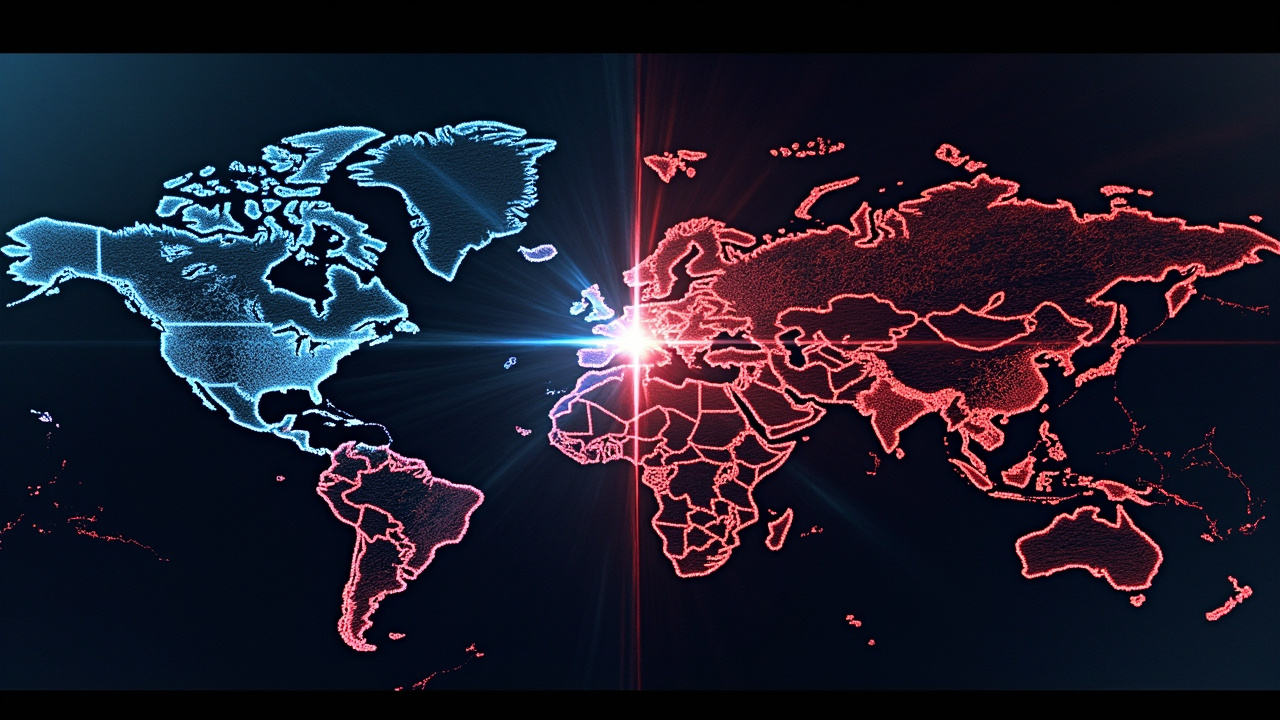
The global AI race just stopped being a race you can watch from the sidelines. According to a Reuters exclusive published on August 14, the United States is preparing to tell dozens of partner countries that they can no longer hedge between rival AI blocs: join China’s new World Artificial Intelligence Cooperation Organization (WAICO), and you risk expulsion from the US-led Pax Silica coalition that anchors Western access to chips, models, and critical minerals.
A draft letter now circulating in Washington, first detailed by The Next Web, warns the roughly 35 signatories of Pax Silica and the related AI Opportunity Statement that membership in Beijing’s framework would “conflict with commitments” under the American-led initiative. In plain terms: the era of strategic ambiguity in AI diplomacy is over.
Two blocs, two philosophies
Pax Silica was launched at a summit in December 2025 under US State Department auspices. Its stated mission is to “reduce coercive dependencies, protect the materials and capabilities foundational to artificial intelligence” — in practice, a coordinated supply-chain alliance spanning critical minerals, semiconductors, and frontier AI models. Member countries commit to joint projects, aligned export controls, and gradually decoupling their silicon stacks from Chinese suppliers.
The coalition has been quietly growing. Norway signed on in May 2026. The Netherlands joined in June — notably, even while locked in a dispute with Washington over ASML export restrictions, a sign that European governments see Pax Silica membership as too valuable to lose. By mid-2026, around two dozen countries were formally involved, with the AI Opportunity Statement extending the umbrella to a wider circle of signatories.
China’s answer arrived in July 2026. At the World AI Conference in Shanghai, President Xi Jinping unveiled a thirteen-point Global AI Governance Action Plan and threw Beijing’s weight behind WAICO — the World Artificial Intelligence Cooperation Organization — a new multilateral body pitched as an open, inclusive alternative to what Beijing calls American “technology hegemony.” In his Shanghai speech, Xi promised AI training programs and cooperation centers for BRICS, ASEAN, Latin American, and African Union countries, positioning China as the partner of choice for the Global South.
The Carnegie Endowment’s analysis of China’s pivot notes that the action plan emphasizes “multilateral collaboration” and capacity building — deliberately framed to appeal to countries that feel excluded from the US-led AI boom. Where Pax Silica speaks the language of security and supply-chain resilience, WAICO speaks the language of access and development.
The exclusivity clause
What changed this month is the hard edge. The draft US letter transforms Pax Silica from a coalition of shared interests into something closer to a mutual-defense pact with an exclusivity requirement. As PYMNTS reported, Washington is explicitly weighing banning nations from Pax Silica if they join the Chinese AI group.
The logic is straightforward, if blunt. Pax Silica’s value depends on trust: shared export-control enforcement, coordinated investment in chip fabrication, and intelligence sharing about supply-chain vulnerabilities all collapse if members are simultaneously plugged into a Beijing-designed framework. US officials worry that WAICO membership would give China visibility into — and leverage over — the very dependencies Pax Silica is meant to eliminate.
But the move carries real risks. Analysts at the Observer Research Foundation argue that “the emerging global AI order is unlikely to split into two rival blocs, as most countries will engage with both ecosystems.” Middle powers from Saudi Arabia to Singapore to Indonesia have spent the past year carefully cultivating ties with both Washington and Beijing — buying American chips while adopting Chinese open-weight models, hosting US cloud regions while joining Chinese AI training programs. Forcing a binary choice may push precisely the countries the US wants to keep into China’s arms, especially where WAICO’s no-strings-attached development pitch lands better than American conditionality.
Why now
The timing is not accidental. Three developments converged to push Washington toward escalation.
First, China’s open-weight model offensive has been startlingly effective. Chinese model families now account for a dominant share of global open-weight downloads and token traffic on routing platforms, giving Beijing genuine technical pull — not just diplomatic rhetoric — with developers worldwide.
Second, WAICO moved from concept to institution faster than expected. What began as a governance talking point at the 2025 World AI Conference crystallized in July 2026 into an actual organization with a secretariat, a membership drive, and Xi’s personal endorsement — the first credible institutional rival to the US-led AI order.
Third, the Atlantic Council and other think tanks have been warning for months that Pax Silica’s coalition model had a free-rider problem: countries could enjoy the benefits of US alignment while keeping Chinese options open. The exclusivity clause is designed to close that loophole.
What happens next
The immediate question is how the 35 warned countries respond. Early signals suggest a split. Close intelligence partners are expected to fall in line quickly. But swing states — particularly in Southeast Asia, the Gulf, and Latin America — now face a genuinely difficult calculation: American technology and security ties on one side, Chinese investment, infrastructure, and increasingly capable models on the other, with the price of admission to each being exclusion from the other.
There is also a constitutional question inside Pax Silica itself: whether expulsion threats can actually be enforced. The initiative is built on political declarations rather than treaty obligations, and analysts at the Atlantic Council have flagged that its enforcement mechanisms remain immature. A high-profile defection — a mid-sized power choosing Beijing anyway — would test whether the coalition’s sticks are as real as its carrots.
One thing is certain. For the past three years, countries could treat the US-China AI rivalry as a background condition to be managed. With this letter, it becomes a foreground decision to be made — publicly, and on a deadline. The Cold War had its Berlin moments; the AI race may have just found its first.
Sources
Reported by Reuters, The Next Web, PYMNTS, Carnegie Endowment, the Atlantic Council, and the Observer Research Foundation. Full source list in the article frontmatter.
Sources
- [1] https://www.reuters.com/world/china/us-tell-partners-they-must-pick-sides-ai-race-with-china-2026-08-14/
- [2] https://thenextweb.com/news/pax-silica-us-letter-35-countries-china-ai-coalition
- [3] https://www.pymnts.com/news/artificial-intelligence/2026/us-weighs-banning-nations-from-pax-silica-if-they-join-china-ai-group/
- [4] https://www.state.gov/releases/office-of-the-spokesperson/2025/12/pax-silica-initiative
- [5] https://en.wikipedia.org/wiki/Pax_Silica
- [6] https://carnegieendowment.org/research/2026/05/chinas-pivot-on-global-ai
- [7] https://www.reuters.com/world/asia-pacific/chinas-xi-promotes-chinas-commitment-ai-access-speech-shanghai-conference-2026-07-17/
- [8] https://genevadiplomacy.ch/waico-2026-a-new-chapter-in-ai-diplomacy/
- [9] https://www.orfonline.org/expert-speak/china-s-bid-to-reshape-the-global-ai-order
- [10] https://www.reuters.com/world/china/netherlands-join-us-led-pax-silica-ai-initiative-despite-asml-dispute-2026-06-23/
- [11] https://www.atlanticcouncil.org/dispatches/three-elements-trumps-pax-silica-needs-to-succeed/