US Military-Funded Research Powered China's Robot Dog Dominance, Reuters Investigation Finds
Reuters reveals Unitree's best-selling robot dogs trace directly to US Army-funded quadruped research — a case study in how open science meets China's industrial machine.
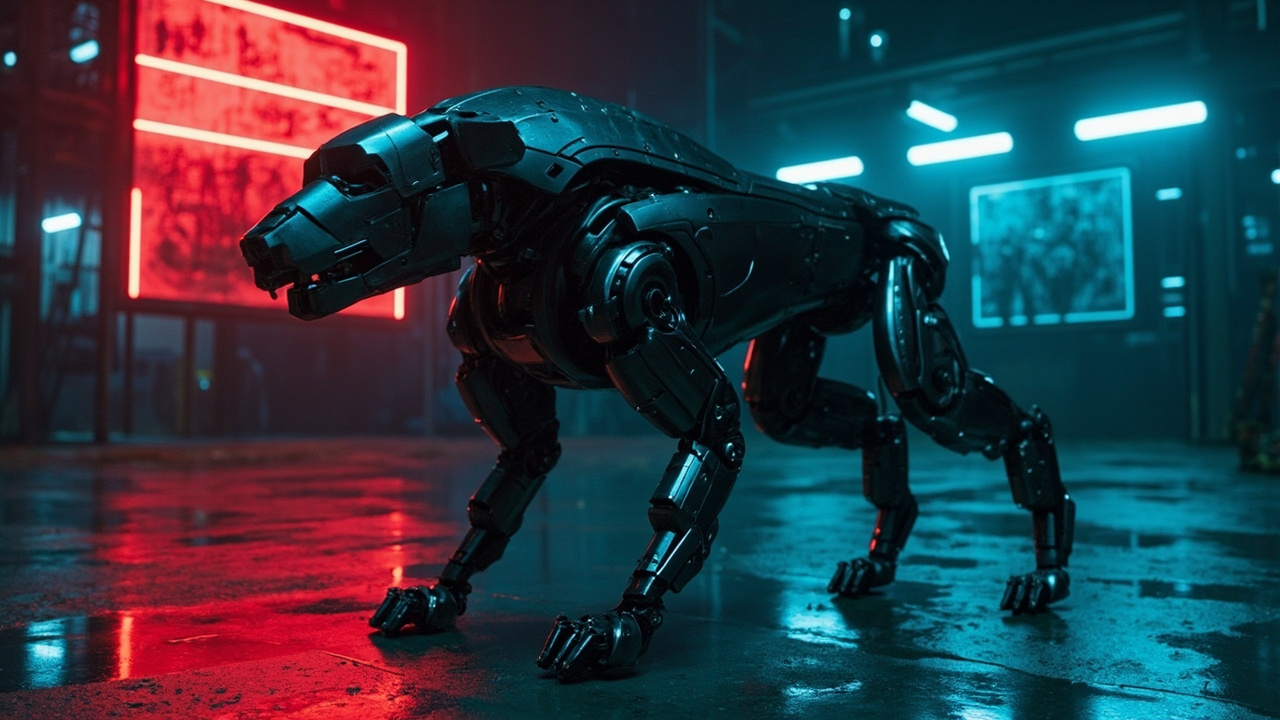
The most important robotics investigation of the year landed on August 18, 2026, and it reads like a parable about the two superpowers’ very different machines of innovation. A Reuters special report by Michael Martina found that China’s Unitree Robotics — now among the world’s largest producers of humanoid and quadruped robots — based the designs of its most successful robot dogs on breakthroughs paid for by the US military.
The finding comes from a former US defense technology official and three top researchers directly involved in the Army-funded program. Reuters is the first news outlet to detail the connections between Unitree’s designs and the US Army research effort.
What the investigation found
The story starts with the Robotics Collaborative Technology Alliance (RCTA), a program the US Army Research Laboratory (ARL, part of DEVCOM) funded between 2010 and 2020. The alliance gathered government, academic, and industry researchers from the University of Pennsylvania, MIT, Boston Dynamics, NASA’s Jet Propulsion Laboratory, and other institutions. Its top commercial partner was General Dynamics Land Systems, the Michigan-based maker of the Abrams M1 tank.
Two breakthroughs matter most:
- 2016 — UPenn’s leg-mounted motors. Researchers including Gavin Kenneally eliminated heavy central gearboxes and placed motors directly in robots’ legs, dramatically improving the machine’s ability to sense and respond to terrain. This work built on MIT lab research funded by DARPA.
- 2019 — MIT’s Mini Cheetah. Ben Katz and colleagues presented the Mini Cheetah, which added strength, agility — and backflips. Months earlier, Katz had published his MIT master’s thesis detailing Mini Cheetah’s actuators.
Within six months of that thesis going public, Katz found Chinese companies manufacturing actuator copies “you could buy on AliExpress.”
The through-line to Unitree is documented on paper. Unitree founder Wang Xingxing’s own 2016 master’s thesis from Shanghai University — reviewed by Reuters — cites the MIT lab’s work on earlier Cheetah iterations and sets out design principles consistent with those developed at the US lab, acknowledging the lab’s “pioneering” contributions. He also directly referenced Kenneally’s ARL-funded UPenn paper.
Ben Katz told Reuters the dimensions of Unitree’s popular Go series were “to the millimeter” almost identical to the Mini Cheetah. Joao Ramos, another MIT lab researcher, said Unitree copied the Mini Cheetah’s shape, structure, and design — but credited the company with doing “proper engineering” to perfect a mass-produced robot: “The actual practical implementation, bringing it to real life, that’s all on them.”
Nothing underhanded — and that’s the point
Here is the uncomfortable twist: Unitree did nothing wrong in using the research. The Army program’s findings were published openly to stimulate progress in the field, a common practice in academic science. An ARL spokesperson said the research “strengthened the broader US robotics ecosystem,” and none of the US researchers who spoke with Reuters advocated keeping such government-financed research secret.
The problem, they argue, is what happens after publication. Kenneally — who commercialized the same breakthroughs through his company Ghost Robotics, a supplier to US special forces — said the Army-funded project became “basically, the first Unitree robot that had any kind of scale.” His assessment of the contest ahead: “This isn’t just a competition between US and Chinese robotics companies. It’s between private US companies and China’s coordinated national strategy.”
The scoreboard
The numbers frame the gap starkly. Unitree sold more than 5,500 humanoids and 18,000 quadrupeds last year according to company filings, and is valued at about $9 billion ahead of its Shanghai stock debut on Wednesday. Its $1,600 Go2 model, launched in 2023, helped it rapidly dominate the global quadruped market, and the IPO has drawn frenzied demand.
No US company has mass-produced such robots — including Tesla, which has displayed Optimus prototypes for years. On a January earnings call, Elon Musk called China “incredibly good” at scaling production. Boston Dynamics, whose 2019 canine Spot used different technology, told a Congressional hearing that China’s low pricing would drive US firms out of the market.
Ghost Robotics, the US champion built on the same research lineage, has shipped about 1,000 Vision 60 robots — mostly to military and government customers — at upwards of $165,000 each, with some components still built in China. Unitree’s B series robot lists for below $100,000 in the US. In 2024, South Korea’s LIG Defense & Aerospace acquired a 60% stake in Ghost Robotics for $240 million, and the company is now exploring production in Taiwan. “We need to work closely with our allies,” Kenneally said. “There’s absolutely no path forward without them.”
Washington’s response: restrictions, not industrial policy
The policy reaction has been defensive. In June, the Pentagon added Unitree to a list of Chinese military companies, calling it a “contributor to the Chinese defense industrial base” — a designation short of a sanction but one that limits future US military use of its technology. In July, the Federal Communications Commission banned imports of future models of foreign-made humanoid and quadruped robots, including Unitree’s. China has threatened retaliation; its Washington embassy accused the US of “market distortion and unilateral bullying.”
Most experts who spoke to Reuters supported the import ban but said it is not enough to build an industry that can catch up. Reyk Knuhtsen, a robotics analyst at SemiAnalysis, called the US failure to commercialize its own research a “dropped ball,” pointing to US venture capital’s preference for high-return software startups. “This is a very big hill for the US to climb,” he said. Vijay Kumar, dean of Penn Engineering, framed it as a systems problem: the US excels at innovation and software but lacks the capital, industrial base, skilled workforce, and component supply chains to scale breakthroughs.
Jaret Riddick, a former ARL director who oversaw the robotics project, put it most bluntly. The Army funding did kick-start the US quadruped industry, he said — but without support for large-scale production, Unitree in China “just kind of consumed that space.”
Why it matters
The robot dog story is the latest chapter in a familiar pattern: solar panels, drones, EVs, quantum communications — technologies first developed in the US with government or military backing, then mass-produced at scale by China’s state-directed manufacturing sector, subsidized and clustered around dense component supply chains. Unitree benefits from both the openness of US science and the industrial depth of Hangzhou’s robotics cluster, where suppliers of motors, gears, actuators, and rare-earth magnets sit within reach.
There is also a military shadow. Chinese state television has featured Unitree Go2 robots alongside PLA troops, and a modified B1 series robot firing a mounted assault rifle — despite Unitree’s insistence that its products are for civilian use and its 2022 signature on an open letter pledging not to weaponize robots. In 2023, the US Army itself secured a federal waiver from Buy American rules to purchase two Unitree Go2s, with procurement records citing insufficient quantities of US-made alternatives “of a satisfactory quality.”
The deeper lesson cuts against both political tribes’ instincts. Hiding research wouldn’t have worked — open publication is how science advances, and ARL defended it. Tariffs and import bans can buy time but cannot conjure a domestic supply chain. What the researchers actually ask for is the boring, hard thing: capital, factories, workforce training, and component ecosystems that can turn American ideas into American products at Chinese speed. Until that exists, the world’s robot dogs — like its drones and solar panels — will keep speaking Chinese at the factory, whatever language their software runs in.
Sources
- [1] https://www.reuters.com/world/asia-pacific/how-us-military-funding-propelled-chinas-robot-dogs-2026-08-18/
- [2] https://www.reuters.com/world/asia-pacific/what-is-unitree-why-are-chinas-humanoid-robot-makers-racing-list-2026-08-10/
- [3] https://www.internazionale.it/ultime-notizie-reuters/2026/08/18/how-u-s-military-funding-propelled-china-s-robot-dogs