Eight Years Later, Huawei Finally Faces a Brooklyn Jury: Inside the RICO Trial That Could Redraw US–China Tech Lines
Jury selection begins September 8 in the long-delayed US racketeering trial of Huawei — a 16-count case spanning Iran sanctions evasion, HSBC bank fraud, and trade-secret theft from six US competitors.
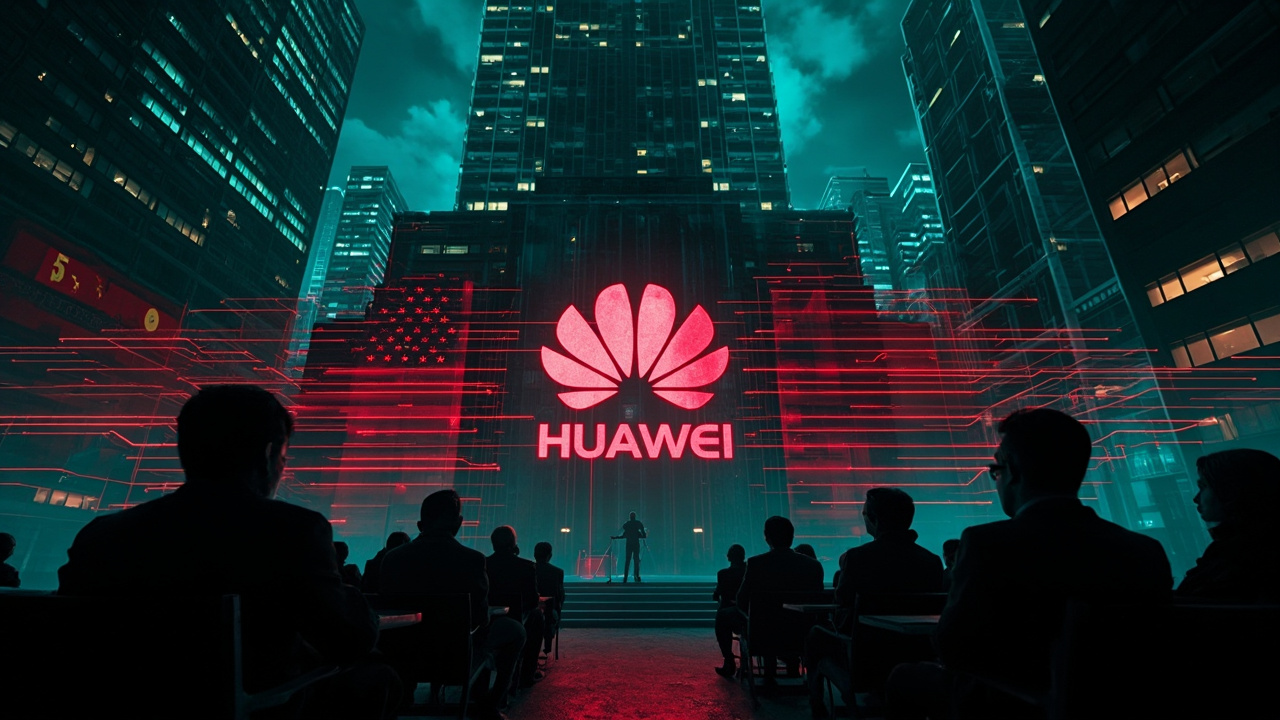
One of the longest-running legal sagas in modern tech history reaches its courtroom climax this week. On September 8, 2026, jury selection begins in the United States government’s criminal racketeering case against Huawei Technologies Co., Ltd., in federal court in Brooklyn, New York. The trial, overseen by U.S. District Judge Ann Donnelly of the Eastern District of New York, is expected to run four to six months and will put the Shenzhen conglomerate’s entire rise — from telecom-equipment upstart to global giant — under a jury’s microscope.
The case has been more than eight years in the making. Prosecutors first charged Huawei in Brooklyn in 2018, and a superseding indictment added racketeering charges in 2020. What finally goes to trial this month is a streamlined 16-count indictment that accuses Huawei of operating what prosecutors describe as a decades-long racketeering scheme designed to grow the company’s brand and market position through theft and deception.
What Huawei stands accused of
The indictment’s core allegations fall into three buckets.
Iran sanctions evasion and bank fraud. Prosecutors allege Huawei misled HSBC and other banks about its business in Iran, causing them to process transactions that violated U.S. sanctions. The accusation traces back to 2012–2013 Reuters reports on Huawei’s Iran dealings, which prosecutors say contained misrepresentations the banks relied upon. This thread of the case is inseparable from the 2018 arrest of Huawei CFO Meng Wanzhou in Vancouver — an event that detonated a diplomatic crisis among Washington, Beijing, and Ottawa and ultimately led to criminal charges against two Canadians in China.
Trade-secret theft from six US companies. The government alleges Huawei unlawfully acquired confidential information from six competitors between 2000 and 2018. The best-known episode involves T-Mobile’s “Tappy” robot — a phone-testing robot Huawei employees were accused of photographing and measuring to steal. Prosecutors also claim Huawei paid bonuses to employees who collected confidential information from rivals.
Racketeering conspiracy. The RICO (Racketeer Influenced and Corrupt Organizations) framing treats these acts not as isolated incidents but as a pattern — an “enterprise” of IP theft and fraud the company allegedly ran for roughly two decades. RICO convictions carry severe penalties, and the government’s willingness to deploy a statute normally reserved for organized crime against a Fortune Global 100 company is precisely what makes this trial a landmark.
Huawei has pleaded not guilty and denies all wrongdoing. The company has characterized the prosecution as politically motivated, accusing the U.S. of treating it as “a prosecutorial guinea pig” and arguing that the case is part of a broader campaign to cripple China’s technology champions.
Why this trial is happening now
The road to September 8 has been anything but smooth. Judge Donnelly initially set the trial for May 4, 2026. In April, she pushed the start to September 8 after prosecutors filed streamlined charges — a revision Huawei pleaded not guilty to at a status conference. Along the way, the judge has issued several significant pre-trial rulings that shaped the case.
Most consequentially, in June 2026 Donnelly ruled that admissions Meng Wanzhou made in 2021 — as part of the deferred-prosecution agreement that secured her release from Canada — can be used as evidence against the company itself. Huawei had argued that using its CFO’s statements violated its right to remain silent; the judge disagreed. Prosecutors also fought, successfully, to quash Huawei’s subpoenas to banks in the weeks before trial, accusing the company of launching “improper fishing expeditions” for government evidence.
The backdrop of the trial is equally charged. The Financial Times reports that opening the case now revives U.S.–China technological confrontation at a delicate moment: Washington is weighing further chip-export-control changes, and AI-related negotiations with Beijing are ongoing. A Trump–Xi summit expected later this month has AI squarely on the agenda — and a Brooklyn courtroom will now be generating headlines in parallel.
The AI connection
This trial does not land in a vacuum. In the past week alone, Huawei has unveiled the Mate XT2 trifold smartphone powered by its homegrown Kirin 9050 Pro chip — a device the company claims is entirely free of U.S. supply-chain dependencies. Reports have detailed DeepSeek training frontier models on clusters of 160,000 Huawei Ascend chips. And Belgium announced espionage charges on September 7 against a former GaN semiconductor executive accused of passing chip secrets to a Chinese startup.
Each story is a reminder that the technology cold war the Huawei prosecution helped ignite has only intensified. When the case began in 2018, Huawei was the world’s second-largest smartphone maker and the dominant telecom-equipment vendor. After years of U.S. export controls, its handset business was hobbled and its chip supply strangled. Yet in 2026 the company has staged a striking comeback — revenues are nearly back to pre-clampdown levels amid an AI boom, powered by a domestic chip stack the U.S. tried and failed to permanently sever.
That paradox gives the trial unusual weight. If jurors accept the government’s narrative, the U.S. legal system will have formally branded Huawei’s rise as substantially built on crime — racketeering, sanctions fraud, and systematic IP theft. If Huawei’s defense succeeds in painting the prosecution as geopolitical theater, the verdict will embolden critics of American extraterritorial enforcement everywhere.
What to watch
Several dynamics will determine how the next four to six months unfold:
- The Meng admissions. How much weight the jury gives to the CFO’s factual stipulations could decide the bank-fraud counts.
- The IP-theft witnesses. The six alleged victim companies will anchor the RICO pattern; expect testimony reaching back to the early 2000s.
- Huawei’s presence. The company may or may not mount a full defense; a conviction in absentia-like scenario — where the company largely disengages — is possible given its stance that the process is illegitimate.
- Collateral consequences. Regardless of verdict, the trial’s disclosures will feed directly into U.S. export-control debates, allied countries’ Huawei exclusion decisions, and the broader question of whether Chinese tech firms can get anything resembling a fair hearing in U.S. courts.
For an industry that has watched export controls, entity lists, and chip bans escalate for eight years, the Brooklyn trial is the rare arena where facts will be tested under oath, with rules of evidence, before ordinary citizens. However it ends, U.S.–China tech relations will look different on the other side.
Sources
- [1] https://www.ft.com/content/9422805f-519c-4b22-839c-cbd7a6464f07
- [2] https://asia.nikkei.com/politics/international-relations/us-china-tensions/china-s-huawei-heads-to-trial-in-us-over-sanctions-and-trade-secrets
- [3] https://www.law.com/newyorklawjournal/2026/09/04/huawei-to-stand-trial-in-landmark-us-racketeering-case/
- [4] https://www.reuters.com/legal/government/huawei-cfos-admissions-can-be-used-against-company-criminal-trial-us-judge-rules-2026-06-17/
- [5] https://www.justice.gov/archives/opa/pr/chinese-telecommunications-conglomerate-huawei-and-subsidiaries-charged-racketeering