Beyond the Founders: China Now Requires Exit Approval for the Families of Its Top AI Talent
Bloomberg reports Beijing's exit-approval regime now covers spouses and children of top AI and chip executives — the sharpest escalation yet in China's talent lockdown.
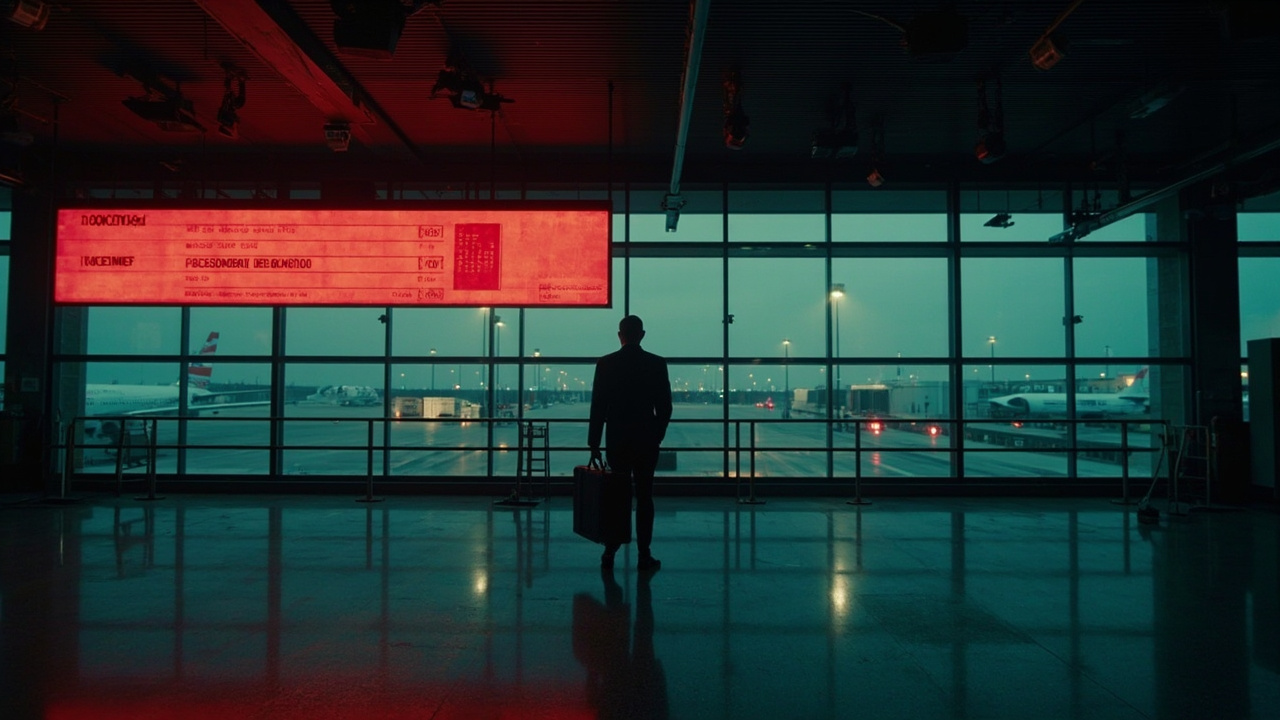
For most of the past decade, the global AI talent war was a story about recruitment — which lab could pay more, which country could offer better GPUs. Over the past six months, it has quietly become a story about exit visas.
On September 28, Bloomberg reported that China has broadened its overseas travel restrictions on top artificial intelligence talent to cover their family members. Direct relatives — spouses and children — of executives at strategically important AI and chip companies whose work is deemed vital to state security now require Beijing’s approval before traveling abroad, even for short trips. The government has begun notifying affected individuals, including startup founders and senior executives, according to the report.
What the new rules actually do
The escalation did not come out of nowhere. It layers on top of a regulatory framework that has been tightening all year:
- May 2026: Bloomberg first reported that top AI researchers, founders, and executives at private firms such as Alibaba and DeepSeek were required to obtain government approval before any overseas travel. Some DeepSeek staff had earlier been asked to surrender their passports, according to The Information.
- September 15, 2026: A new regulation on exit and entry administration took effect, giving authorities formal power to impose exit bans on individuals suspected of posing a threat to “industrial and technological security.”
- September 28, 2026: Bloomberg reports the regime now extends to immediate family members of key AI and chip personnel, and that Beijing plans to add more individuals to the list over time.
In practice, this means the spouse of a senior engineer at a Chinese AI lab who wants to attend a wedding in Singapore or enroll a child at a university in the United States may now need clearance from Beijing. The measures are explicitly designed to prevent critical technologies and information from leaking to the US amid escalating friction between the two countries.
The Manus precedent
The trigger most often cited for the crackdown is Meta’s attempted $2 billion acquisition of Manus, the AI startup founded by two Chinese nationals in Beijing. Manus had moved its headquarters to Singapore partly to escape US investment curbs and expand globally. Beijing blocked the deal — and, according to DW, barred the firm’s two founders from leaving the country.
The case hardened a fear at the top of the Chinese system: that its most valuable AI companies and the people who build them can simply be bought or lured away by American money. Since then, China has also tightened curbs on US investment in sensitive technology firms.
An ironic reversal
There is a historical irony here that analysts have not let pass. For years, the US and EU accused China of industrial-scale intellectual property theft — recruiting Western engineers, allegedly spying on rivals, and running cyberattacks on trade secrets. Now the accusation has inverted: China appears to fear that its frontier AI expertise, accumulated through massive state and private investment, could walk out the door to American labs offering tenured research positions and eight-figure compensation packages.
Henry Gao, a law professor at Singapore Management University, told DW the measures “offer a rare glimpse into the true state of China’s economy,” suggesting Beijing is deeply concerned about economic weakness and substantial capital outflows. Bloomberg Intelligence estimated roughly $1 trillion in Chinese wealth left the country last year — the largest outflow of “hot money” since records began in 2006.
Why families, and why now
Extending curbs to spouses and children is a significant escalation in kind, not just degree. Travel bans on individuals can be endured; bans on families change life decisions. Analysts note it effectively raises the cost of defection: an executive weighing a move to a US lab must now consider that their children’s schooling abroad and their spouse’s mobility are contingent on staying in Beijing’s good graces.
Alicia Garcia-Herrero, chief economist for Asia-Pacific at Natixis, argued to DW that the talent squeeze will matter more than the capital squeeze. “You can still move money slowly, with approvals,” she said. “You cannot easily replace a process engineer who cannot board a plane — or who will not take an overseas job because of an indefinite ban.”
The counterargument: it may backfire
Not everyone believes the lockdown will work. SMU’s Gao argues the curbs could prove counterproductive: the harder it becomes to move capital or people abroad, the greater the incentive for those with means to find other ways out — and the deeper the erosion of confidence among exactly the entrepreneurs Beijing says it wants to keep. “Over time, that could further erode confidence, accelerate capital flight and deepen the very economic problems the measures are intended to contain,” he told DW.
There are also workarounds already visible. International law firms including DLA Piper have advised companies to keep visa filings for China trips “truthful” and “complete,” warning that mismatches between paperwork and actual work can now trigger entry bans of up to five years. The US State Department, in an updated advisory this month, warned Americans to “exercise increased caution in mainland China” citing “the use of exit bans without a fair and transparent process under the law.”
What it means for the AI race
The timing matters. Chinese AI models now route the majority of tokens inside China and are rapidly closing the capability gap with US frontiers. Simultaneously, Washington is debating how hard to restrict the AI buildout, and the White House convened top AI executives the same week this report landed.
If the family-level curbs are enforced broadly, three consequences follow. First, Chinese AI talent becomes structurally less mobile — raising the domestic retention of scarce expertise in the near term. Second, the signal to globally mobile researchers considering Chinese labs is unambiguous: joining a strategically classified firm in China now carries long-term personal restrictions, which could depress inbound talent flows. Third, it entrenches a bifurcated global AI labor market, mirroring the bifurcation already underway in chips, cloud, and models.
A regime that began as passport controls on a handful of founders has become, in under a year, a family-level exit-approval system for a strategic industry. How the tens of thousands of engineers who build China’s frontier models respond to that bargain — stay and build, or route around it — will shape the talent side of the US-China AI race for years.
Sources
- [1] https://www.bloomberg.com/news/articles/2026-09-28/china-broadens-travel-curbs-to-encompass-family-of-top-ai-talent
- [2] https://www.thestandard.com.hk/innovation/article/344062/China-expands-overseas-travel-curbs-for-top-AI-talent-to-include-their-families-Bloomberg
- [3] https://www.dw.com/en/china-technology-artificial-intelligence-expertise-capital-travel-rules/a-79319937
- [4] https://aiweekly.co/alerts/bloomberg-china-expands-exec-travel-curbs-to-spouses-and-children-of-top-ai-and